Haben Sie noch nichts passendes gefunden? Stöbern Sie durch unser komplettes Sortiment.
Oder melden Sie sich an bzw. registrieren Sie sich.


Beschreibung
This book provides a detailed assessment of current smart city technology developments and their applications. It serves as an additional resource for researchers, urban planners, policymakers, and practitioners, showcasing the application of technology in ur...
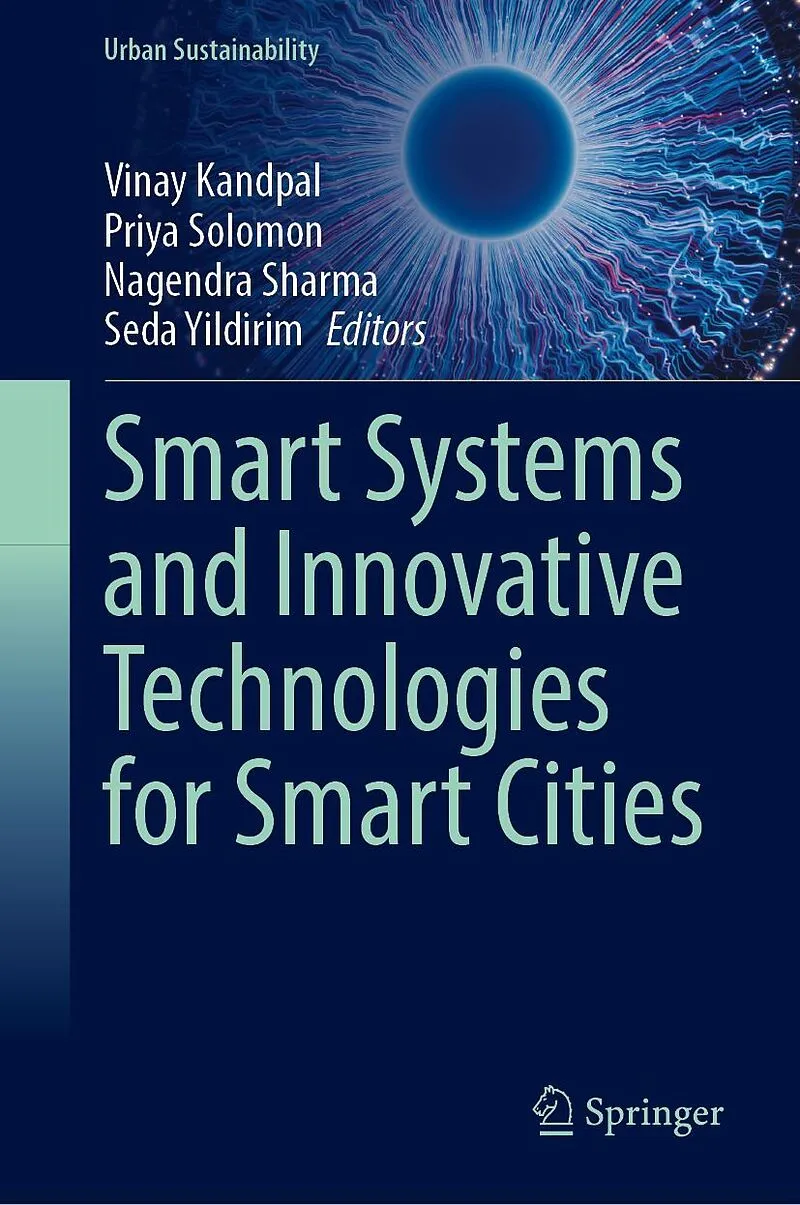
This book provides a detailed assessment of current smart city technology developments and their applications. It serves as an additional resource for researchers, urban planners, policymakers, and practitioners, showcasing the application of technology in urban environments to promote sustainability, resource efficiency, and livability. The objectives are to provide an analysis of smart systems and technologies adopted in smart cities around the world and to review existing case studies of successful smart city adoption in different parts of the world. Review existing case studies of successful smart city adoption in different parts of the world. To study the potentialities and difficulties accompanying smart city projects. Investigate upcoming smart city technology changes and developments. This book provides real action steps for city planners, politicians, and tech engineers. Future technological innovations strengthen smart city capabilities, making them more adaptable and responsive to their citizens' needs. This edited book delivers extensive research on smart city themes, mapping the theoretical bases and practical usage of these technologies and their prospective pathways. Thanks to its combination of essential theoretical groundwork, practical skills, and progressive outlooks, future readers obtain understanding and capabilities through this book.
Combines foundational smart city concepts with real-world case studies for actionable insights Covers all core technologies, governance, and citizen engagement for sustainable urban development Provides a detailed assessment of current smart city technology developments and their applications
Autorentext
Dr. Vinay Kandpal stands out as an authority in finance and a dedicated mentor at Graphic Era University in Dehradun, India, with a distinguished career spanning more than 19 years in both the educational sector and the business world. As a senior faculty member in Department of Management Studies, he offers his profound expertise on a breadth of subjects encompassing financial studies, business management, and pedagogy. Dr. Kandpal's academic credentials are noteworthy; he has earned both a D Litt (Post Doctoral degree) and a Ph.D. focusing on Finance from Kumaun University in Uttarakhand, India. Further enriching his scholarly background is his role as a postdoctoral fellow at PG Administracao-Paulista UniversityUNIP in Brazil.
Dr. Priya Solomon is a distinguished academic professional with over 22 years of experience in teaching, research, and administration. She has served as a professor, head of Department, controller of Examinations, and registrar, contributing extensively to key academic and administrative committees. She holds a Ph.D. from the University of Allahabad and a Master's in Finance and Economics, along with a Chartered Financial Analyst (CFA) degree from ICFAI University. Her research spans areas like Smart Cities, Blockchain Applications & Artificial Intelligence, Financial Markets, Sustainable development, and Climate Finance, with publications in internationally recognized journals. She is a keynote speaker and session chair at global conferences and has guided Ph.D. scholars to success. With 5 books, over 46 published articles, and 5 patents to her name, Dr. Solomon has received international awards and recognition for her contributions to academia and research.
Dr. Nagendra Kumar Sharma is currently working as an associate professor in Marketing and Sustainability at Graphic Era University, Dehradun, India. He completed his post-doctoral fellowship (PDF) at Chaoyang University of Technology, Taiwan, in 2022. Dr. Sharma started his career as an academician in 2010 at NIT-Allahabad, where he served as visiting faculty till 2013. He cleared the UGC-NET& JRF examination in Management and later went on to pursue Ph.D. from NIT-Bhopal and completed it in the year 2018. He has both industrial and academic experience from 2008 and 2022. He had also served at Dr. A.P.J. Abdul Kalam University, Lucknow. His areas of research are green marketing and issues related to business and sustainability, such as the circular economy and Industry 4.0. Dr. Sharma has published several research papers indexed in SCOPUS, SCI, SSCI, and other WOS journals.
Prof. Dr. Seda Yldrm currently works at Tekirdag Namk Kemal University in Turkey. She is a full-time professor, and she has a Ph.D. degree in marketing. She studies sustainable development, 2030 Sustainable Development Goals, sustainable consumption patterns, digitalization, higher education, consumption patterns, environmental quality, and food security. She has over 2000 citations in Google Scholar. She has published many books and book chapters in reputable publishing groups such as Taylor and Francis, IGI Global, and Springer Nature. She has many articles in journals indexed with Web of Science (SCIE, SSCI, ESCI) and SCOPUS.
Inhalt
Part I. Smart CitiesFoundations, Governance, and Policy Frameworks.- Chapter 1. Emotional Intelligence as a Catalyst for Achieving SDG 16: Building Peaceful, Just, and Inclusive Societies (Megha Ojha).- Chapter 2. Data-Driven Smart Cities: Challenges, Measures, and Policy Guidelines for India (Ajay Jha).- Chapter 3. Integrating Higher Education in Smart City Development: Pathways to Sustainable Urban Futures (Chahat Sahani).- Chapter 4. Evolution of Sustainable Smart Cities: Foundations and Future Prospects (Kanwar Ajay Singh).- Part II. Green Technologies, Circular Economy, and Sustainable Energy Systems.- Chapter 5. Urban Sustainability and Green Technologies: Innovating for Resilient and Eco-Friendly Cities (Mohammad Kashif).- Chapter 6. AI-Driven Sustainability for Circular Economy and Carbon Footprint Reduction: A Developing Country Perspective (Rubee Singh).- Chapter 7. Sustainable Finance as a Catalyst for Circular Economy Transition (Rekha Vashist).- Chapter 8. From Potential to Progress: Advancing Rooftop Solar Energy in India (Kumaravel S).- Chapter 9. Role of Green AI in Developing Environmentally Sustainable Smart Cities (Megha Ahuja).- Part III. Smart Infrastructure, Mobility, and Built Environment.- Chapter 10. Electrification of Transportation and Sustainable Development: A Field Study on the Usage of Electric Cars in Chandigarh and Mohali (Sai Aanchal).- Chapter 11. User-Centric Smart Buildings for Sustainable Indian Cities (Taran Kaur).- Chapter 12. Can Offices in India Be Made Urban Green Spaces? A Review of Strategies and a Proposed Implementation Checklist (Shree Nidhi M).- Chapter 13. Green Cities, Smart Food: Digital Transformation of Urban Agriculture for Sustainable Development Goals (Mohit Gundwal).