
IHR WARENKORB IST AKTUELL LEER.
Haben Sie noch nichts passendes gefunden? Stöbern Sie durch unser komplettes Sortiment.
Oder melden Sie sich an bzw. registrieren Sie sich.
- Kostenlose Lieferung
- Kauf auf Rechnung
- Ex Libris Tiefpreis
- Filiallieferung und 650+ Abholorte
- Rabatt-Bons als Club-Mitglied
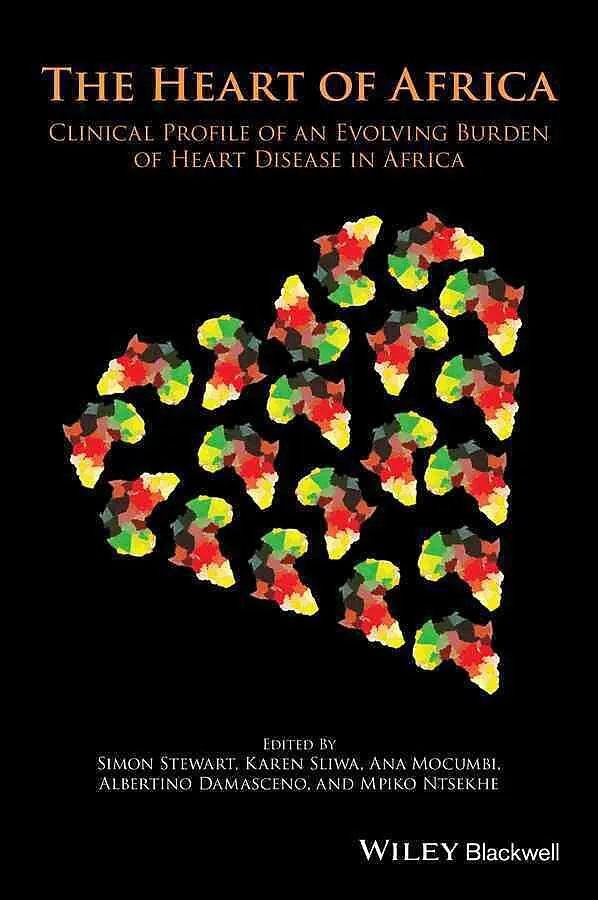
The Heart of Africa
Beschreibung
Informationen zum Autor Simon Stewart PhD, NFESC, FAHA, FCSANZ Mary MacKillop Institute for Health Research, Australian Catholic University, Melbourne, Victoria, Australia Karen Sliwa MD, PhD, FESC, FACC Hatter Institute for Cardiovascular Research in Africa, ...Format auswählen
- Kartonierter EinbandCHF 34.00

Wird oft zusammen gekauft
Andere Kunden kauften auch
Beschreibung
Informationen zum Autor Simon Stewart PhD, NFESC, FAHA, FCSANZ Mary MacKillop Institute for Health Research, Australian Catholic University, Melbourne, Victoria, Australia Karen Sliwa MD, PhD, FESC, FACC Hatter Institute for Cardiovascular Research in Africa, Department of Medicine, Faculty of Health Sciences, University of Cape Town, South Africa; Soweto Cardiovascular Research Group, Faculty of Health Sciences, University of the Witwatersrand. Ana Mocumbi MD, PhD, FESC Instituto Nacional de Saude Ministerio da Saude Doencas Cronicas Nao Transmissiveis Instituto Maputo, Mocambique Albertino Damasceno MD, PhD Departamento de Medicina/Faculdade de Medicina Universidade Eduardo Mondlane Maputo, Moçambique Mpiko Ntsekhe MD, PhD, FACC Division of Cardiology Department of Medicine, University of Cape Town, Groote Schuur Hospital Cape Town, South Africa Klappentext While many high-income countries observe a relative decline in the population impact of heart disease and deal with the problem of an older patient population who readily survive earlier non-fatal encounters with the condition, Africa contends with a typically younger population with frequently advanced and often fatal heart disease. Similarly, while high-income countries exclusively deal with non-communicable forms of heart disease, Africa contends with both communicable and non-communicable forms of heart disease. In clear contrast to regions such as Europe and North America, case complexity is often high and available resources from the individual to societal perspective (particularly primary health care services) are often sub-optimal. This book presents the most salient research detailing the evolving burden of communicable and non-communicable forms of heart disease published within the past decade. It is designed to give anyone with an interest in heart disease in Africa an immediate sense of where we are, from a clinical to research perspective, in responding to this evolving epidemic. The six sections in this book include; maternal heart health and pediatric heart disease, risk and prevention, infectious heart disease, non-communicable disease, and heart failure and the cardiomyopathies. Considers the progress of cardiac healthcare in Africa, summarising and interpreting recent studies and the lessons that can be drawn from their outcomes; Includes recommendations drawn from study results and discussion points on the future direction of healthcare management and therapies; Each chapter contains helpful summary tables and is thoughtfully referenced, providing further direction for readers on that topic. This book will be of interest to health care workers, specialist clinicians, public health practitioners and health policy makers with an interest in cardiac health care in developing nations. Endorsed by PASCAR, The Pan-African Society of Cardiology Zusammenfassung While many high-income countries observe a relative decline in the population impact of heart disease and deal with the problem of an older patient population who readily survive earlier non-fatal encounters with the condition, Africa contends with a typically younger population with frequently advanced and often fatal heart disease. While high-income countries exclusively deal with non-communicable forms of heart disease, Africa contends with both communicable and non-communicable forms of heart disease.* Designed to provide anyone with an interest in heart disease in Africa with an immediate sense of how the area is progressing from a clinical to research perspective in responding to this evolving epidemic* Presents salient research uncovering the evolving burden of communicable and non-communicable forms of heart disease,* Includes content on maternal heart disease, ...
Autorentext
**Simon Stewart PhD, NFESC, FAHA, FCSANZ
**Mary MacKillop Institute for Health Research,
Australian Catholic University,
Melbourne, Victoria, Australia
**Karen Sliwa MD, PhD, FESC, FACC
**Hatter Institute for Cardiovascular Research in Africa, Department of Medicine,
Faculty of Health Sciences, University of Cape Town, South Africa;
Soweto Cardiovascular Research Group, Faculty of Health Sciences, University of the Witwatersrand.
**Ana Mocumbi MD, PhD, FESC
**Instituto Nacional de Saude Ministerio da Saude Doencas Cronicas
Nao Transmissiveis Instituto
Maputo, Mocambique
**Albertino Damasceno MD, PhD
**Departamento de Medicina/Faculdade de Medicina
Universidade Eduardo Mondlane
Maputo, Moçambique
**Mpiko Ntsekhe MD, PhD, FACC
**Division of Cardiology
Department of Medicine,
University of Cape Town,
Groote Schuur Hospital
Cape Town, South Africa
Klappentext
While many high-income countries observe a relative decline in the population impact of heart disease and deal with the problem of an older patient population who readily survive earlier non-fatal encounters with the condition, Africa contends with a typically younger population with frequently advanced and often fatal heart disease. Similarly, while high-income countries exclusively deal with non-communicable forms of heart disease, Africa contends with both communicable and non-communicable forms of heart disease. In clear contrast to regions such as Europe and North America, case complexity is often high and available resources from the individual to societal perspective (particularly primary health care services) are often sub-optimal.
This book presents the most salient research detailing the evolving burden of communicable and non-communicable forms of heart disease published within the past decade. It is designed to give anyone with an interest in heart disease in Africa an immediate sense of where we are, from a clinical to research perspective, in responding to this evolving epidemic.
The six sections in this book include; maternal heart health and pediatric heart disease, risk and prevention, infectious heart disease, non-communicable disease, and heart failure and the cardiomyopathies.
Considers the progress of cardiac healthcare in Africa, summarising and interpreting recent studies and the lessons that can be drawn from their outcomes;
Includes recommendations drawn from study results and discussion points on the future direction of healthcare management and therapies;
Each chapter contains helpful summary tables and is thoughtfully referenced, providing further direction for readers on that topic.
This book will be of interest to health care workers, specialist clinicians, public health practitioners and health policy makers with an interest in cardiac health care in developing nations. Endorsed by PASCAR, The Pan-African Society of Cardiology
Inhalt
List of contributors vii
Foreword x
Preface xii
Acknowledgments xiv
Sub?-Saharan Africa and The Heart of Africa: A brief introduction 1
Section 1: Maternal heart health
Karen Sliwa
1 Maternal heart health 9
Karen Sliwa, John Anthony, and Denise Hilfiker-Kleiner
References 27
Section 2: Infant and childhood heart disease
Ana Mocumbi
2 Congenital heart disease 35
Ana Mocumbi, Tantchou Tchoumi Jacques Cabral, John Musuku, and Serigne A. Ba
3 Acquired heart disease 44
Ana Mocumbi, Liesl Zühlke, and Peter Zilla
References 63
Section 3: Spectrum of cardiovascular risk and heart disease in sub-Saharan Africa
Simon Stewart
4 Cardiovascular risk in urban and rural African settings 73
Kemi Tibazarwa, Karen Sliwa, Melinda Jane Carrington, Okechukwu Samuel Ogah, and Simon Stewart
5 The African INTERHEART study 89
Krisela Steyn and Karen Sliwa
6 The spectrum of heart disease in urban Africans: The Heart of Soweto Study 96
Melinda Jane Carrington, Karen Sliwa, and Simon Stewart
References 113
Section 4: Infectious heart disease
Mpiko Ntsekhe
7 Rheumatic heart disease 121
Simon Stewart, Melinda Jane Carrington, and Karen Sliwa
8 Pericardial di…