
IHR WARENKORB IST AKTUELL LEER.
Haben Sie noch nichts passendes gefunden? Stöbern Sie durch unser komplettes Sortiment.
Oder melden Sie sich an bzw. registrieren Sie sich.
- Kostenlose Lieferung
- Kauf auf Rechnung
- Ex Libris Tiefpreis
- Filiallieferung und 650+ Abholorte
- Rabatt-Bons als Club-Mitglied
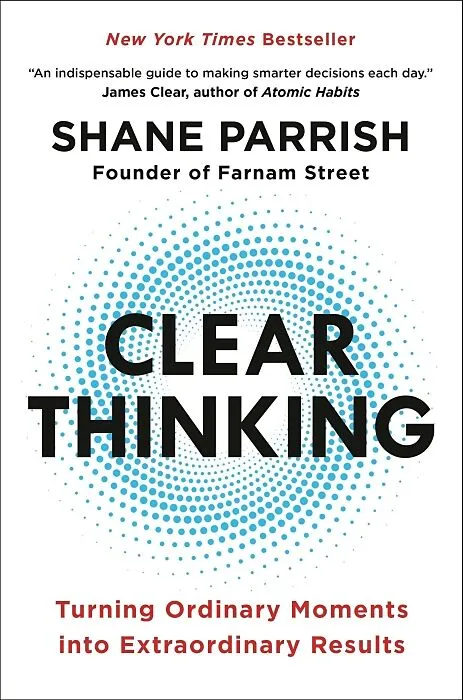
Clear Thinking
Beschreibung
Informationen zum Autor Shane Parrish is an entrepreneur and wisdom seeker behind the popular website Farnam Street, where he focuses on turning timeless insights into action. His insights are used by Fortune 500 companies and sports teams in the NFL, NBA, MLB...Format auswählen
- Fester EinbandCHF 33.20

Wird oft zusammen gekauft
Andere Kunden kauften auch
Beschreibung
Informationen zum Autor Shane Parrish is an entrepreneur and wisdom seeker behind the popular website Farnam Street, where he focuses on turning timeless insights into action. His insights are used by Fortune 500 companies and sports teams in the NFL, NBA, MLB, and NHL to drive better results. His work has appeared in nearly every major publication, including The New York Times , The Wall Street Journal , and Forbes . His weekly newsletter, Brain Food , has captivated the minds of over half a million subscribers worldwide. His podcast, The Knowledge Project , is one of the most popular in the world. Klappentext "A must-have manual for optimizing decision-making, gaining competitive advantage, and living a more intentional life"-- Leseprobe Chapter 1.1 Thinking Badly- or Not Thinking at All? Rationality is wasted if you don't know when to use it. When you ask people about improving thinking, they typically point toward numerous tools designed to help people think more rationally. Bookstores are full of books that assume the problem is our ability to reason. They list the steps we should take and the tools we should use to exercise better judgment. If you know you should be thinking, these can be helpful. What I've learned from watching real people in action is that, just like the angry CEO, they're often unaware circumstances are thinking for them. It's as if we expect the inner voice in our head to say, "STOP! THIS IS A MOMENT WHEN YOU NEED TO THINK!" And because we don't know we should be thinking, we cede control to our impulses. In the space between stimulus and response, one of two things can happen. You can consciously pause and apply reason to the situation. Or you can cede control and execute a default behavior. The problem is, our default behavior often makes things worse. When someone slights us, we lash out with angry words. When someone cuts us off, we assume malice on their part. When things go slower than we want, we become frustrated and impatient. When someone is passive-aggressive, we take the bait and escalate. In these moments of reaction, we don't realize that our brains have been hijacked by our biology, and that the outcome will go against what we seek. We don't realize that hoarding information to gain an advantage is hurting the team. We don't realize we're conforming to the group's ideas when we should be thinking for ourselves. We don't realize our emotions are making us react in ways that create problems downstream. So our first step in improving our outcomes is to train ourselves to identify the moments when judgment is called for in the first place, and pause to create space to think clearly. This training takes a lot of time and effort, because it involves counterbalancing our hardwired biological defaults evolved over many centuries. But mastery over the ordinary moments that make the future easier or harder is not only possible, it's the critical ingredient to success and achieving your long-term goals. The High Cost of Losing Control Reacting without reasoning makes every situation worse. Consider a common scenario that I've seen countless times. A coworker slights a project you're leading in a meeting. Instinctively you hit back with a comment that undermines them or their work. You didn't make a conscious choice to respond, you just did. Before you even know what's happening, the damage is done. Not only does the relationship suffer but the meeting goes sideways. Too much energy is then consumed getting you back to where you were. The relationship needs to be repaired. The derailed meeting needs to be rescheduled. You might need to talk to the other people in the meeting to clear the air. And even after all of this, you might still be worse off than you were before. Every witness and every person t...
Autorentext
Shane Parrish is an entrepreneur and wisdom seeker behind the popular website Farnam Street, where he focuses on turning timeless insights into action. His insights are used by Fortune 500 companies and sports teams in the NFL, NBA, MLB, and NHL to drive better results. His work has appeared in nearly every major publication, including The New York Times, The Wall Street Journal, and Forbes. His weekly newsletter, Brain Food, has captivated the minds of over half a million subscribers worldwide. His podcast, The Knowledge Project, is one of the most popular in the world.
Klappentext
"A must-have manual for optimizing decision-making, gaining competitive advantage, and living a more intentional life"--
Zusammenfassung
Few things will change your trajectory in life or business as much as learning to think clearly. Yet few of us recognize opportunities to think in the first place.
You might believe you’re thinking clearly in the moments that matter most. But in all likelihood, when the pressure is on, you won’t be thinking at all. And your subsequent actions will inevitably move you further from the results you ultimately seek—love, belonging, success, wealth, victory. According to Farnam Street founder Shane Parrish, we must get better at recognizing these opportunities for what they are, and deploying our cognitive ability in order to achieve the life we want.
Clear Thinking gives you the tools to recognize the moments that have the potential to transform your trajectory, and reshape how you navigate the critical space between stimulus and response. As Parrish shows, we may imagine we are the protagonists in the story of our lives. But the sad truth is, most of us run on autopilot. Our behavioral defaults, groomed by biology, evolution, and culture, are primed to run the show for us if we don’t intervene. At our worst, we react to events without reasoning, not even realizing that we’ve missed an opportunity to think at all. At our best, we recognize these moments for what they are, and apply the full capacity of our reasoning and rationality to them.
Through stories, mental models, and more, Parrish offers the missing link between behavioral science and real-life outcomes. The result is a must-have manual for optimizing decision-making, gaining competitive advantage, and living a more intentional life.
Leseprobe
Chapter 1.1
Thinking Badly-
or Not Thinking at All?
Rationality is wasted if you don't know when to use it.
When you ask people about improving thinking, they typically point toward numerous tools designed to help people think more rationally. Bookstores are full of books that assume the problem is our ability to reason. They list the steps we should take and the tools we should use to exercise better judgment. If you know you should be thinking, these can be helpful.
What I've learned from watching real people in action is that, just like the angry CEO, they're often unaware circumstances are thinking for them. It's as if we expect the inner voice in our head to say, "STOP! THIS IS A MOMENT WHEN YOU NEED TO THINK!"
And because we don't know we should be thinking, we cede control to our impulses.
In the space between stimulus and response, one of two things can happen. You can consciously pause and apply reason to the situation. Or you can cede control and execute a default behavior.
The problem is, our default behavior often makes things worse.
When someone slights us, we lash out with angry words.
When someone cuts us off, we assume malice on their part.
When things go slower than we want, we become frustrated and impatient.
When someone is passive-aggressive, we take the bait and escalate.
In these moments of reaction, we don't realize that our brains have been hijacked by our biology, and that the outcome will go against what we seek. We don't realize that hoarding information to gain an advantage is hurting the team. We don't realize we're conforming to the group's ideas when we should be thinking for ourselves. We don't…