Haben Sie noch nichts passendes gefunden? Stöbern Sie durch unser komplettes Sortiment.
Oder melden Sie sich an bzw. registrieren Sie sich.


Beschreibung
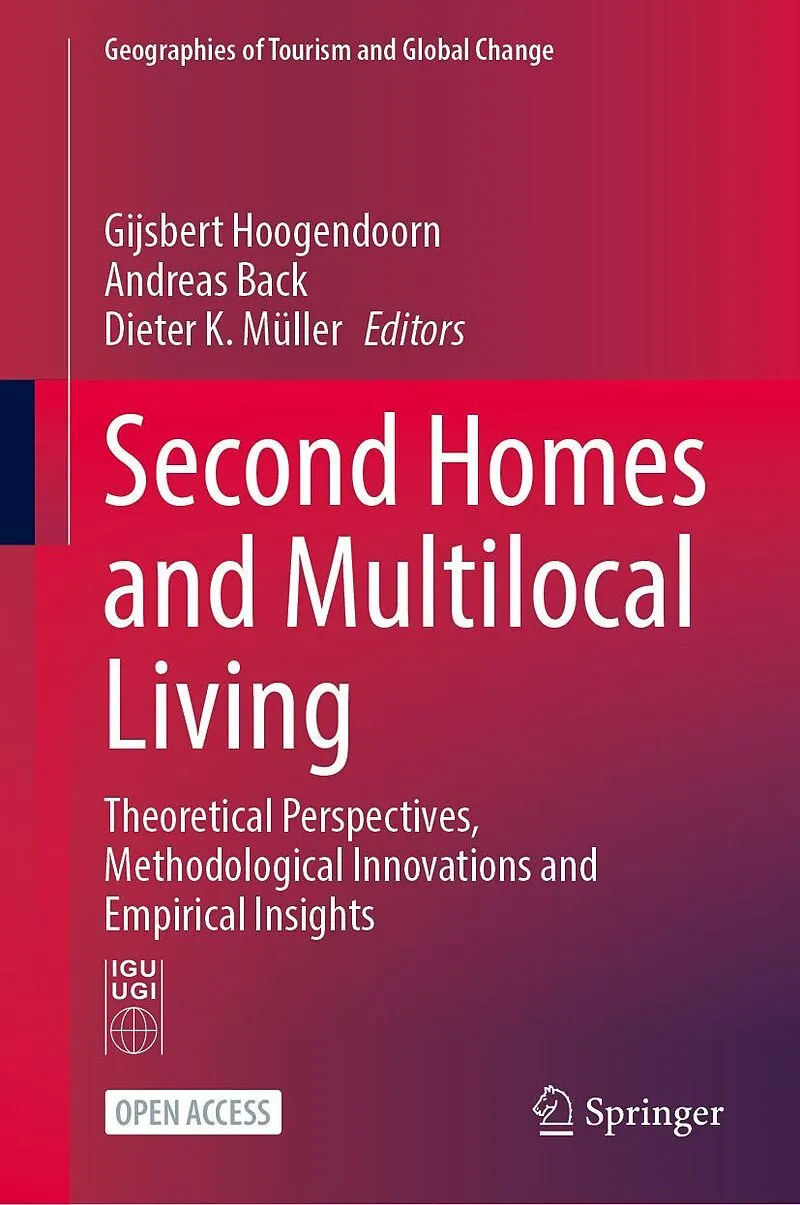
Through new theoretical insights, methodological developments, and empirical research, this book provides a fresh overview of international second-home research. Bringing together studies from across the globe, it examines the economic, social, and environmen...
Through new theoretical insights, methodological developments, and empirical research, this book provides a fresh overview of international second-home research. Bringing together studies from across the globe, it examines the economic, social, and environmental impacts of second homes, including their effects on local economies, communities, housing markets, ecosystems, and natural resources. With mobility and multi-locality as central themes, the volume examines how post-Covid mobility trends, technological developments, and changing work patterns are transforming second homes into spaces for remote work and seasonal living. These developments challenge traditional distinctions between 'home' and 'away' and have important implications for planning and rural development. The book also addresses methodological challenges in second-home research, particularly limitations in statistical classifications and data collection. By presenting new frameworks and approaches, the chapters contribute to more accurate and comprehensive research.
This book is open access, which means that you have free and unlimited access Provides timely post-Covid insights on second home tourism and mobility trends Discusses innovative methodologies for accurate data collection and analysis Offers practical policy guidance for sustainable urban and rural development
Autorentext
Gijsbert Hoogendoorn is Professor of Tourism Geography at the University of Johannesburg, South Africa. His research interests lie in Tourism Geography, with a particular focus on second-home tourism, a topic he has explored for over 20 years across various themes. He has published extensively on the social, economic, and environmental impacts of second-home tourism, with case studies in South Africa, Sweden, China, and Mozambique. In addition to his work on second-home tourism, Professor Hoogendoorn has authored over 100 articles, monographs, and conference proceedings, covering topics such as climate change and tourism in Southern Africa and urban tourism in Johannesburg, South Africa.
Andreas Back is an Assistant Professor in Human Geography at Umeå University, Sweden. His research focuses on second-home tourism, regional development, public planning, and rural housing. He examines how the mobility of people, resources, and capital affects society, particularly through the lens of leisure tourism and its impact on municipal planning and housing markets. His doctoral thesis explored how second-home tourism influences social planning and housing markets in municipalities, highlighting the dynamic interplay between society and the economy. Currently, Back's research delves into the planning challenges connected to abandoned rural housing.
Dieter Müller was a Professor of Social and Economic Geography at Umeå University, Sweden. His research primarily focuses on tourism and regional development, particularly in peripheral and Arctic regions. Müller extensively studied second homes, Sami tourism, nature tourism, and the broader impacts of tourism on regional development and rural change. In addition to his academic roles, Müller held several significant positions, including chairing the International Geographical Union Commission on Tourism, Leisure, and Global Change, and founding member of the International Polar Tourism Research Network. He was also involved in various boards and committees, such as the Arctic Centre at Umeå University and the Umeå School of Sport Sciences. His contributions to the field have been recognized with numerous awards, including the Roy Wolfe Award from the American Association of Geographers and his election to the Royal Swedish Academy of Sciences. Müller's work is characterized by a strong emphasis on collaboration and internationalization, as evidenced by his leadership in projects like the Arctic Five, which fosters cooperation among universities in the Arctic region.
Inhalt
Chapter 1. Second Homes and Multilocal Living: Theoretical Perspectives, Methodological Innovations, Empirical Insights: An Introduction.- Chapter 2. Changing Geographies of Multilocal Living During the COVID-19 Pandemic: Second-Home Tourism in Northern Sweden.- Chapter 3. Second-Home Ownership as a Relational Spatial Process.- Chapter 4. Platformisation, Governance, and Socio-Spatial Transformations: Second Homes as Hybrid Infrastructures.- Chapter 5. Second Home and the Environment the Importance of Governance Scales.- Chapter 6. Trash Houses and Dead Meat Statistics: A Continuum Perspective on Second Homes and Abandoned Rural Housing.- Chapter 7. Multilocal Lifestyle in Alpine Resorts: A Chronotopic Approach to InterResidential Occupancy.- Chapter 8. Second Homes in European Countries: Statistical Practices, Temporal Changes and Spatial Distribution.- Chapter 9. Exploring the 'Hidden Giant': Contradictions in the Registration of Second Homes in Slovenia.- Chapter 10. Second Homes on Wheels: Exploring the Geography of Seasonal Campers in Sweden.- Chapter 11. Second Homes, Urban-Tourist Transformation and Water Demand: Evidence From Water-Constrained Mallorca, Balearic Islands.- Chapter 12. The beginning of the end? Second-home communities, historic vulnerability, and resilience.- Chapter 13. Pandemic-era Second Home Demand, Spatial Mobility, and Rural Gentrification in Vilas County, Wisconsin, United States.- Chapter 14. Localising Multi-Locality: Second Homes as Catalysts for Rural Change.- Chapter 15. Second Homes and Multilocal Living: Conclusions on Theoretical Perspectives, Methodological Innovations, and Empirical Insights.