
IHR WARENKORB IST AKTUELL LEER.
Haben Sie noch nichts passendes gefunden? Stöbern Sie durch unser komplettes Sortiment.
Oder melden Sie sich an bzw. registrieren Sie sich.
- Kostenlose Lieferung
- Kauf auf Rechnung
- Ex Libris Tiefpreis
- Filiallieferung und 650+ Abholorte
- Rabatt-Bons als Club-Mitglied
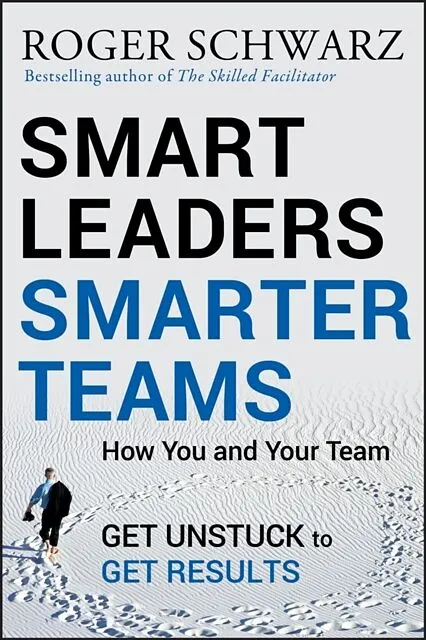
Smart Leaders, Smarter Teams
Beschreibung
Informationen zum Autor ROGER SCHWARZ has been a recognized thought leader in the realm of team leadership for three decades. An organizational psychologist and president and CEO of Roger Schwarz Associates, he is a sought-after advisor to global companies, fe...Format auswählen
- Fester EinbandCHF 41.50

Wird oft zusammen gekauft
Andere Kunden kauften auch
Beschreibung
Informationen zum Autor ROGER SCHWARZ has been a recognized thought leader in the realm of team leadership for three decades. An organizational psychologist and president and CEO of Roger Schwarz Associates, he is a sought-after advisor to global companies, federal government agencies, and international nonprofit organizations. Clients include Hewlett-Packard, the American Red Cross, the World Bank, TransCanada, Chevron, and the U.S. Department of the Interior. He is author of the seminal work The Skilled Facilitator and coauthor of The Skilled Facilitator Fieldbook . He holds a Ph.D. in organizational psychology from the University of Michigan, and a master of education degree from Harvard University. Schwarz lives in Chapel Hill with his wife. They have two children. www.schwarzassociates.com Klappentext A proven approach for helping leaders and teams work together to achieve better decisions, greater commitment, and stronger resultsMore than ever, effective leadership requires us to work as a team, but many leaders struggle to get the results they need. When stakes are high, you can't get great results by just changing what you do. You also need to change how you think. Organizational psychologist and leadership consultant Roger Schwarz applies his 30+ years of experience working with leadership teams to reveal how leaders can drastically improve results by changing their individual and team mindset.* Provides practical guidance to help teams increase decision quality, decrease implementation time, foster innovation, get commitment, reduce costs and increase trust* Outlines 5 core values leadership teams can adopt to exponentially improve results* Author of The Skilled Facilitator and The Skilled Facilitator FieldbookGet the results you and your team need. Start by applying the practical wisdom of Smart Leaders, Smarter Teams. Zusammenfassung A proven approach for helping leaders and teams work together to achieve better decisions, greater commitment, and stronger results More than ever, effective leadership requires us to work as a team, but many leaders struggle to get the results they need. Inhaltsverzeichnis Preface xi Who this book is for, what it is about, and why I wrote it. 1 How Well Does Your Team Really Work? 1 Why does a group of smart leaders so often create a less-than-smart team? This chapter describes how the mindset leaders use can get them and their team stuck. It explains why adopting a mutual learning set of values and assumptions gets you and your team unstuck so that you get more done and achieve your goals. 2 How You and Your Team Get Stuck: The Unilateral Control Approach 25 When you and your team try to achieve your goals by unilaterally controlling the situation, you get the very results you've been trying to avoid. This chapter enables you to compare your own mindset and behaviors to those of a unilaterally controlling leader, so you can understand the mindset from which you are operating. 3 Getting Unstuck to Get Results: The Mutual Learning Approach 49 When you shift to a mutual learning mindset, you and your team operate from a more productive set of values and assumptions. These include being transparent, curious, accountable, and compassionate, and creating informed choice. This chapter demonstrates how that mindset generates common understanding that transforms decision making to produce better team performance, stronger team working relationships, and work that is satisfying and motivating. 4 Getting the Puzzle Pieces on the Table: Mutual Learning Behaviors 1-4 87 How you think is how you lead. This chapter provides detailed guidance on how to put the mutual learning mindset into action through four mutual learning behaviors: state views and ask genuine questions, share all relevant inf...
Autorentext
ROGER SCHWARZ has been a recognized thought leader in the realm of team leadership for three decades. An organizational psychologist and president and CEO of Roger Schwarz Associates, he is a sought-after advisor to global companies, federal government agencies, and international nonprofit organizations. Clients include Hewlett-Packard, the American Red Cross, the World Bank, TransCanada, Chevron, and the U.S. Department of the Interior. He is author of the seminal work The Skilled Facilitator and coauthor of The Skilled Facilitator Fieldbook. He holds a Ph.D. in organizational psychology from the University of Michigan, and a master of education degree from Harvard University. Schwarz lives in Chapel Hill with his wife. They have two children. www.schwarzassociates.com
Klappentext
A proven approach for helping leaders and teams work together to achieve better decisions, greater commitment, and stronger results More than ever, effective leadership requires us to work as a team, but many leaders struggle to get the results they need. When stakes are high, you can't get great results by just changing what you do. You also need to change how you think. Organizational psychologist and leadership consultant Roger Schwarz applies his 30+ years of experience working with leadership teams to reveal how leaders can drastically improve results by changing their individual and team mindset. * Provides practical guidance to help teams increase decision quality, decrease implementation time, foster innovation, get commitment, reduce costs and increase trust * Outlines 5 core values leadership teams can adopt to exponentially improve results * Author of The Skilled Facilitator and The Skilled Facilitator Fieldbook Get the results you and your team need. Start by applying the practical wisdom of Smart Leaders, Smarter Teams.
Inhalt
Preface xi
Who this book is for, what it is about, and why I wrote it.
**1 How Well Does Your Team Really Work? 1
** Why does a group of smart leaders so often create a less-than-smart team? This chapter describes how the mindset leaders use can get them and their team stuck. It explains why adopting a mutual learning set of values and assumptions gets you and your team unstuck so that you get more done and achieve your goals.
**2 How You and Your Team Get Stuck: The Unilateral Control Approach 25
** When you and your team try to achieve your goals by unilaterally controlling the situation, you get the very results you've been trying to avoid. This chapter enables you to compare your own mindset and behaviors to those of a unilaterally controlling leader, so you can understand the mindset from which you are operating.
**3 Getting Unstuck to Get Results: The Mutual Learning Approach 49
** When you shift to a mutual learning mindset, you and your team operate from a more productive set of values and assumptions. These include being transparent, curious, accountable, and compassionate, and creating informed choice. This chapter demonstrates how that mindset generates common understanding that transforms decision making to produce better team performance, stronger team working relationships, and work that is satisfying and motivating.
**4 Getting the Puzzle Pieces on the Table: Mutual Learning Behaviors 1-4 87
** How you think is how you lead. This chapter provides detailed guidance on how to put the mutual learning mindset into action through four mutual learning behaviors: state views and ask genuine questions, share all relevant information, use specific examples and agree on what important words mean, and explain your reasoning and intent. See how these behaviors lead you and your team to higher quality decisions, shorter implementation time, and greater commitment and trust.
**5 Putting the Puzzle Together: Mutual Learning Behaviors 5-8 109
** *Continuing from Chapter Four, this chapter provides detailed guidance on how to put the mutual learning mindset into action through four more mutual learning behaviors: focus on interests not positions, test assumptions and inferences, jointly design next steps, and discuss und…