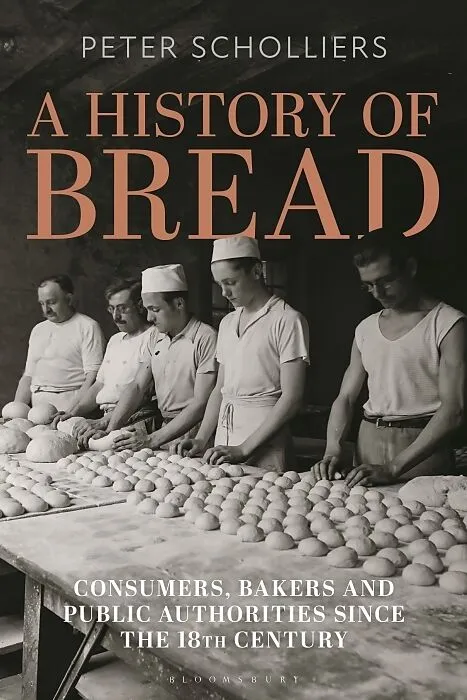
A History of Bread
Beschreibung
Zusatztext Bread was, for centuries, the staple of most Europeans' diets. Here Peter Scholliers weaves together economic and medical histories, the daily lives of workers, the histories of technology and consumption, to demonstrate how a simple item like a loa...Format auswählen
- Kartonierter EinbandCHF 36.70

Wird oft zusammen gekauft
Andere Kunden kauften auch
Beschreibung
Zusatztext Bread was, for centuries, the staple of most Europeans' diets. Here Peter Scholliers weaves together economic and medical histories, the daily lives of workers, the histories of technology and consumption, to demonstrate how a simple item like a loaf of bread can trace historical change in all its complexity. Informationen zum Autor Peter Scholliers Klappentext For a long time, everything revolved around bread. Providing more than half of people's daily calories, bread was the life-source of Europe for centuries. In the middle of 19th century, a third of household expenditure was spent on bread. Why, then, does it only account for 0.8% of expenditure and just 12% of daily calories today? In this book, Peter Scholliers delves into the history of bread to map out its defining moments and people. From the price revolution of the 1890s that led to affordable and pure white bread, to the taste revolution of the 1990s that ushered in healthy brown bread, he studies consumers, bakers and governments to explain how and why this food that once powered an entire continent has fallen by the wayside, and what this means for the modern age. From prices and consumption to legislation and technology, Scholliers shows how the history of bread has been shaped by subtle cultural shifts as well as top-down decisions from ruling bodies. From the small home baker to booming factories, he follows changes in agriculture, transport, production and policy since the 19th century to explain why bread, once the centre of everything, is not so today. Vorwort A history of bread through its consumers, bakers and legislators to illustrate social, economic, political and technological changes in Europe since the 18th century. Zusammenfassung A history of bread through its consumers, bakers and legislators to illustrate social, economic, political and technological changes in Europe since the 18th century. Inhaltsverzeichnis Introduction Part I: The Consumer 1. Eating Bread 2. Types of Bread3. Prices and Purchasing power4. Acquiring Bread: Baking, Buying and Stealing 5. Calories, Kilos and Grams6. Bad bread: Fraud, Additives and Riots Part II: The Baker 7. Artisanal Baking8. Technology and Hygiene 9. The Factories 10. Wages, Costs and Profits 11. Image, Status and Wealth12. Politics, Strikes and Consultations Part III: The Government 13. Grain Policy14. Price Control15. Fraud on the Track 16. School and Education 17. Committees, Councils, Institutes and Agencies Conclusion: Good Bread Glossary Bibliography Appendices Index...
Vorwort
A history of bread through its consumers, bakers and legislators to illustrate social, economic, political and technological changes in Europe since the 18th century.
Autorentext
Peter Scholliers
Klappentext
For a long time, everything revolved around bread. Providing more than half of people's daily calories, bread was the life-source of Europe for centuries. In the middle of 19th century, a third of household expenditure was spent on bread. Why, then, does it only account for 0.8% of expenditure and just 12% of daily calories today?
In this book, Peter Scholliers delves into the history of bread to map out its defining moments and people. From the price revolution of the 1890s that led to affordable and pure white bread, to the taste revolution of the 1990s that ushered in healthy brown bread, he studies consumers, bakers and governments to explain how and why this food that once powered an entire continent has fallen by the wayside, and what this means for the modern age.
From prices and consumption to legislation and technology, Scholliers shows how the history of bread has been shaped by subtle cultural shifts as well as top-down decisions from ruling bodies. From the small home baker to booming factories, he follows changes in agriculture, transport, production and policy since the 19th century to explain why bread, once the centre of everything, is not so today.
Inhalt
Introduction Part I: The Consumer 1. Eating Bread 2. Types of Bread 3. Prices and Purchasing power 4. Acquiring Bread: Baking, Buying and Stealing 5. Calories, Kilos and Grams 6. Bad bread: Fraud, Additives and Riots Part II: The Baker 7. Artisanal Baking 8. Technology and Hygiene 9. The Factories 10. Wages, Costs and Profits 11. Image, Status and Wealth 12. Politics, Strikes and Consultations Part III: The Government 13. Grain Policy 14. Price Control 15. Fraud on the Track 16. School and Education 17. Committees, Councils, Institutes and Agencies Conclusion: Good Bread Glossary Bibliography Appendices Index