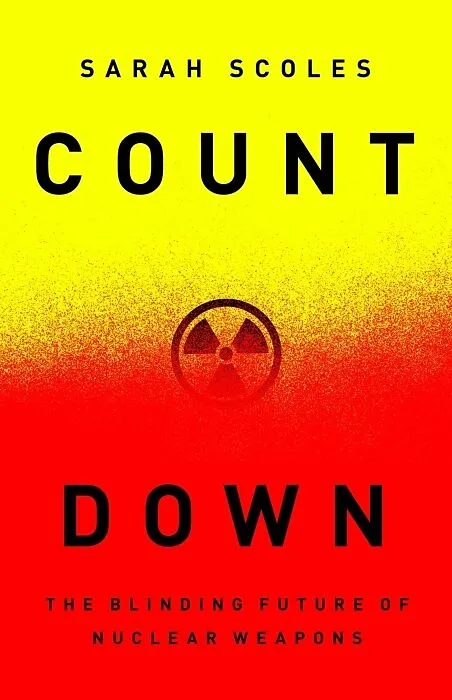
Countdown
Beschreibung
Nuclear weapons are, today, as important as they were during the Cold War, and some experts say we could be as close to a nuclear catastrophe now as we were at the height of that conflict. Despite that, conversations about these bombs generally often happen in...Format auswählen
- Fester EinbandCHF 38.80

Wird oft zusammen gekauft
Andere Kunden kauften auch
Beschreibung
Nuclear weapons are, today, as important as they were during the Cold War, and some experts say we could be as close to a nuclear catastrophe now as we were at the height of that conflict. Despite that, conversations about these bombs generally often happen in past tense. In Countdown , science journalist Sarah Scoles uncovers a different atomic reality: the nuclear age''s present. Drawing from years of on-the-ground reporting at the nation''s nuclear weapons labs, Scoles interrogates the idea that having nuclear weapons keeps us safe, deterring attacks and preventing radioactive warfare. She deftly assesses the existing nuclear apparatus in the United States, taking readers beyond the news headlines and policy-speak to reveal the state of nuclear-weapons technology, as well as how people currently working within the U.S. nuclear weapons complex have come to think about these bombs and the idea that someone, someday, might use them. Through a sharp, surprising, and undoubtedly urgent narrative, Scoles brings us out of the Cold War and into the twenty-first century, opening readers'' eyes to the true nature of nuclear weapons and their caretakers while also giving us the context necessary to understand the consequences of their existence, for worse and for better, for now and for the future.
Autorentext
Sarah Scoles is a Colorado-based science journalist, a contributing writer at Popular Science, and a senior contributor at Undark. Her work has appeared in publications like the New York Times, Wired, Scientific American, and others. She is also the author of the books Making Contact: Jill Tarter and the Search for Extraterrestrial Intelligence, They Are Already Here: UFO Culture and Why We See Saucers, and Astronomical Mindfulness. Her forthcoming book is called Countdown: The Blinding Future of Nuclear Weapons. Her articles have won the American Geophysical Union's David Perlman Award for Excellence in Science Writing (2021) and the American Astronomical Society Solar Physics Division's Popular Media Award (2019, 2020). Previously, she was an associate editor at Astronomy and a public education officer at the National Radio Astronomy Observatory in Green Bank, West Virginia.
Klappentext
A riveting investigation into the modern nuclear weapons landscape and its future.
The average person thinks about nuclear weapons less than they did during the mid-20th century. Yet, we live in a time when nuclear culture is more important than it has been since the Cold War as experts say we're closer to a nuclear catastrophe now than we were at the height of that conflict. Conversations surrounding weapons of mass destruction are generally discussed in past tense (as in Chernobyl) or sometimes as a future problem that's not yet upon us and may never be (as with the speculation about North Korea's nuclear capabilities). In Thermo, science journalist Sarah Scoles uncovers the shocking reality of our current nuclear age.
Drawing from years of on the ground reporting, from atomic bases to witnessing test explosions firsthand, Scoles challenges the comforting idea that having nuclear weapons keeps us safe, through the threat of "mutually-assured destruction." Rather, she deftly lays out the current nuclear apparatus in the United States, taking readers beyond the news headlines and policy speak to reveal how far nuclear technology has come, who the true decision-makers and gatekeepers are, and how the current generation of nuclear physicists have come to think about WMEs and a society that has the power to use them.
Through a sharp, surprising and undoubtedly urgent narrative, Scoles brings us out of the Cold War and into the present, opening readers eyes to the true nature of nuclear weapons while also giving us the needed context to understand the magnitude of our abilities, for now and for the future.
Zusammenfassung
**For fans of Oppenheimer, a riveting investigation into the modern nuclear weapons landscape.
**
Nuclear weapons are, today, as important as they were during the Cold War, and some experts say we could be as close to a nuclear catastrophe now as we were at the height of that conflict. Despite that, conversations about these bombs generally often happen in past tense.
In Countdown, science journalist Sarah Scoles uncovers a different atomic reality: the nuclear age’s present.
Drawing from years of on-the-ground reporting at the nation's nuclear weapons labs, Scoles interrogates the idea that having nuclear weapons keeps us safe, deterring attacks and preventing radioactive warfare. She deftly assesses the existing nuclear apparatus in the United States, taking readers beyond the news headlines and policy-speak to reveal the state of nuclear-weapons technology, as well as how people currently working within the U.S. nuclear weapons complex have come to think about these bombs and the idea that someone, someday, might use them.
Through a sharp, surprising, and undoubtedly urgent narrative, Scoles brings us out of the Cold War and into the twenty-first century, opening readers' eyes to the true nature of nuclear weapons and their caretakers while also giving us the context necessary to understand the consequences of their existence, for worse and for better, for now and for the future.