
IHR WARENKORB IST AKTUELL LEER.
Haben Sie noch nichts passendes gefunden? Stöbern Sie durch unser komplettes Sortiment.
Oder melden Sie sich an bzw. registrieren Sie sich.
- Kostenlose Lieferung
- Kauf auf Rechnung
- Ex Libris Tiefpreis
- Filiallieferung und 650+ Abholorte
- Rabatt-Bons als Club-Mitglied
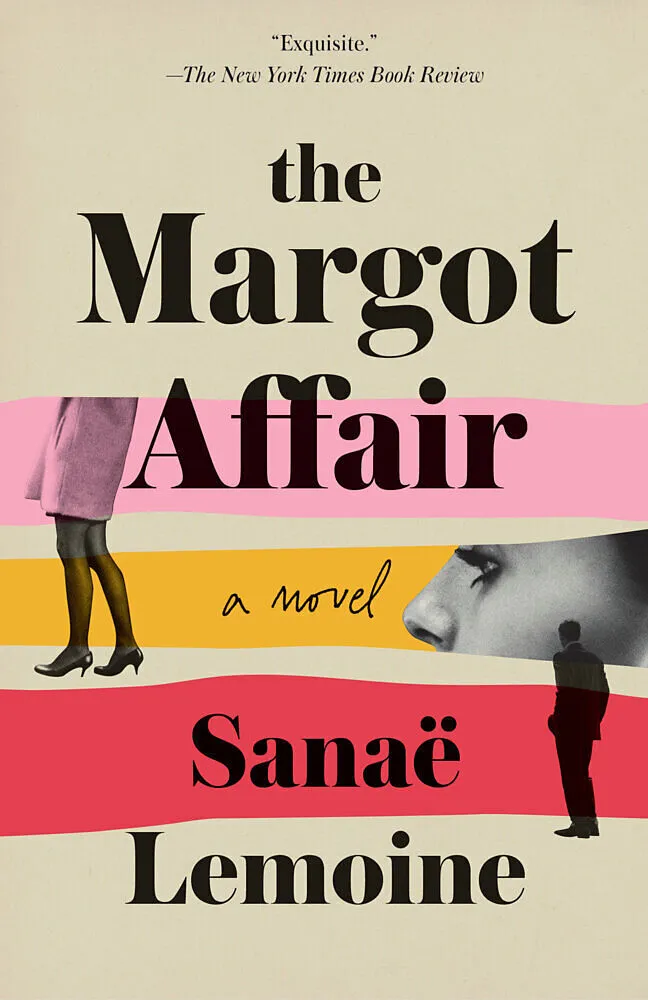
The Margot Affair
Beschreibung
An exquisite (The New York Times Book Review, Editors Choice) and wonderfully Parisian (Leila Slimani, author of The Perfect Nanny) debut novel of intrigue and deception. Betrayal and desire fuel the story of Margot, the secret daughter of a twenty-year affair...Format auswählen
- Kartonierter EinbandCHF 20.00

Wird oft zusammen gekauft
Andere Kunden kauften auch
Beschreibung
An exquisite (The New York Times Book Review, Editors Choice) and wonderfully Parisian (Leila Slimani, author of The Perfect Nanny) debut novel of intrigue and deception.
Betrayal and desire fuel the story of Margot, the secret daughter of a twenty-year affair between a French politician and a famous actress. . . . A startling, affecting first book by an author who is confident in her craft. The New York Times
Margot Louve has lived her whole life as a secret. The hidden daughter of a long-standing affair, she exists with her mother in the shadows, living in a small Parisian apartment on the Left Bank.
It is a house of cards that Margot fueled by a longing to be seen and heard decides to tumble. The summer of her seventeenth birthday, she meets a well-regarded journalist who will set her plan in motion.
But as Margot is drawn into an adult world she struggles to comprehend, she learns how one impulsive decision can shatter the lives of those around her in ways she could never have imagined. Incisively exposing the seams between private lives and public faces, The Margot Affair is a simmering exploration of desire, transgression, and the dangers of speaking the truth.
Autorentext
Sanaë Lemoine was born in Paris to a Japanese mother and French father, and raised in France and Australia. She earned her undergraduate degree from the University of Pennsylvania and her MFA at Columbia University. She now lives in New York.
Klappentext
An “exquisite” (The New York Times Book Review, Editors’ Choice) and “wonderfully Parisian” (Leila Slimani, author of The Perfect Nanny) debut novel of intrigue and deception.
“Betrayal and desire fuel the story of Margot, the secret daughter of a twenty-year affair between a French politician and a famous actress. . . . A startling, affecting first book by an author who is confident in her craft.”—The New York Times
Margot Louve has lived her whole life as a secret. The hidden daughter of a long-standing affair, she exists with her mother in the shadows, living in a small Parisian apartment on the Left Bank.
It is a house of cards that Margot—fueled by a longing to be seen and heard—decides to tumble. The summer of her seventeenth birthday, she meets a well-regarded journalist who will set her plan in motion.
But as Margot is drawn into an adult world she struggles to comprehend, she learns how one impulsive decision can shatter the lives of those around her in ways she could never have imagined. Incisively exposing the seams between private lives and public faces, The Margot Affair is a simmering exploration of desire, transgression, and the dangers of speaking the truth.
Leseprobe
1
Onstage my mother was her truest self. I would see the transformation within moments, a slow-building intimacy between herself and the audience. Mid-scene she would remove her shirt with the ease of a man, as if taking off a pair of socks. Then she would hold her red curls with both hands and lift them high enough to expose the length of her neck, jut out her elbows and accentuate the slope of her shoulders. She could be whomever she wanted. In her one-woman shows she would address the audience as though they were old friends. I could feel her effect on them as they tilted forward, eyes wide, their pores opening in her presence. She carried this effortless familiarity out into the world. With strangers, she was joyful and gracious. She dazzled. In other words, she was a true actress.
She had been acting since her teenage years, but it was a lead role in the nineties, when I was barely five years old, that propelled her career and led to her solo acts. The play in question was Mère, a short, forceful production that ran eighty minutes without an intermission. It had a small cast: a man, his wife whom she played, their three young children, and the man s father. It ended in a long scene where the mother kills her children in a bathtub. The potential for such a violent act wasn t at first visible in the mother although there was a hovering sense of unease, interspersed with moments of levity and tenderness. At that age, no one told me my mother was playing a woman who murders her children, but I knew offstage she would often choose to stay in character.
At home, she was a stranger to me. I wanted her to return to where she d come from, as if she could be reabsorbed into herself. She was turned inside out, her interior laid flat along her skin for everyone to see. I preferred her right side out, a mother in the conventional sense.
I wanted to be proud of my mother, and yet most of the time I would find myself annoyed. What others admired in her seemed exaggerated and theatrical to me.
Well, it is theater, Mathilde said, when I complained.
But I want to be moved by her. I want to stand on my feet and clap with all of you.
What high school girl is moved by her mother?
A good one.
We love that you re not good, Théo said.
Théo and Mathilde were my mother s closest friends. Mathilde was a renowned designer in the theater world, specializing in embroidery. She tailored my clothes and made me dresses for special events. She had worked on the costumes for Mère. Théo, her husband, was a dancer. My mother had trained as a dancer in her youth and felt an instant kinship with Théo.
With me, my mother cultivated distance in a more deliberate way. I had memories of standing outside her room, knocking on the door. Maman, I d say, thinking she hadn t heard me. One day I transitioned to Anouk, hoping she might better respond to her name. Over time it became harder to say Maman; the soft consonants would belie the estrangement I so often felt around her. Anouk, on the other hand, ended with a sharp edge, and when I yelled her name, it was like throwing her over a cliff.
Her bedroom was smaller than mine, with a flimsy wooden door and a gap the size of my toe between the floor and paneling. I remember her voice on the other side, practicing the same line over and over again. I should have pulled you from that dark place and covered you with kisses. I would wait for her to open the door.
When we were alone, she d look at me with a serious expression and say: We have to cut the cord. Too much affection is the greatest handicap. At those times, the difference between us would seem enormous, as if we were from two foreign countries, each speaking our own dialect. A mother is not a friend, she would like to emphasize, as if to justify our divergent views. It was