
IHR WARENKORB IST AKTUELL LEER.
Haben Sie noch nichts passendes gefunden? Stöbern Sie durch unser komplettes Sortiment.
Oder melden Sie sich an bzw. registrieren Sie sich.
- Kostenlose Lieferung
- Kauf auf Rechnung
- Ex Libris Tiefpreis
- Filiallieferung und 650+ Abholorte
- Rabatt-Bons als Club-Mitglied
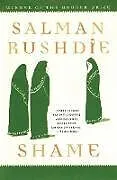
Shame
Beschreibung
Zusatztext WINNER OF THE PRIX DU MEILLEUR LIVRE ETRANGER Rushdie's novels pour by in a sparkling, voracious onrush...each paragraph luxurious and delicious. --The New Yorker There can seldom have been so robust and baroque an incarnation of the political novel...Format auswählen
- Kartonierter EinbandCHF 23.90

Wird oft zusammen gekauft
Andere Kunden kauften auch
Beschreibung
Zusatztext WINNER OF THE PRIX DU MEILLEUR LIVRE ETRANGER Rushdie's novels pour by in a sparkling, voracious onrush...each paragraph luxurious and delicious. --The New Yorker There can seldom have been so robust and baroque an incarnation of the political novel as Shame . It can be read as a fable, polemic, or excoriation; as history or as fiction.... This is the novel as myth and as satire. --Sunday Telegraph Shame is and is not about Pakistan, that invented, imaginary country, 'a failure of the dreaming mind.'... Rushdie shows us with what fantasy our sort of history must now be writtenif, that is, we are to penetrate it, and perhaps even save it. -- The Guardian Swift in Gulliver's Travels , Voltaire in Candide , Sterne in Tristram Shandy... Rushdie, it seems to me, is very much a latter-day member of their company. --The New York Times Book Review A pitch-black comedy of public life and historical imperatives. --The Times (UK) Informationen zum Autor Salman Rushdie Klappentext The novel that set the stage for his modern classic, The Satanic Verses, Shame is Salman Rushdie's phantasmagoric epic of an unnamed country that is "not quite Pakistan. In this dazzling tale of an ongoing duel between the families of two men-one a celebrated wager of war, the other a debauched lover of pleasure-Rushdie brilliantly portrays a world caught between honor and humiliation-"shamelessness, shame: the roots of violence. Shame is an astonishing story that grows more timely by the day.1 THE DUMB-WAITER In the remote border town of Q., which when seen from the air resembles nothing so much as an ill-proportioned dumb-bell, there once lived three lovely, and loving, sisters. Their names but their real names were never used, like the best household china, which was locked away after the night of their joint tragedy in a cupboard whose location was eventually forgotten, so that the great thousand-piece service from the Gardner potteries in Tsarist Russia became a family myth in whose factuality they almost ceased to believe the three sisters, I should state without further delay, bore the family name of Shakil, and were universally known (in descending order of age) as Chhunni, Munnee and Bunny. And one day their father died. Old Mr Shakil, at the time of his death a widower for eighteen years, had developed the habit of referring to the town in which he lived as 'a hell hole'. During his last delirium he embarked on a ceaseless and largely incomprehensible monologue amidst whose turbid peregrinations the household servants could make out long passages of obscenity, oaths and curses of a ferocity that made the air boil violently around his bed. In this peroration the embittered old recluse rehearsed his lifelong hatred for his home town, now calling down demons to destroy the clutter of low, dun-coloured, 'higgling and piggling' edifices around the bazaar, now annihilating with his death-encrusted words the cool whitewashed smugness of the Cantonment district. These were the two orbs of the town's dumb-bell shape: old town and Cantt, the former inhabited by the indigenous, colonized population and the latter by the alien colonizers, the Angrez, or British, sahibs. Old Shakil loathed both worlds and had for many years remained immured in his high, fortress-like, gigantic residence which faced inwards to a well-like and lightless compound yard. The house was positioned beside an open maidan, and it was equidistant from the bazaar and the Cantt. Through one of the building's few outward-facing windows Mr Shakil on his death-bed was able to stare out at the dome of a large Palladian hotel, which rose out of the intolerable Cantonment streets like a mirage, and inside which were to be found golden cuspidors and tame spider-monkeys in brass-butt...
WINNER OF THE PRIX DU MEILLEUR LIVRE ETRANGER
“Rushdie’s novels pour by in a sparkling, voracious onrush...each paragraph luxurious and delicious.” --The New Yorker
“There can seldom have been so robust and baroque an incarnation of the political novel as Shame. It can be read as a fable, polemic, or excoriation; as history or as fiction.... This is the novel as myth and as satire.” --Sunday Telegraph
“Shame is and is not about Pakistan, that invented, imaginary country, ‘a failure of the dreaming mind.’... Rushdie shows us with what fantasy our sort of history must now be written—if, that is, we are to penetrate it, and perhaps even save it.” --The Guardian
*
“Swift in Gulliver’s Travels, Voltaire in Candide, Sterne in Tristram Shandy...Rushdie, it seems to me, is very much a latter-day member of their company.” --The New York Times Book Review
*
“A pitch-black comedy of public life and historical imperatives.” --The Times (UK)
Autorentext
Salman Rushdie
Klappentext
The novel that set the stage for his modern classic, The Satanic Verses, Shame is Salman Rushdie's phantasmagoric epic of an unnamed country that is "not quite Pakistan.” In this dazzling tale of an ongoing duel between the families of two men-one a celebrated wager of war, the other a debauched lover of pleasure-Rushdie brilliantly portrays a world caught between honor and humiliation-"shamelessness, shame: the roots of violence.” Shame is an astonishing story that grows more timely by the day.
Zusammenfassung
The novel that set the stage for his modern classic, The Satanic Verses, Shame is Salman Rushdie’s phantasmagoric epic of an unnamed country that is “not quite Pakistan.” In this dazzling tale of an ongoing duel between the families of two men–one a celebrated wager of war, the other a debauched lover of pleasure–Rushdie brilliantly portrays a world caught between honor and humiliation–“shamelessness, shame: the roots of violence.” Shame is an astonishing story that grows more timely by the day.
Leseprobe
1
THE DUMB-WAITER
In the remote border town of Q., which when seen from the air resembles nothing so much as an ill-proportioned dumb-bell, there once lived three lovely, and loving, sisters. Their names … but their real names were never used, like the best household china, which was locked away after the night of their joint tragedy in a cupboard whose location was eventually forgotten, so that the great thousand-piece service from the Gardner potteries in Tsarist Russia became a family myth in whose factuality they almost ceased to believe … the three sisters, I should state without further delay, bore the family name of Shakil, and were universally known (in descending order of age) as Chhunni, Munnee and Bunny.
And one day their father died.
Old Mr Shakil, at the time of his death a widower for eighteen years, had developed the habit of referring to the town in which he lived as ‘a hell hole’. During his last delirium he embarked on a ceaseless and largely incomprehensible monologue amidst whose turbid peregrinations the household servants could make out long passages of obscenity, oaths and curses of a ferocity that made the air boil violently around his bed. In this peroration the embittered old recluse rehearsed his lifelong hatred for his home town, now calling down demons to destroy the clutter of low, dun-coloured, ‘higgling and piggling’ edifices around the bazaar, now annihilating with his death-encrusted words the cool whitewashed smugness of the Cantonment district. These were the two orbs of the town’s dumb-bell shape: old town and Cantt, the former inhabited by the indigenous, colonized population and the latter by the alien colonizers, the Angrez, or British, sahibs. Old Shakil loathed both worlds and had for many years remained immured in his hig…