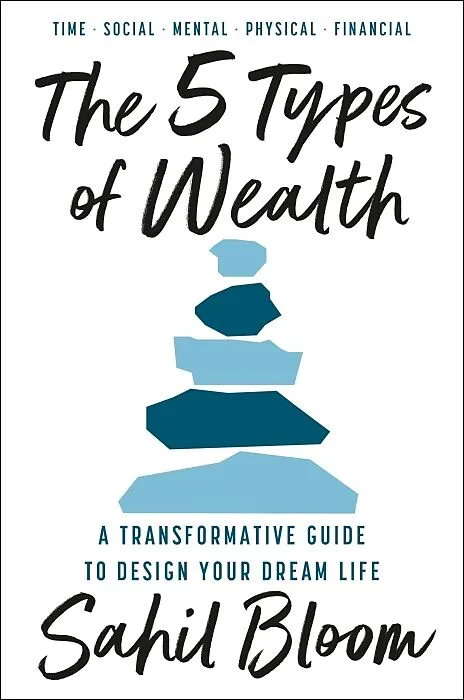
The 5 Types of Wealth
Beschreibung
A groundbreaking guide to rejecting the default path and designing your dream life--a life centered around Harsh truth: You’ve been lied to. Throughout your life, you’ve been slowly indoctrinated to believe that money is the only type of wealth. Th...Format auswählen
- Fester EinbandCHF 33.20

Wird oft zusammen gekauft
Andere Kunden kauften auch
Beschreibung
A groundbreaking guide to rejecting the default path and designing your dream life--a life centered around Harsh truth: You’ve been lied to. Throughout your life, you’ve been slowly indoctrinated to believe that money is the only type of wealth. The reality: Your wealthy life may involve money, but in the end, it will be defined by everything else. In Whether you are a recent college graduate, mid-life warrior, or a retiree, this playbook will unlock new levels of freedom and fulfillment, including: • Control over how you spend your time • Depth of connection with those around you • Clarity of purpose, presence, and decision making • Improved health and vitality • Simple pathways to financial independence Bloom’s unique blend of storytelling, questions, and actionable insights enables readers to make immediate positive change and build the joyful, balanced lives they’d previously only dreamed of.
Autorentext
Sahil Bloom
Klappentext
"Reject the default path, define your priorities, and achieve lasting happiness with this transformative guide to your dream life--a life centered around the five types of wealth"--
Zusammenfassung
*THE INSTANT NEW YORK TIMES AND USA TODAY* BESTSELLER
Reject the default path, define your priorities, and achieve lasting happiness with this transformative guide to your dream life—a life centered around the five types of wealth.
“A powerful call to action to think deeply about what lights you up—and a guide for how to build a life of meaning and purpose.”—Tim Cook, CEO of Apple**
Throughout your life, you’ve been slowly indoctrinated to believe that money is the only type of wealth. In reality, your wealthy life may involve money, but in the end, it will be defined by everything else.
After three years of research, personal experimentation, and thousands of interviews across the globe, Sahil Bloom has created a groundbreaking blueprint to build your life around five types of wealth: Time Wealth, Social Wealth, Mental Wealth, Physical Wealth, and Financial Wealth. A life of true fulfillment engages all five types—working dynamically, in concert across the seasons of your journey.
Through powerful storytelling, science-backed practices, and actionable insights, in The 5 Types of Wealth, you’ll learn:
• How to prioritize energy-creating tasks to unlock more time in your day
• How to create deeper bonds and build a powerful network
• How to engage your purpose to spark continuous growth
• How to maximize health and vitality through three simple principles
• How to achieve financial independence and define your version of “enough”
No matter where you are on your path—a recent graduate, new parent, midlife warrior, retiree, or anything in between—The 5 Types of Wealth will help you act on your priorities to create an instant positive impact in your daily life, make better decisions, and design the life you’ve always dreamed of.
Leseprobe
1.
One Thousand Years of Wisdom
What Advice Would You Give to Your Younger Self?
In late 2022, I asked this question to a dozen eighty- and ninety-year-olds as part of my annual birthday ritual. Every year, I conduct a new and (hopefully) interesting exercise that will push me to think and grow. In past years, I had written gratitude letters to all my family and friends, gone on a twelve-hour silent walk, and attempted my version of a misogi challenge (a Japanese ritual that involves doing something so challenging on one day that it has lasting benefits for the rest of the year).
But 2022 felt different.
The birth of my son in May had altered my relationship with the most fundamental reality: time. Observing the passage of time—both in his daily changes and in the juxtaposition of the newness of his life with the suddenly apparent maturity of my parents’ lives—had left me wrestling with its very nature.
I decided to explore the wisdom that time has to offer by talking with those who had experienced much more of it. My younger, naïve self had sought advice from the richest people he knew when charting his life course. My older, (slightly) more enlightened self would seek advice from the wisest people he knew to do the same. I wondered how older people would reflect on what they had learned. What did they regret? Where had they been led astray? What had brought them lasting joy and fulfillment? What detours had proven to be better than the original route? What had they known for sure that just wasn’t so?
What did they know at ninety that they wished they’d known at thirty?
I had these conversations with a diverse and fascinating group. A video call with my ninety-four-year-old grandmother in India, born a princess of a small kingdom prior to her family being run out by the British colonists, yielded this beautiful insight: “Never fear sadness, as it tends to sit right next to love.” An email from a ninety-eight-year-old family friend who had spent his career as a Hollywood writer yielded a personal favorite: “Never raise your voice, except at a ball game.” His eighty-eight-year-old wife, a former soap opera star whom he had met on set and fallen desperately in love with, added, “Find dear friends and celebrate them, for the richness of being human is in feeling loved and loving back.” In a text message, the eighty-year-old father of a close friend expressed regret over his body’s deterioration over the years: “Treat your body like a house you have to live in for another seventy years.” He added, “If something has a minor issue, repair it. Minor issues become major issues over time. This applies equally to love, friendships, health, and home.” A ninety-two-year-old who had recently lost his beloved wife of seventy years said something that brought tears to both of our eyes, his poetic ode to their evening practice: “Tell your partner you love them every night before falling asleep; someday you’ll find the other side of the bed empty and you’ll wish you could tell them.” My last conversation was with the ninety-four-year-old great-aunt of one of my dearest friends, and she delivered this beautiful closing insight: “When in doubt, love. The world can always use more love.”
The responses ranged from playful and witty (“Dance at weddings until your feet are sore”) to deeply moving (“Never let a good friendship atrophy”). Some were common tropes repeated over the years (“Always remind yourself that your track record for making it through your bad days is perfect”); others were original and thought-provoking (“Regret from inaction is always more painful than regret from action”). The wisdom I gathered was the product of 1,042 years of lived experience.
I hadn’t steered the dialogue in any way—I had simply posed the question and let each of them take it as they wished. They had independently focused on a variety of things: build lasting relationships, have fun, invest in your future mental and physical wellness, raise well-adjusted kids, and more. There was certainly immense value in what I heard but perhaps even more value in what I didn’t. In all the advice, insight, and wisdom shared, there was a notable omission.
No one mentioned money.
There’s Always Going to Be a Bigger Boat
Before we go any further, I want to make an important point: This book will not argue that money doesn’t matter, that you should give up your worldly possessions, go live as a monk in the Himalayas, and spend sixteen hours a day meditating in silence. If you want to do that, great, but…