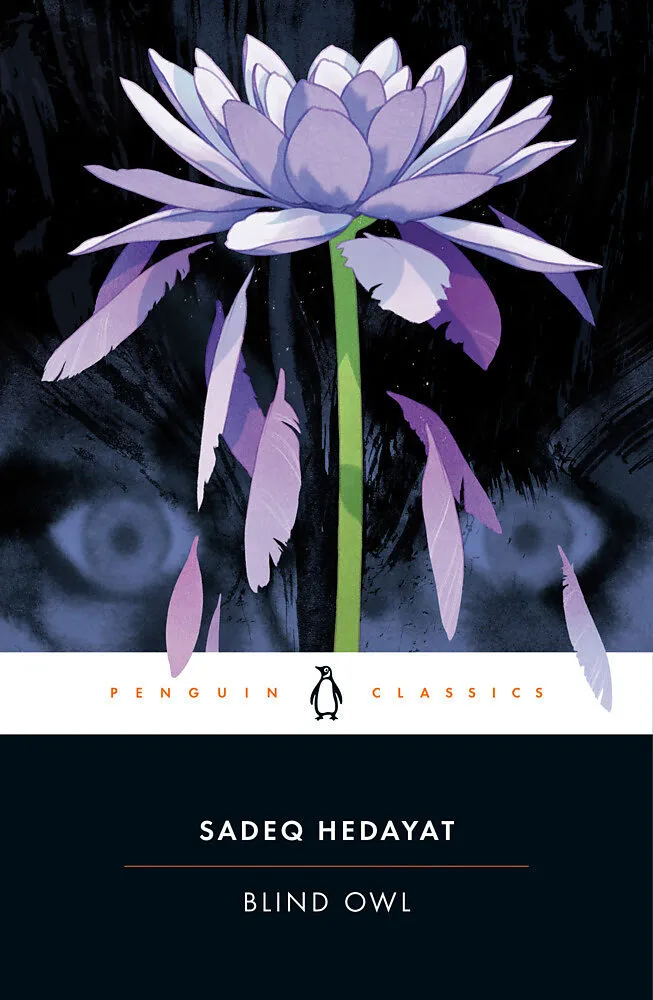
Blind Owl
Beschreibung
A new English translation of one of the most important, controversial Iranian novels of the twentieth century Winner of the 2023 Lois Roth Persian Translation Award A Penguin Classic Written by one of the greatest Iranian writers of the twentieth century, Blin...Format auswählen
- Kartonierter EinbandCHF 21.10

Wird oft zusammen gekauft
Andere Kunden kauften auch
Beschreibung
**A new English translation of one of the most important, controversial Iranian novels of the twentieth century
Winner of the 2023 Lois Roth Persian Translation Award
A Penguin Classic**
Written by one of the greatest Iranian writers of the twentieth century, Blind Owl tells a two-part story of an isolated narrator with a fragile relationship with time and reality. In first person, the narrator offers a string of hazy, dreamlike recollections fueled by opium and alcohol. He spends time painting the exact same scene on the covers of pen cases: an old man wearing a cape and turban sitting under a cypress tree, separated by a small stream from a beautiful woman in black who offers him a water lily. In a one-page transition, the reader finds the narrator covered in blood and waiting for the police to arrest him. In part two, readers glimpse the grim realities that unlock the mysteries of the first part. In a new translation that reflects Hedayat s conversational, confessional tone, Blind Owl joins the ranks of classics by Edgar Allan Poe, Franz Kafka, and Fyodor Dostoyevsky that explore the dark recesses of the human psyche.
Autorentext
Sadegh Hedayat (1903 - 1951) was an Iranian writer and translator. Born in Tehran to an aristocratic Iranian family, Hedayat - after a brief period studying in France - became a devotee of Western literature and an exponent of Iranian folklore and history. He is credited with introducing many modern European writers to Iran, translating works from now-seminal authors such as Franz Kafka, Anton Chekhov and Jean-Paul Sartre. His novel Blind Owl is considered to be the earliest modernist work written in Persian and one of the great Iranian novels of twentieth century. He later returned to France, where, in 1951, he died by suicide.
Klappentext
A new English translation of arguably the most famous twentieth century Persian novel
A Penguin Classic
Written by one of the greatest Iranian writers of the twentieth century, Blind Owl tells a three-part story of a pen-case painter, an isolated narrator with a fragile relationship with time and reality. In part one, he relates his own story in the first person, in a string of hazy, dreamlike recollections fueled by opium and alcohol. He spends time painting the covers of pen cases only to paint the exact same scene: an old man wearing a cape and turban sitting under a cypress tree, separated by a small stream from a beautiful woman in black who is bending down to offer him a waterlily. The novel transitions to a one-page part two where reader find the narrator covered in blood and waiting for the police to arrest him. Part three gives readers a glimpse into the grim realities that unlock the mysteries of the first part. Influenced by European writers like Kafka and de Maupassant, Hedayat also reveals a strong affinity with Dostoevsky. The protagonist of Blind Owl suffers from the brain fever characteristic of many of Dostoevsky's heroes such as Crime and Punishment's Raskolnikov. Both characters are also isolated in a tomb-like room, surrounded by deafening echoes of disturbed thoughts. Both are guilty of a horrible crime and paranoid of being arrested by the police at any moment. But whereas Raskolnikov has intellectually convinced himself that he must commit the crime for the greater good, the pen-case painter acts on instinct and seems oddly unaware of what he has done.