
IHR WARENKORB IST AKTUELL LEER.
Haben Sie noch nichts passendes gefunden? Stöbern Sie durch unser komplettes Sortiment.
Oder melden Sie sich an bzw. registrieren Sie sich.
- Kostenlose Lieferung
- Kauf auf Rechnung
- Ex Libris Tiefpreis
- Filiallieferung und 650+ Abholorte
- Rabatt-Bons als Club-Mitglied
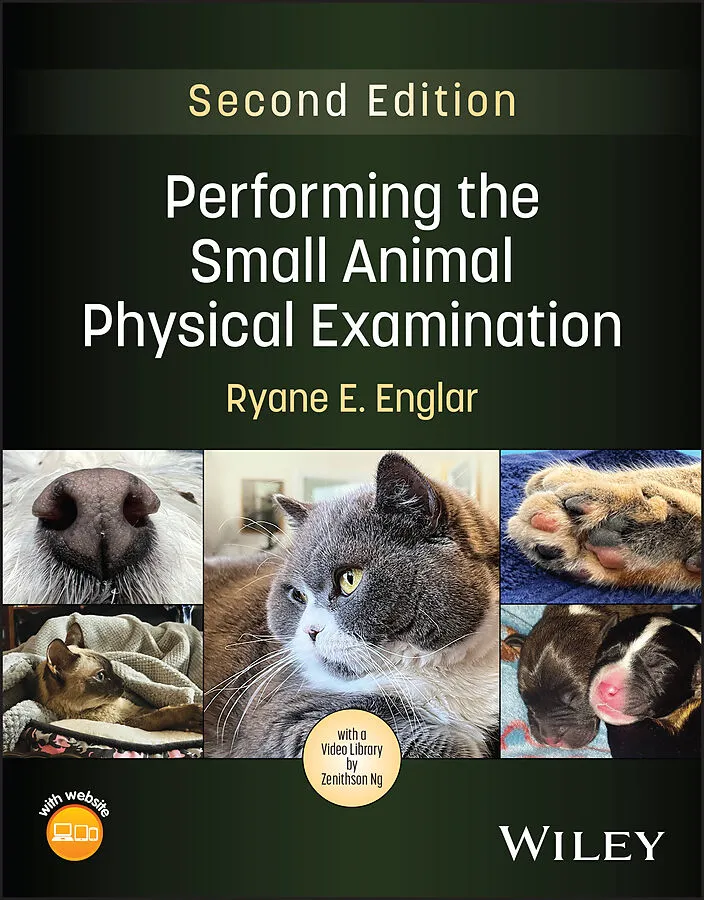
Performing the Small Animal Physical Examination
Beschreibung
Detailed, step-by-step guide to the physical examination of canine and feline patients, updated with video clips demonstrating key clinical signs, observational skills, and palpation techniques Performing the Small Animal Physical Examination, Second Edition ...
Format auswählen
- Fester EinbandCHF 162.00
- Fester EinbandCHF 158.00

Wird oft zusammen gekauft
Andere Kunden kauften auch
Beschreibung
Detailed, step-by-step guide to the physical examination of canine and feline patients, updated with video clips demonstrating key clinical signs, observational skills, and palpation techniques
Performing the Small Animal Physical Examination, Second Edition offers practical guidance on how to conduct a thorough clinical exam in dogs and cats. Taking a detailed step-by-step approach with accompanying photographs, the book is organized by body system with in-depth advice for examining each region. The overarching goal of the book is to help examiners feel confident evaluating clinical anatomy during every step of the process.
This new edition features an extensive library of video clips on a companion website to demonstrate important skills and techniques. In addition, featured updates to the Second Edition of Performing the Small Animal Physical Examination include:
- End of chapter summaries to highlight key takeaways
- More than 650 additional color photos that differentiate normal from abnormal clinical anatomy
- Tips for identifying fear, anxiety, and stress in patients and staging exams, and how to perform the hands-off (limited) physical examination
- Three new appendices with canine and feline reference intervals for temperature, pulse, and respiration (TPR), templates for documenting physical exam findings in classic SOAP note form, and tips for performing the comprehensive physical exam Performing the Small Animal Physical Examination is an essential reference for the entire veterinary team, especially veterinary students and recently qualified veterinarians.
Autorentext
**The author
**Ryane E. Englar, DVM, DABVP (Canine and Feline Practice), is Professor of Practice and Executive Director of Clinical and Professional Skills at the University of Arizona College of Veterinary Medicine in Oro Valley, Arizona, USA.
**The video content developer
**Zenithson Ng, DVM, DABVP (Canine and Feline Practice), is Clinical Professor of Small Animal Primary Care at the University of Tennessee College of Veterinary Medicine in Knoxville, Tennessee, USA.
Inhalt
Dedication v
About the Author xxii
About the Primary Author of Video Content xxiii
Preface xxiv
Acknowledgments xxvi
About the Companion Website xxviii
PART 1 Examining the Feline Patient
1 Setting the Stage: Feline-Friendly Practice 3
1.1 Challenges Faced in Feline Practice, 3
1.2 Finding Solutions to Increase Cat Visits: The Emergence of Feline-Friendly Handling Practices, 5
1.3 Key Principles of Feline-Friendly Practice, 7
1.4 The Role of Sound, 17
1.5 The Role of Tactile Stimulation, 19
1.6 The Role of Scent, 20
1.7 The Role of Advance Preparation, 22
1.8 Examination Room Etiquette: Accessing the Cat, 22
1.9 Recognizing Body Language, 25
1.10 Feline-Friendly Handling, 27
1.11 Other Feline Handling Tools, 32
1.12 The Hands-Off Physical Exam, 36
2 Patient Identification and Assessing the Big Picture: The Body, the Coat, and the Skin of the Cat 39
2.1 Forms of Identification, 39
2.2 The Role of Nutrition in Maintenance of Feline Health and Body Condition Score (BCS), 41
2.3 Assessing Hydration, 47
2.4 First Impressions and Coat Inspection, 50
2.5 Identifying Coat Colors and Coat Patterns, 53
2.6 Assessing Coat Quality, 60
2.7 Inspecting the Skin, 67
2.8 Inspecting the Claws, Paw Pads, and Toes, 74
2.9 Inspecting the Mammary Chains, 76
2.10 Additional Tools that Facilitate Inspection of the Skin, 78
3 Examining the Head of the Cat and Associated Vital Structures 82
3.1 Skull Shape, 82
3.2 Facial Symmetry, 86
3.3 The Eyes and Accessory Structures, 89
3.4 The Ears, 129
3.5 The Nose, 141
3.6 The Vibrissae, 145
3.7 Extraoral Examination, 145
3.8 The Intraoral Examination, 152
4 Examining the Endocrine and Lymphatic Systems of the Cat 169
4.1 Evaluating the Thyroid Gland, 169
4.2 Assessing the Lymphatic System, 174
5 Assessing the Cardiovascular and Respiratory Systems of the Cat 180
5.1 Introduction to the Thoracic Cavity, 180
5.2 The Feline Cardiac Patient, 181
5.3 Assessing the Cardiovascular System Prior to Auscultation, 185
5.4 Cardiothoracic Auscultation, 188
5.5 The Feline Respiratory Patient, 198
5.6 Assessing the Respiratory System Prior to Auscultation, 202
5.7 Understanding Normal Airway Sounds, 210
5.8 Auscultating the Airway, 211
5.9 Understanding Adventitious Airway Sounds, 211
5.10 Using Airway Sounds to Corroborate Percussive Findings, 212
5.11 Purring as an Obstruction to Auscultation, 212
5.12 Veterinary Wearables for Vital Signs, 212
5.13 Other In-House Support for Vital Signs, 214
6 Examining the Abdominal Cavity and External Genitalia of Cats, with a Brief Introduction to Pregnancy and Neonatal Norms 218
6.1 Overview of the Digestive Tract as it Pertains to Presenting Complaints, 218
6.2 The Esophagus, 229
6.3 Visual Inspection of the Abdomen, 229
6.4 Superficial Palpation and Auscultation of the Abdomen, 230
6.5 Deep Palpation of the Abdomen, 234Contents xiii
6.6 The Upper Urinary Tract, 249
6.7 The Lower Urinary Tract, 254
6.8 The Male Reproductive Tract, 263
6.9 The Female Reproductive Tract, 269
6.10 Neonates, 276
7 Examining the Musculoskeletal System of the Cat 284
7.1 Muscle Condition Score (MCS), 284
7.2 The Skeleton as a Whole, 287
7.3 Key Components of the Axial Skeleton to Appreciate on Physical Examination, 288
7.4 Key Components of the Appendicular Skeleton to Appreciate on Physical Examination, 291xiv Contents
7.5 A Deeper Dive into the Appendicular Skeleton: The Forelimb, 304
7.6 A Deeper Dive into the Appendicular Skeleton: The Pelvic (Hind) Limb, 311
8 Evaluating the Nervous System of the Cat 325
8.1 Assessing Mentation and Differentiating it from Behavior, 325
8.2 Assessing Posture and Abnormal Head Positions, 328
8.3 Assessing Coordination, Gait, and Voluntary Movement: Paresis Versus Paralysis, 333
8.4 Assessing Postural Reactions, 335
8.5 Dyskinesias, 338
8.6 Evaluating Spinal Reflexes, 338
8.7 Assessing Cranial Nerves, 341
8.8 Assessing Nociception, 346
PART 2 Examining the Canine Patient
9 Setting the Stage: Dog-Friendly Practices 353
9.1 The Human-Animal Bond and Addressing the Clinical Challenge of When that Bond Breaks, 353
9.2 The Low-Stress Handling Movement, 355
9.3 Fear Free Certification, 357
9.4 The Dog-Friendly Clinic Scheme, 357
9.5 A Fresh Start: Building Dog-Friendly Practices into the Clinic, 358
9.6 Considerations About White-Coat Syndrome, 360
9.7 The Role of Scent, 361
9.8 The Role of Advance Preparation, 363
9.9 Examination Room Etiquette: Setting the Tone for Initial Veterinary Interactions with the Dog, 363
9.10 Recognizing Body Language, 365
9.11 Creative Approaches to Challenging Interactions with Canine Patients, 371
9.12 Other Canine Handling Tools, 372
9.13 The Hands-Off Canine Physical Exam, 376
10 Patient Identification and Assessing the Big Picture: The Body, the Coat, and the Skin of the Dog 379
10.1 Forms of Identification, 379
10.2 Body Condition Scoring, 380
10.3 Assessing Hydration, 388
10.4 Patient Signalment, Breed Designation, and Breed-Specific Legislation (BSL), 390
10.5 First Impressions and Coat Inspection, 391
10.6 Identifying Coat Colors and Coat Patterns, 393
10.7 Assessing Coat Quality, 399
10.8 Inspecting the Skin, 404
10.9 Primary Skin Lesions in Canine Patients, 408
10.10 Secondary Skin Lesions in Canine Patients, 412
10.11 Miscellaneous Skin Lesions, 414
10.12 Hyperkeratosis, 416
10.13 Skin Folds, 416
10.14 Nails and Paw Pads, 419
10.15 Skin Incisions, 423
10.16 Mammary Glands, 423
11 Examining the Head of the Dog and Associated Vital Structures 427
11.1 Skull Shape and Associated Welfare Concerns, 427
11.2 Facial Symmetry, 434
11.3 The Eyes and Accessory Stru…