
IHR WARENKORB IST AKTUELL LEER.
Haben Sie noch nichts passendes gefunden? Stöbern Sie durch unser komplettes Sortiment.
Oder melden Sie sich an bzw. registrieren Sie sich.
- Kostenlose Lieferung
- Kauf auf Rechnung
- Ex Libris Tiefpreis
- Filiallieferung und 650+ Abholorte
- Rabatt-Bons als Club-Mitglied
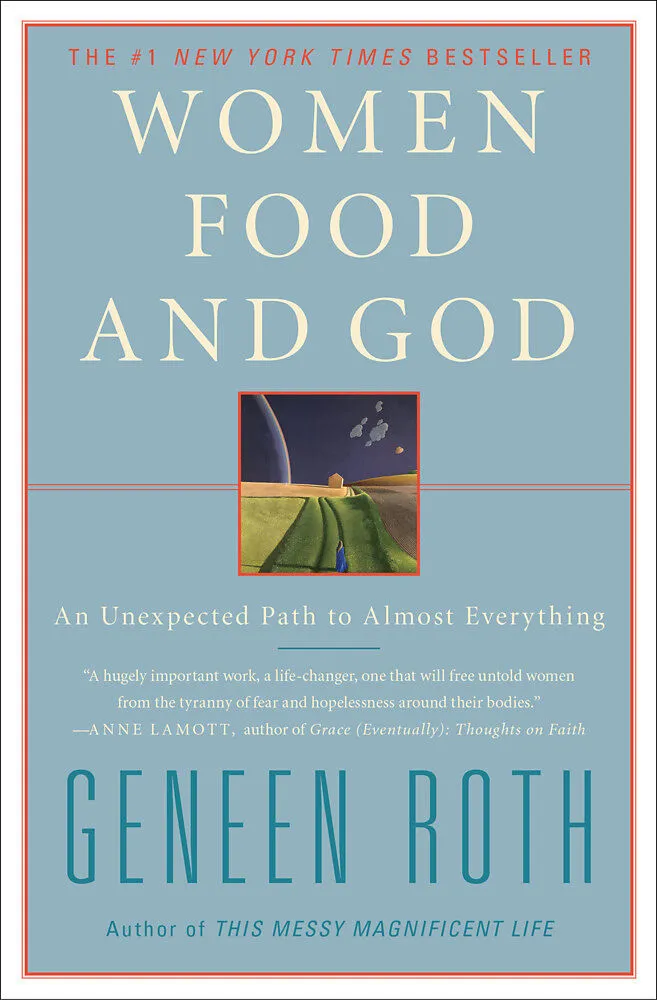
Women Food and God
Beschreibung
No matter how sophisticated or wealthy or broke or enlightened you are, how you eat tells all. Informationen zum Autor Geneen Roth is the author of ten books! including the New York Times bestsellers When Food Is Love ! Lost and Found ! and Women Food and God ...Format auswählen
- Kartonierter EinbandCHF 22.30
Wird oft zusammen gekauft
Andere Kunden kauften auch
Beschreibung
No matter how sophisticated or wealthy or broke or enlightened you are, how you eat tells all.
Informationen zum Autor Geneen Roth is the author of ten books! including the New York Times bestsellers When Food Is Love ! Lost and Found ! and Women Food and God ! as well as The Craggy Hole in My Heart and the Cat Who Fixed It . She has been speaking! teaching groundbreaking workshops! and offering retreats for over thirty years and has appeared on numerous national shows! including The Oprah Winfrey Show ! 20/20 ! the Today show! Good Morning America ! and The View . For more information about her work! please visit GeneenRoth.com Klappentext The bestselling author of "When Food Is Love" helps overeaters find the underlying reasons for using food as an emotional buffer. Roth also provides seven basic guidelines for eating and other therapeutic self-help tools. Zusammenfassung Embraced by Oprah! the #1 New York Times bestselling guide that explains the connection between eating and emotion from Geneen Rothnoted authority on mindful eating. No matter how sophisticated or wealthy or broke or enlightened you are! how you eat tells all. After three decades of studying! teaching! and writing about our compulsions with food! bestselling author Geneen Roth adds a powerful new dimension to her work in Women Food and God . She begins with her most basic concept: the way you eat is inseparable from your core beliefs about being alive. Your relationship with food is an exact mirror of your feelings about love! fear! anger! meaning! transformation and! yes! even God. A timeless and seminal work! Women Food and God shows how going beyond the food and the feelings takes you deeper into realms of spirit and soulto the bright center of your own life.
Autorentext
Geneen Roth is the author of ten books, including the New York Times bestsellers When Food Is Love, Lost and Found, and Women Food and God, as well as The Craggy Hole in My Heart and the Cat Who Fixed It. She has been speaking, teaching groundbreaking workshops, and offering retreats for over thirty years and has appeared on numerous national shows, including The Oprah Winfrey Show, 20/20, the Today show, Good Morning America, and The View. For more information about her work, please visit GeneenRoth.com
Klappentext
The way you eat is inseparable from your core beliefs about being alive. No matter how sophisticated or wise or enlightened you believe you are, how you eat tells all. The world is on your plate. When you begin to understand what prompts you to use food as a way to numb or distract yourself, the process takes you deeper into realms of spirit and to the bright center of your own life. Rather than getting rid of or instantly changing your conflicted relationship with food, Women Food and God is about welcoming what is already here, and contacting the part of yourself that is already whole divinity itself.
Zusammenfassung
Embraced by Oprah, the #1 New York Times bestselling guide that explains the connection between eating and emotion from Geneen Roth—noted authority on mindful eating.
No matter how sophisticated or wealthy or broke or enlightened you are, how you eat tells all.
After three decades of studying, teaching, and writing about our compulsions with food, bestselling author Geneen Roth adds a powerful new dimension to her work in Women Food and God. She begins with her most basic concept: the way you eat is inseparable from your core beliefs about being alive. Your relationship with food is an exact mirror of your feelings about love, fear, anger, meaning, transformation and, yes, even God.
A timeless and seminal work, Women Food and God shows how going beyond the food and the feelings takes you deeper into realms of spirit and soul—to the bright center of your own life.
Leseprobe
Women Food and God PROLOGUE
The World on Our Plates
Eighty hungry women are sitting in a circle with bowls of cold tomato vegetable soup; they are glowering at me, furious. It is lunchtime on the third day of the retreat. During these daily eating meditations each woman approaches the buffet table, lines up to be served, takes her seat in the circle, and waits until we all sit down to eat. The process is agonizingly slow-fifteen minutes or so-especially if food is your drug of choice.
Although the retreat is going well and many people here have had life-changing insights, at this moment no one cares. They don't care about stunning breakthroughs or having ninety pounds to lose or whether God exists. They want to be left alone with their food, period. They want me to take my fancy ideas about the link between spirituality and compulsive eating and go away. It is one thing to be conscious about food in the meditation hall, and another to be sitting in the dining room, refraining from taking even one bite until the entire group has been served. Also, I've asked that silence be observed, so there are no frissons of laughter or chatty how-are-yous to distract attention from hunger or lack of it, since not everyone is hungry.
The retreat is based on a philosophy I've developed over the past thirty years: that our relationship to food is an exact microcosm of our relationship to life itself. I believe we are walking, talking expressions of our deepest convictions; everything we believe about love, fear, transformation and God is revealed in how, when and what we eat. When we inhale Reese's peanut butter cups when we are not hungry, we are acting out an entire world of hope or hopelessness, of faith or doubt, of love or fear. If we are interested in finding out what we actually believe-not what we think, not what we say, but what our souls are convinced is the bottom-line truth about life and afterlife-we need go no further than the food on our plates. God is not just in the details; God is also in the muffins, the fried sweet potatoes and the tomato vegetable soup. God-however we define him or her-is on our plates.
Which is why eighty women and I are sitting in a circle with cold vegetable soup. I look around the room. Photographs of flowers-intricate close-ups of a red dahlia, the golden edges of a white rose-are hung on the wall. A bouquet of peach gladiolas is splayed so extravagantly on a side table that it looks as if it is prancing at the prom in its finery. Then I begin noticing the faces of my students. Marjorie, a psychologist in her fifties, is playing with her spoon and doesn't meet my eyes. A twenty-year-old gymnast named Patricia is wearing black tights and a lemon-colored tank top. Her tiny body sits like an origami bird on her cushion-delicate, perfectly erect. On her plate is a handful of sprouts and a fistful of salad, that's all. I look to my right and see Anna, a surgeon from Mexico City, biting one of her lips and tapping her fork on the plate impatiently. There are three pieces of bread with thick slabs of butter on her plate, a bit of salad, no soup, no vegetables. Her food says, "Fuck you, Geneen, I don't have to play this ridiculous game. Watch me binge the second I get the chance." I nod at her as if to say, "Yup, I understand how hard it is to slow down." I take a quick glance around the rest of the room, at faces, at plates. The air is thick with resistance to this eating meditation, and since I am the one who makes the rules, I am also the one at whom the fury is directed. Getting between people and their food is like standing in front of a speeding train; the act of being stopped in compulsive behavior is no