
IHR WARENKORB IST AKTUELL LEER.
Haben Sie noch nichts passendes gefunden? Stöbern Sie durch unser komplettes Sortiment.
Oder melden Sie sich an bzw. registrieren Sie sich.
- Kostenlose Lieferung
- Kauf auf Rechnung
- Ex Libris Tiefpreis
- Filiallieferung und 650+ Abholorte
- Rabatt-Bons als Club-Mitglied
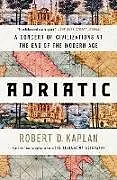
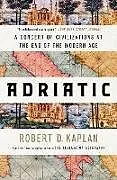
Adriatic
Beschreibung
Informationen zum Autor Robert D. Kaplan is the bestselling author of twenty-four books on foreign affairs and travel translated into many languages, includingChina Whisperers, Waste Land, The Loom of Time, The Tragic Mind, The Revenge of Geography, Asias Caul...Format auswählen
- Kartonierter EinbandCHF 17.25
- Fester EinbandCHF 26.10

Wird oft zusammen gekauft
Andere Kunden kauften auch
Beschreibung
Informationen zum Autor Robert D. Kaplan is the bestselling author of twenty-four books on foreign affairs and travel translated into many languages, includingChina Whisperers, Waste Land, The Loom of Time, The Tragic Mind, The Revenge of Geography, Asias Cauldron, The Coming Anarchy,andBalkan Ghosts.For three decades he reported on foreign affairs forThe Atlantic.He is a distinguished senior lecturer at the University of Texas at Austin. He was a member of the Pentagons Defense Policy Board and the USNavys Executive Panel.Foreign Policymagazine twice named him one of the worlds Top 100 Global Thinkers. Klappentext [An] elegantly layered exploration of Europe's past and future . . . a multifaceted masterpiece. The Wall Street Journal A lovely, personal journey around the Adriatic, in which Robert Kaplan revisits places and peoples he first encountered decades ago.Peter Frankopan, author of The Silk Roads ONE OF THE BEST BOOKS OF THE YEAR: The New Yorker In this insightful travelogue, Robert D. Kaplan, geopolitical expert and bestselling author of Balkan Ghosts and The Revenge of Geography, turns his perceptive eye to a region that for centuries has been a meeting point of cultures, trade, and ideas. He undertakes a journey around the Adriatic Sea, through Italy, Slovenia, Croatia, Montenegro, Albania, and Greece, to reveal that far more is happening in the region than most news stories let on. Often overlooked, the Adriatic is in fact at the center of the most significant challenges of our time, including the rise of populist politics, the refugee crisis, and battles over the control of energy resources. And it is once again becoming a global trading hub that will determine Europe's relationship with the rest of the world as China and Russia compete for dominance in its ports. Kaplan explores how the region has changed over his three decades of observing it as a journalist. He finds that to understand both the historical and contemporary Adriatic is to gain a window on the future of Europe as a whole, and he unearths a stark truth: The era of populism is an epiphenomenona symptom of the age of nationalism coming to an end. Instead, the continent is returning to alignments of the early modern era as distinctions between East and West meet and break down within the Adriatic countries and ultimately throughout Europe. With a brilliant cross-pollination of history, literature, art, architecture, and current events, in Adriatic, Kaplan demonstrates that this unique region that exists at the intersection of civilizations holds revelatory truths for the future of global affairs. Leseprobe Never does Europe's pagan inheritance seem so sure of itself as at the entrance to this Christian church. The piazza, polished and lonely in the downpour, is dramatically reduced by a line of other buildings directly at my back. The longer I look, the more extraordinary the church becomes. Between the massive columns mounted on a high stylobate ledge are blind arcades guarding, in turn, a confidently deep triangular pediment. And within that triangular pediment is a lintel that anchors the whole facade. Form and proportion take over. In classical architecture, beauty is mathematical and equates with perfection. Passing through the door, rather than a warm and embracing candlelit darkness, there is a shivery, pounding silence and the perpetual late afternoon light of an overcast day. I feel like ducking under the clouds. The loud echo of another pair of footsteps every few minutes reinforces my loneliness. A yawning marble floor overwhelms the meager rows of benches approaching the apse (rebuilt after the World War II bombing). The longer I sit here, the more vast and spare the marble becomes. The iron cold begins its assault. Instead of experiencing the splendor of egg tempera and oil, I am aware of...
Klappentext
**“[An] elegantly layered exploration of Europe’s past and future . . . a multifaceted masterpiece.”—*The Wall Street Journal
“A lovely, personal journey around the Adriatic, in which Robert Kaplan revisits places and peoples he first encountered decades ago.”—Peter Frankopan, author of The Silk Roads*
ONE OF THE BEST BOOKS OF THE YEAR: The New Yorker
In this insightful travelogue, Robert D. Kaplan, geopolitical expert and bestselling author of Balkan Ghosts and The Revenge of Geography, turns his perceptive eye to a region that for centuries has been a meeting point of cultures, trade, and ideas. He undertakes a journey around the Adriatic Sea, through Italy, Slovenia, Croatia, Montenegro, Albania, and Greece, to reveal that far more is happening in the region than most news stories let on. Often overlooked, the Adriatic is in fact at the center of the most significant challenges of our time, including the rise of populist politics, the refugee crisis, and battles over the control of energy resources. And it is once again becoming a global trading hub that will determine Europe’s relationship with the rest of the world as China and Russia compete for dominance in its ports.
Kaplan explores how the region has changed over his three decades of observing it as a journalist. He finds that to understand both the historical and contemporary Adriatic is to gain a window on the future of Europe as a whole, and he unearths a stark truth: The era of populism is an epiphenomenon—a symptom of the age of nationalism coming to an end. Instead, the continent is returning to alignments of the early modern era as distinctions between East and West meet and break down within the Adriatic countries and ultimately throughout Europe.
With a brilliant cross-pollination of history, literature, art, architecture, and current events, in Adriatic, Kaplan demonstrates that this unique region that exists at the intersection of civilizations holds revelatory truths for the future of global affairs.
Leseprobe
Never does Europe’s pagan inheritance seem so sure of itself as at the entrance to this Christian church. The piazza, polished and lonely in the downpour, is dramatically reduced by a line of other buildings directly at my back. The longer I look, the more extraordinary the church becomes. Between the massive columns mounted on a high stylobate ledge are blind arcades guarding, in turn, a confidently deep triangular pediment. And within that triangular pediment is a lintel that anchors the whole facade. Form and proportion take over. In classical architecture, beauty is mathematical and equates with perfection.
Passing through the door, rather than a warm and embracing candlelit darkness, there is a shivery, pounding silence and the perpetual late afternoon light of an overcast day. I feel like ducking under the clouds. The loud echo of another pair of footsteps every few minutes reinforces my loneliness. A yawning marble floor overwhelms the meager rows of benches approaching the apse (rebuilt after the World War II bombing). The longer I sit here, the more vast and spare the marble becomes. The iron cold begins its assault.
Instead of experiencing the splendor of egg tempera and oil, I am aware of the white limestone clarity of an archaeological ruin: one reconstructed by the early Renaissance. Rather than color, force and volume emanate from the flattened and compressed reliefs. The feast of limestone sculptures in the side chapels takes possession of me. Because of the limestone, these crowded and intricate figures, despite their energy, expressiveness, and flowing movement, achieve an abstract and theoretical intensity. This is art that makes you think as well as feel. I am not seeing just the art—I am seeing a path back to antiquity by way of late medieval city-states, in which communal survival left little room for conventional morality. For beauty can often emerge from the celebration of power, making it a register of Europe&…