
IHR WARENKORB IST AKTUELL LEER.
Haben Sie noch nichts passendes gefunden? Stöbern Sie durch unser komplettes Sortiment.
Oder melden Sie sich an bzw. registrieren Sie sich.
- Kostenlose Lieferung
- Kauf auf Rechnung
- Ex Libris Tiefpreis
- Filiallieferung und 650+ Abholorte
- Rabatt-Bons als Club-Mitglied
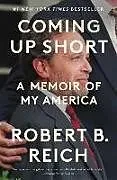
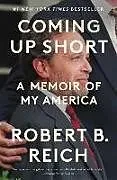
Coming Up Short
Beschreibung
Autorentext ROBERT B. REICH recently retired as Chancellor’s Professor of Public Policy at the University of California, Berkeley. He has served in three presidential administrations, Republican and Democrat, as Secretary of Labor under Bill Clinton, and...Format auswählen
- Poche format BCHF 23.50
Wird oft zusammen gekauft
Andere Kunden kauften auch
Beschreibung
Autorentext
ROBERT B. REICH recently retired as Chancellor’s Professor of Public Policy at the University of California, Berkeley. He has served in three presidential administrations, Republican and Democrat, as Secretary of Labor under Bill Clinton, and has written eighteen books, including The Work of Nations (translated into twenty-two languages) and the bestsellers The Common Good, Saving Capitalism, and Locked in the Cabinet. His articles have appeared in The New Yorker, The Atlantic, The New York Times, The Washington Post, and The Wall Street Journal. He is a columnist for Newsweek and The Guardian, and writes a daily newsletter at https://robertreich.substack.com/. He is co-creator of the award-winning film Inequality for All and the Netflix original Saving Capitalism, and co-founder of Inequality Media. He lives in Berkeley.
Klappentext
**#1 NEW YORK TIMES BESTSELLER • From political economist, cabinet member, beloved professor, media presence, and bestselling author of Saving Capitalism and The Common Good, a deeply felt, compelling memoir of growing up in a baby-boom America that made progress in certain areas, fell short in so many important ways, and still has lots of work to do
"Important and galvanizing.” —Senator Bernie Sanders
"Essential reading for understanding this moment in American history.” —Molly Jong-Fast, New York Times bestselling author of How to Lose Your Mother**
A thought-provoking, principled, clear-eyed chronicle of the culture, politics, and economic choices that have landed us where we are today—with irresponsible economic bullies and corporations with immense wealth and lobbying power on top, demagogues on the rise, and increasing inequality fueling anger and hatred across the country.
Nine months after World War II, Robert Reich was born into a united America with a bright future—which went unrealized for so many as big money took over our democracy. His encounter with school bullies on account of his height—4'11" as an adult—set him on a determined path to spend his life fighting American bullies of every sort. He recounts the death of a friend in the civil rights movement; his political coming of age witnessing the Berkeley free speech movement; working for Bobby Kennedy and Senator Eugene McCarthy; experiencing a country torn apart by the Vietnam War; meeting Hillary Rodham in college, Bill Clinton at Oxford, and Clarence Thomas at Yale Law. He details his friendship with John Kenneth Galbraith during his time teaching at Harvard, and subsequent friendships with Bernie Sanders and Ted Kennedy; and his efforts as labor secretary for Clinton and economic advisor to Barack Obama. Ultimately, Reich asks: What did his generation accomplish? Did they make America better, more inclusive, more tolerant? Did they strengthen democracy? Or did they come up short?
Reich hardly abandons us to despair over a doomed democracy. With characteristic spirit and humor, he lays out how we can reclaim a sense of community and a democratic capitalism based on the American ideals we still have the power to salvage.
Leseprobe
Starters
My father, Ed Reich, was a medic during the Second World War. Fred Trump, Donald’s father, built barracks for Navy personnel. George W.’s father, George H.W., was a Navy pilot. Bill Blythe, who fathered Bill Clinton, repaired ships and tanks. At the end of the war, Ed, Fred, George, and Bill returned to Mildred Reich, Mary Anne Trump, Barbara Bush, and Virginia Blythe, respectively, to stoke what would be known as the postwar baby boom. More babies were born in 1946 than in any other year in American history to that time—3.4 million of us little darlings, 20 percent more than the year before. We were born into an America that felt proud of its war victory but also exhausted by the experience.
Surprising almost everyone, the nation emerged economically stronger. Almost all Americans had been put to work during the war and almost every factory was run at full capacity, ending the Great Depression more effectively than any of the many programs that President Franklin D. Roosevelt launched.
We were born to men and women whose futures were now filled with more possibility than they had ever known. They had survived the economic cataclysm of the Great Depression. They had been part of a nation that confronted and ended fascism. They had witnessed (and were soon to learn more about) the horrific results of genocide. Because they faced this together, it’s likely they felt more connected to other Americans of their generation than has any generation before or since. The GI Bill offered many a means to a college degree. The soaring postwar economy offered bountiful opportunity.
Black Americans and women, though, were still second-class citizens. Black men had served in segregated units during the war. Millions of women, like my mother, had taken factory jobs, but with the end of the war many of their jobs were eliminated and new ones were filled by blue-collar men. The rights of Black Americans and women, in the economy and our political system, would make for a central struggle in postwar America.
The war and the Depression decade before it had obliterated the fortunes of the Gilded Age. Industrial robber barons, monopolists, titans of Wall Street, and heirs to vast wealth lost almost everything they had accumulated or had it taxed away. The vast playing field of the American economy was greatly leveled, opening the way to the largest middle class the world had ever seen.
When I was a toddler, Ed had saved just enough money to rent a store on Lackawanna Avenue in Scranton and buy the only things he had learned to sell before the war—women’s dresses, blouses, and stockings. The shop was called Beverly’s, named after his sister. His customers were the wives of factory workers. Most were now homemakers who helped save what they could of their husband’s paychecks and spent the rest.
When Donald was a toddler, Fred was a real estate developer in the Bronx who acquired a mortgage-servicing company with access to the titles of many properties nearing foreclosure, which he bought cheaply and sold at a profit.
When little George W. was a toddler, George H.W. was in the oil business in Texas.
Bill’s father had been a traveling salesman who died in an automobile accident three months before Bill was born. Four years after Bill’s birth, Virginia married Roger Clinton, co-owner of an automobile dealership.
What did Donald, George, Bill, I, and millions of other boomers do for the next seventy-nine years? Did we make America better, more inclusive, more tolerant? Did we strengthen American democracy?
The beginning of an answer might be found in It’s a Wonderful Life, Frank Capra’s ode to America, released to the public on December 21, 1946, the same year little Donald, George, Bill, and I were released on America.
It’s a Wonderful Life
If you don’t already know it, the movie’s central conflict is between Mr. Potter (played by Lionel Barrymore) and George Bailey (Jimmy Stewart). Potter is a greedy, cruel banker, in whose Social Darwinist view of America people compete with one another for scarce resources. Those who succeed deserve to win because they’ve outrun everyone else in that competitive race.
George is the generous, honorable head of Bedford Falls’ building-and-loan company, the one entity standing in the way of Potter’s total domination of the town.
After the death of George’s father, who founded the building-and-loan company, Potter—who sits on the bank’s board—seeks to dissolve it. Potter…