
IHR WARENKORB IST AKTUELL LEER.
Haben Sie noch nichts passendes gefunden? Stöbern Sie durch unser komplettes Sortiment.
Oder melden Sie sich an bzw. registrieren Sie sich.
- Kostenlose Lieferung
- Kauf auf Rechnung
- Ex Libris Tiefpreis
- Filiallieferung und 650+ Abholorte
- Rabatt-Bons als Club-Mitglied
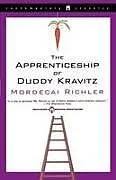
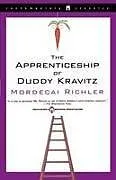
The Apprenticeship Of Duddy Kravitz
Beschreibung
Alfred Kazin It comes off brilliantly. Autorentext Mordecai Richler was born in Montreal in 1931. Among his most successful novels are The Apprenticeship of Duddy Kravitz (made into an acclaimed film starring Richard Dreyfuss), St. Urbain's Horseman, Solomon G...Format auswählen
- Kartonierter EinbandCHF 28.40

Wird oft zusammen gekauft
Andere Kunden kauften auch
Beschreibung
Alfred Kazin It comes off brilliantly.
Autorentext
Mordecai Richler was born in Montreal in 1931. Among his most successful novels are The Apprenticeship of Duddy Kravitz (made into an acclaimed film starring Richard Dreyfuss), St. Urbain's Horseman, Solomon Gursky Was Here, and Barney's Version. He divides his time between Canada (Montreal and Lake Memphremagog) and London.
Klappentext
From Mordecai Richler, one of our greatest satirists, comes one of literature's most delightful characters, Duddy Kravitz -- in a novel that belongs in the pantheon of seminal twentieth century books.Duddy -- the third generation of a Jewish immigrant family in Montreal -- is combative, amoral, scheming, a liar, and totally hilarious. From his street days tormenting teachers at the Jewish academy to his time hustling four jobs at once in a grand plan to "be somebody, " Duddy learns about living -- and the lesson is an outrageous roller-coaster ride through the human comedy. As Richler turns his blistering commentary on love, money, and politics, THE APPRENTICESHIP OF DUDDY KRAVITZ becomes a lesson for us all...in laughter and in life.
Leseprobe
CHAPTER ONE
What with his wife so ill these past few weeks and the prospect of three more days of teaching before the weekend break, Mr. MacPherson felt unusually glum. He trudged along St. Dominique Street to within sight of the school. Because it was early and he wanted to avoid the Masters' Room, he paused for an instant in the snow. When he had first seen that building some twenty years ago, he had shut his eyes and asked that his work as a schoolmaster be blessed with charity and achievement. He had daydreamed about the potential heritage of his later years, former students -- now lawyers or doctors or M.P.'s -- gathering in his parlor on Sunday evenings to lament the lost hockey games of twenty years ago. But for some time now Mr. MacPherson had felt nothing about the building. He couldn't describe it or tell you how to get there any more than he could forget that Shelley's Ode to the West Wind was on page 89 of Highroads to Reading, the central idea being the poet's dedication to a free and natural spirit.
Since he had first come to the school in 1927 -- a tight-lipped young Scot with a red fussy face -- many of Mr. MacPherson's earliest students had, indeed, gone on to make their reputations in medicine, politics, and business, but there were no nostalgic gatherings at his home. The sons of his first students would not attend Fletcher's Field High School, either. For making their way in the world his first students had also graduated from the streets of cold-water flats that surrounded F.F.H.S. to buy their own duplexes in the tree-lined streets of Outremont. In fact, that morning, as Mr. MacPherson hesitated on a scalp of glittering white ice, there were already three Gentiles in the school (that is to say, Anglo-Saxons; for Ukrainians, Poles, and Yugoslavs, with funny names and customs of their own, did not count as true Gentiles), and ten years hence F.F.H.S. would no longer be the Jewish high school. At the time, however, most Jewish boys in Montreal who had been to high school had gone to F.F.H.S. and, consequently, had studied history out of The World's Progress (Revised) with John Alexander MacPherson; and every old graduate had an anecdote to tell about him.
Mr. MacPherson's most celebrated former student -- Jerry Dingleman, the Boy Wonder -- liked to tell the one about the merit cards.
Once Mr. MacPherson tried giving out merit cards to his students for such virtues as exceptionally high examination results, good behavior, and neat writing. Each month he collected the cards and gave the boy who had earned the most of them the afternoon off from school. But at the end of the third month it was Jerry Dingleman who stood up to claim and, on demand, produce a suspiciously high stack of soiled merit cards. Now Mr. MacPherson knew that he had never awarded Dingleman, a most inattentive and badly behaved boy, one single card. On the threat of a week's suspension from school Dingleman confessed that he had won all the cards playing nearest-to-the-wall with the other boys in the toilet, and so the system ended.
Many of the other anecdotes, especially the more recent (and vastly exaggerated) ones, had to do with Mr. MacPherson's drinking habits. It was true that by 1947 he was a heavy drinker, though he was certainly not, as they say, a problem. He was still much slimmer than his first students, but his face seemed more bitingly angry and the curly black hair had grayed. Mr. MacPherson was more inclined to stoop, but, as on his first day at F.F.H.S., he still wore the brim of his battered little gray fedora turned down, rain or shine, spoke with a thick Scots accent, and had yet to strap a boy.
If Mr. MacPherson had altered somewhat with the years, the school building had remained exactly the same.
Fletcher's Field High School was five stories high, like the Style-Kraft building that flanked it on one side and the tenement on the other. Across the street at Stein's the bare-chested bakers worked with the door open even during the winter and, at school recess time, were fond of winking at the boys outside and wiping the sweat from under their armpits with an unbaked kimel bread before tossing it into the oven. Except for the cracked asphalt courtyard to the right of the school, separating it from the tenement, there was little to distinguish this building from the others.
There were, of course, the students.
At that moment several of the older boys leaned against Felder's frosted window. The biggest sign in Felder's tiny tenement store, DON'T BUY FROM THE GOYISHE CHIP MAN -- FELDER IS YOUR FRIEND FOR LIFE, was no longer needed. The last time the chip man, an intrepid French-Canadian, had passed with his horse and wagon the boys, led by Duddy Kravitz, had run him off the street.
Duddy Kravitz was a small, narrow-chested boy of fifteen with a thin face. His black eyes were ringed with dark circles and his pale, bony cheeks were crisscrossed with scratches, as he shaved twice daily in his attempt to encourage a beard. Duddy was president of Room 41.
"Hey, guess what," Samuels shouted, running up to the boys. "Mr. Horner's not coming back. He's got triple pneumonia or something. So we're getting a new class master, Mac, of all people."
"Mac'll be a breeze," Duddy said, lighting a cigarette. "He never straps or nothing. Mac believes in per-suasion."
Only Hersh failed to laugh. "We're lucky to get Mac," he said, "so let's not take advantage like."
Mr. MacPherson didn't want to cross the street in order to chastise the smokers, but the boys had clearly seen him.
"Weasel! Can the cigs. Here comes Mac himself."
"I should care," Duddy said.
"Kravitz! Put out that cigarette immediately."
"My father is aware that I smoke, sir."
"Then he's not fit to bring up a boy."
"He's my father, sir."
"Would you like to stay on in this school, Kravitz?"
"Yes, sir. But he's my father, sir."
"Then let's not have any more of your cheekiness. Put out that cigarette immediately."
"Yes, sir."
No sooner had Mr. MacPherson turned his back on them than Duddy began to hum "Coming Through the Rye." But, turning sharply into the boys' side of the courtyard, Mr. MacPherson guessed that he was far enough away to pretend that he hadn't heard.
"Boy, are you ever lucky," Hersh said. "Horner would've strapped you ten on each."
Mr. MacPherson began to climb the icy concrete steps that led into the school. When he was on the last step a high-pitched shriek rose among the students. He felt a plunk on the back of his neck as the snowball smashed to smithereens just above his coat collar. Particles of snow began to trace a chilling pattern down his back. Mr. MacPherson whi…