
IHR WARENKORB IST AKTUELL LEER.
Haben Sie noch nichts passendes gefunden? Stöbern Sie durch unser komplettes Sortiment.
Oder melden Sie sich an bzw. registrieren Sie sich.
- Kostenlose Lieferung
- Kauf auf Rechnung
- Ex Libris Tiefpreis
- Filiallieferung und 650+ Abholorte
- Rabatt-Bons als Club-Mitglied
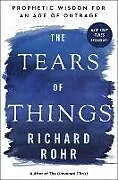
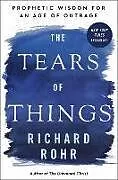
The Tears of Things
Beschreibung
In his first major work since How do we live compassionately in a time of violence and despair? What can we do with our private disappointments and the anger we feel in such an unjust world? In his most personal book yet, Richard Rohr turns to the writings of ...Format auswählen
- Fester EinbandCHF 28.40

Wird oft zusammen gekauft
Andere Kunden kauften auch
Beschreibung
In his first major work since How do we live compassionately in a time of violence and despair? What can we do with our private disappointments and the anger we feel in such an unjust world? In his most personal book yet, Richard Rohr turns to the writings of the Jewish prophets, revealing how some of the lesser-read books of the Bible offer us a crucial path forward today. The prophets’ writings reflect the full spectrum of human maturity. In almost every case, their initial rage and their accusatory words evolve into a profound pathos and lamentation about our shared human condition and the world’s suffering. Through astute critiques of culture and institutions, and their journey from anger to sadness, and ultimately compassion, the prophets exemplify what Rohr calls “sacred criticism”--a distinct approach to confronting evil and injustice that acknowledges the wholeness of history, the interconnectedness of every living being, and the reality of a divine and universal love. In this, they set the stage for Jesus, who follows this identical pattern. Drawing on a century of biblical scholarship and written in the warm, pastoral voice that has endeared Rohr to millions, <The Tears of Things< breathes new life into ancient wisdom. It paves a path of enlightenment for anyone seeking a compassionate way of living in a hurting world.
Autorentext
Richard Rohr
Klappentext
**NEW YORK TIMES BESTSELLER • In his first major work since The Universal Christ, one of our most prominent spiritual voices offers a wholehearted and hope-filled model for the world today, grounded in the timeless wisdom of the Hebrew prophets.
“Richard Rohr is one of the great Christian spiritual masters of our time. Of any time.”—James Martin, SJ, author of Come Forth**
How do we live compassionately in a time of violence and despair? What can we do with our private disappointments and the anger we feel in such an unjust world? In his most personal book yet, Richard Rohr turns to the writings of the Jewish prophets, revealing how some of the lesser-read books of the Bible offer us a crucial path forward today.
The prophets’ writings reflect the full spectrum of human maturity. In almost every case, their initial rage and their accusatory words evolve into a profound pathos and lamentation about our shared human condition and the world’s suffering. Through astute critiques of culture and institutions, and their journey from anger to sadness, and ultimately compassion, the prophets exemplify what Rohr calls “sacred criticism”—a distinct approach to confronting evil and injustice that acknowledges the wholeness of history, the interconnectedness of every living being, and the reality of a divine and universal love. In this, they set the stage for Jesus, who follows this identical pattern.
Drawing on a century of biblical scholarship and written in the warm, pastoral voice that has endeared Rohr to millions, The Tears of Things breathes new life into ancient wisdom. It paves a path of enlightenment for anyone seeking a compassionate way of living in a hurting world.
Leseprobe
Chapter 1
The Tears of Things
In the first book of Virgil’s Aeneid (line 462), the hero Aeneas gazes at a mural that depicts a battle of the Trojan War and the deaths of his friends and countrymen. He is so moved with sorrow at the tragedy of it all that he speaks of “the tears of things” (lacrimae rerum). As Seamus Heaney translates it, “There are tears at the heart of things”—at the heart of our human experience. Only tears can move both Aeneas and us beyond our deserved and paralyzing anger at evil, death, and injustice without losing the deep legitimacy of that anger.
This phrase “the tears of things” has continued to be quoted and requoted in many contexts over the centuries. You can find it on war memorials, in the work of poets, in the music of Franz Liszt, and in Pope Francis’s recent encyclical letter “Fratelli Tutti.” (I myself remember it because of a haggard, bent-over Latin teacher who would often enter the classroom moaning “Lacrimae rerum” several times before he began quizzing us. It might have been comic if it weren’t so tragic!)
Because the phrase has no prepositions in Latin, it allows two meanings at the same time: Virgil seems to be saying that there are both “tears in things” and “tears for things.” And each of these tears leads to the other. Though translators often feel compelled to choose one or the other meaning, I believe the poet implies it is both.
There is an inherent sadness and tragedy in almost all situations: in our relationships, our mistakes, our failures large and small, and even our victories. We must develop a very real empathy for this reality, knowing that we cannot fully fix things, entirely change them, or make them to our liking. This “way of tears,” and the deep vulnerability that it expresses, is opposed to our normal ways of seeking control through willpower, commandment, force, retribution, and violence. Instead, we begin in a state of empathy with and for things and people and events, which just might be the opposite of judgmentalism. It is hard to be on the attack when you are weeping.
Prophets and mystics recognize what most of us do not—that all things have tears and all things deserve tears. They know that grief and sadness are doorways to understanding life in a non-egocentric way. Tears come from both awe and empathy, and they generate even deeper awe and deeper empathy in us. The sympathy that wells up when we weep can be life-changing, too, drawing us out of ourselves and into communion with those around us. This is continuously exemplified in the writings that we have received from the Hebrew prophets.
After a lifetime of counseling and retreat work—not to mention my own spiritual direction—I have become convinced that most anger comes, first of all, from a place of deep sadness. Years ago, when I led male initiation rites at Ghost Ranch, New Mexico, I would watch men’s jaws drop open and their faces turn pale when I said this. Life disappoints and hurts all of us, and the majority of people, particularly men, do not know how to react—except as a child does, with anger and rage. It is a defensive, reactionary, and totally understandable posture, but it often goes nowhere, and only creates cycles of bitterness and retaliation.
Over time, the Hebrew prophets came to see this profound connection between sadness and anger. It was what converted them to a level of truth-telling that is deeply and forever true—which is the real sign of a prophet. They first needed to get angry at injustices, oppression, and war. Anger can be deserved and even virtuous, particularly when it motivates us to begin seeking a necessary change. But only until sunset, Paul says (Ephesians 4:26). If we stay with our rage and resentment too long, we will righteously and unthinkingly pass on the hurt in ever new directions, and we injure our own souls in ways we don’t even recognize. This is killing our postmodern world.
In this way, the realization that all things have tears, and most things deserve tears, might even be defined as a form of salvation: from ourselves and from our illusions. The prophets knew and taught and modeled that anger must first be recognized, allowed—even loved!—as an expression of the deep, normally inaccessible sadness that all of us carry. Even Jesus, our enlightened one, “sobbed” over the whole city of Jerusalem (Luke 19:41) and at the death of his friend Lazarus (John 11:35). In his final “sadness . . . and great distress” in the Garden of Gethsemane (Matthew 26:37, jb), &ldquo…