
IHR WARENKORB IST AKTUELL LEER.
Haben Sie noch nichts passendes gefunden? Stöbern Sie durch unser komplettes Sortiment.
Oder melden Sie sich an bzw. registrieren Sie sich.
- Kostenlose Lieferung
- Kauf auf Rechnung
- Ex Libris Tiefpreis
- Filiallieferung und 650+ Abholorte
- Rabatt-Bons als Club-Mitglied
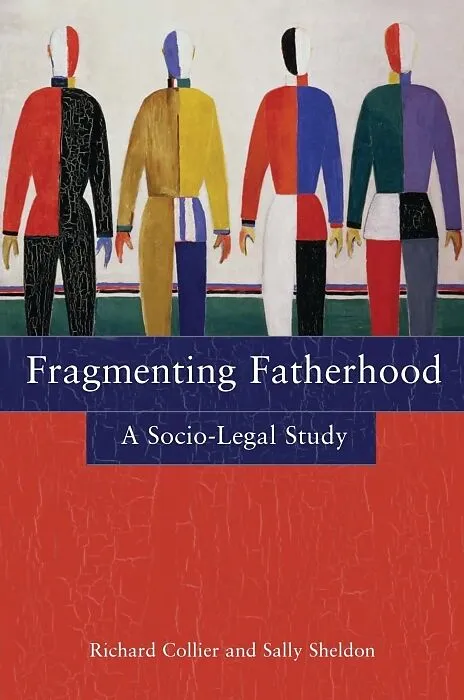
Fragmenting Fatherhood
Beschreibung
Zusatztext Richard Collier and Sally Sheldon... are to be congratulated.... the main chapters contain many useful, thought-provoking ideas to illuminate the authors' central thesis of the rapidly evolving social institutions of modern fatherhood and its implic...Format auswählen
- Kartonierter Einband (Kt)CHF 85.60
Wird oft zusammen gekauft
Andere Kunden kauften auch
Beschreibung
Zusatztext Richard Collier and Sally Sheldon... are to be congratulated.... the main chapters contain many useful, thought-provoking ideas to illuminate the authors' central thesis of the rapidly evolving social institutions of modern fatherhood and its implications for family law. Informationen zum Autor Richard Collier is Professor of Law at the University of Newcastle.Sally Sheldon is a Professor of Law at the University of Kent. Klappentext Discussion of the legal status, responsibilities, and rights of men who are fathers whether they are married or unmarried, cohabiting or separated, biological or 'social' in nature has a long history. In recent years, however, western societies have witnessed a heightening of concern about whether families need fathers and, if so, what kinds of fathers these should be. A debate about the future of fatherhood has become central to a range of conversations about the changing family, parenting, and society. Law has served an important role in these discussions, serving as a focal point for broader political frustrations, playing a central role in mediating disputes, and operating as a significant symbolic 'authorized discourse' which provides an official, state-sanctioned account of the scope of paternal rights and responsibilities. Fragmenting Fatherhood provides the first sustained engagement with the way that fatherhood has been understood, constructed, and regulated within English Zusammenfassung Debates about the future of fatherhood have been central to a range of conversations about changing family forms, parenting and society. Law has served an important, yet often neglected, role in these discussions, serving as an important focal point for broader political frustrations, playing a central role in mediating disputes, and operating as a significant, symbolic, state-sanctioned account of the scope of paternal rights and responsibilities. Fragmenting Fatherhood provides the first sustained engagement with the way that fatherhood has been understood, constructed and regulated within English law. Drawing on a range of disparate legal provisions and material from diverse disciplines, it sketches the major contours of the figure of the father as drawn in law and social policy, tracing shifts in legal and broader understandings of what it means to be a 'father'and what rights and obligations should accrue to that status. In thematically linked chapters cutting across substantive areas of law, the book locates fatherhood as a key site of contestation within broader political debates regarding the family and gender equality. Multiple visions of fatherhood, evolving unevenly over time across diverse areas of law, emerge from this analysis. Fatherhood is revealed as an essentially fragmented status and one which is intertwined in complex ways with the legal, cultural and political contexts in which discourses of parenthood are produced. Fragmenting Fatherhood provides an important and unique resource, speaking to debates about fatherhood across a range of fields including law and legal theory, sociology, gender studies, social policy, marriage and the family, women's studies and gender studies. Inhaltsverzeichnis 1. Introducing Fatherhood and Law2. Fatherhood and 'Natural' Reproduction3. Fatherhood and Assisted Reproduction4. Marital Fatherhood5. Post-Separation Fatherhood6. Unmarried Fatherhood7. Fragmenting Fatherhood...
Richard Collier and Sally Sheldon... are to be congratulated. ... the main chapters contain many useful, thought-provoking ideas to illuminate the authors' central thesis of the rapidly evolving social institutions of modern fatherhood and its implications for family law.
Autorentext
Richard Collier is Professor of Law at the University of Newcastle.
Sally Sheldon is a Professor of Law at the University of Kent.
Klappentext
Debates about the future of fatherhood have been central to a range of conversations about changing family forms, parenting and society. Law has served an important, yet often neglected, role in these discussions, serving as an important focal point for broader political frustrations, playing a central role in mediating disputes, and operating as a significant, symbolic, state-sanctioned account of the scope of paternal rights and responsibilities. Fragmenting Fatherhood provides the first sustained engagement with the way that fatherhood has been understood, constructed and regulated within English law. Drawing on a range of disparate legal provisions and material from diverse disciplines, it sketches the major contours of the figure of the father as drawn in law and social policy, tracing shifts in legal and broader understandings of what it means to be a 'father'and what rights and obligations should accrue to that status. In thematically linked chapters cutting across substantive areas of law, the book locates fatherhood as a key site of contestation within broader political debates regarding the family and gender equality. Multiple visions of fatherhood, evolving unevenly over time across diverse areas of law, emerge from this analysis. Fatherhood is revealed as an essentially fragmented status and one which is intertwined in complex ways with the legal, cultural and political contexts in which discourses of parenthood are produced.
Fragmenting Fatherhood provides an important and unique resource, speaking to debates about fatherhood across a range of fields including law and legal theory, sociology, gender studies, social policy, marriage and the family, women's studies and gender studies.
Zusammenfassung
This book provides the first sustained engagement with the way that fatherhood has been understood, constructed and regulated within English law.
Inhalt
- Introducing Fatherhood and Law
- Fatherhood and 'Natural' Reproduction
- Fatherhood and Assisted Reproduction
- Marital Fatherhood
- Post-Separation Fatherhood
- Unmarried Fatherhood
- Fragmenting Fatherhood