
IHR WARENKORB IST AKTUELL LEER.
Haben Sie noch nichts passendes gefunden? Stöbern Sie durch unser komplettes Sortiment.
Oder melden Sie sich an bzw. registrieren Sie sich.
- Kostenlose Lieferung
- Kauf auf Rechnung
- Ex Libris Tiefpreis
- Filiallieferung und 650+ Abholorte
- Rabatt-Bons als Club-Mitglied
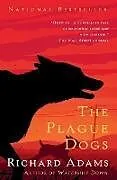
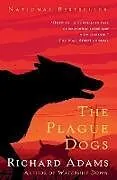
The Plague Dogs
Beschreibung
Zusatztext Gripping. . . . A compelling tale of emotional force and high suspense. The Wall Street Journal Adams takes us to places where no author author has taken us. The Washington Post Engrossing. . . . Bears the abundant mark of sheer genius. The Plain De...Format auswählen
- Kartonierter EinbandCHF 24.80

Wird oft zusammen gekauft
Andere Kunden kauften auch
Beschreibung
Zusatztext Gripping. . . . A compelling tale of emotional force and high suspense. The Wall Street Journal Adams takes us to places where no author author has taken us. The Washington Post Engrossing. . . . Bears the abundant mark of sheer genius. The Plain Dealer Better and more powerful than Watership Down . Providence Journal Marvelous. . . . An excellent drama. Newsweek Excellent. New York Daily News Adams writes brilliantly about animals. . . . When these dogs are on the move! they compel us to follow! trotting along the narrative path on all the legs we have. Saturday Review The genuine and moving feeling for animals that dominated Watership Down emerges here in intense dramatic form. Adams engenders such compassion! such desperate! urgent sympathy for 'the plague dogs!' that the reader yearns for a happy ending. Publishers Weekly Informationen zum Autor Richard Adams Klappentext This modern-day classic is an unforgettable tale of fantasy and adventure, a powerful exploration of the limits of human cruelty and kindness. A gripping ... compelling tale of emotional force and high suspense ( The Wall Street Journal ). Rowf, a shaggy black mongrel, and Snitter, a black-and-white fox terrier, are among dozens of animals being cruelly held in a testing facility in North West England. When one of the handlers fails to close Rowf's cage properly, the two dogs make a daring escape into the English countryside, where they befriend a red fox who helps them survive in the wild. But as rumors circulate that the dogs may have been the test subjects for biological weapons and could be carrying a terrible plague, they soon find themselves targets of a great dog hunt. Local farmers, politicians, scientists, and even the military join in the search to track them down.Fit 1 Friday the 15th October The water in the metal tank slopped sideways and a treacly ripple ran along the edge, reached the corner and died away. Under the electric lights the broken surface was faceted as a cracked mirror, a watery harlequin's coat of tilting planes and lozenges in movement, one moment dull as stone and the next glittering like scalpels. Here and there, where during the past two hours the water had been fouled, gilded streaks of urine and floating, spawn-like bubbles of saliva rocked more turgidly, in a way suggestiveif anyone present had been receptive to such suggestionof an illusion that this was not water, but perhaps some thicker fluid, such as those concoctions of jam and stale beer which are hung up in glass jars to drown wasps, or the dark puddles splashed through by hooves and gum-boots on the concrete floors of Lakeland cattle sheds. Mr. Powell, his note-pad ready in hand, leant across the flanged and overhanging edge of the tank, wiped his glasses on his sleeve and looked down the two or three feet to the contents below. I think it's packing in, chief, he said. Oh, no, wait a jiffy. He paused, drew back the cuff of his white coat to avoid another, though weak, splash and then bent over the water once more. No, I was right first timeit is going. D'you want it out now? When it definitely sinks and stops moving, answered Dr. Boycott, without looking up from the papers on the table. Although there was in the room no draught or air movement whatever, he had placed the two graphs and the log sheet on top of one another and was using the heavy stop-watch as a paperweight to ensure that they remained where he intended them to remain. I thought I'd made it clear the other day, he added, in a level, polite tone, what the precise moment of removal should be. But you don't want it to drown, do you? asked Mr. Powell, a shade of anxiety creeping into his voice. If it <...
ldquo;Gripping. . . . A compelling tale of emotional force and high suspense.” —The Wall Street Journal
“Adams takes us to places where no author author has taken us.” —The Washington Post
“Engrossing. . . . Bears the abundant mark of sheer genius.” —The Plain Dealer
“Better and more powerful than Watership Down.” —Providence Journal
“Marvelous. . . . An excellent drama.” —*Newsweek
*
“Excellent.” —*New York Daily News
*
“Adams writes brilliantly about animals. . . . When these dogs are on the move, they compel us to follow, trotting along the narrative path on all the legs we have.” —*Saturday Review
*
“The genuine and moving feeling for animals that dominated Watership Down emerges here in intense dramatic form. Adams engenders such compassion, such desperate, urgent sympathy for ‘the plague dogs,’ that the reader yearns for a happy ending.” —Publishers Weekly
Autorentext
Richard Adams
Klappentext
This modern-day classic is an unforgettable tale of fantasy and adventure, a powerful exploration of the limits of human cruelty and kindness. A “gripping ... compelling tale of emotional force and high suspense” (The Wall Street Journal).
Rowf, a shaggy black mongrel, and Snitter, a black-and-white fox terrier, are among dozens of animals being cruelly held in a testing facility in North West England. When one of the handlers fails to close Rowf’s cage properly, the two dogs make a daring escape into the English countryside, where they befriend a red fox who helps them survive in the wild.
But as rumors circulate that the dogs may have been the test subjects for biological weapons and could be carrying a terrible plague, they soon find themselves targets of a great dog hunt. Local farmers, politicians, scientists, and even the military join in the search to track them down.
Leseprobe
Fit 1
Friday the 15th October
The water in the metal tank slopped sideways and a treacly ripple ran along the edge, reached the corner and died away. Under the electric lights the broken surface was faceted as a cracked mirror, a watery harlequin’s coat of tilting planes and lozenges in movement, one moment dull as stone and the next glittering like scalpels. Here and there, where during the past two hours the water had been fouled, gilded streaks of urine and floating, spawn-like bubbles of saliva rocked more turgidly, in a way suggestive—if anyone present had been receptive to such suggestion—of an illusion that this was not water, but perhaps some thicker fluid, such as those concoctions of jam and stale beer which are hung up in glass jars to drown wasps, or the dark puddles splashed through by hooves and gum-boots on the concrete floors of Lakeland cattle sheds.
Mr. Powell, his note-pad ready in hand, leant across the flanged and overhanging edge of the tank, wiped his glasses on his sleeve and looked down the two or three feet to the contents below.
“I think it’s packing in, chief,” he said. “Oh, no, wait a jiffy.” He paused, drew back the cuff of his white coat to avoid another, though weak, splash and then bent over the water once more. “No, I was right first time—it is going. D’you want it out now?”
“When it definitely sinks and stops moving,” answered Dr. Boycott, without looking up from the papers on the table. Although there was in the room no draught or air movement whatever, he had placed the two graphs and the log sheet on top of one another and was using the heavy stop-watch as a paperweight to ensure that they remained where he intended them to remain. “I thought I’d made it clear the other day,” he added, in a level, polite tone, “what the precise moment of removal should be.”
“But you don’t want it to drown, do you?” asked Mr. Powell, a shade of anxiety creeping into his voice. “If it—”
“No!” interjected Dr. Boycott quickly, as…