Beschreibung
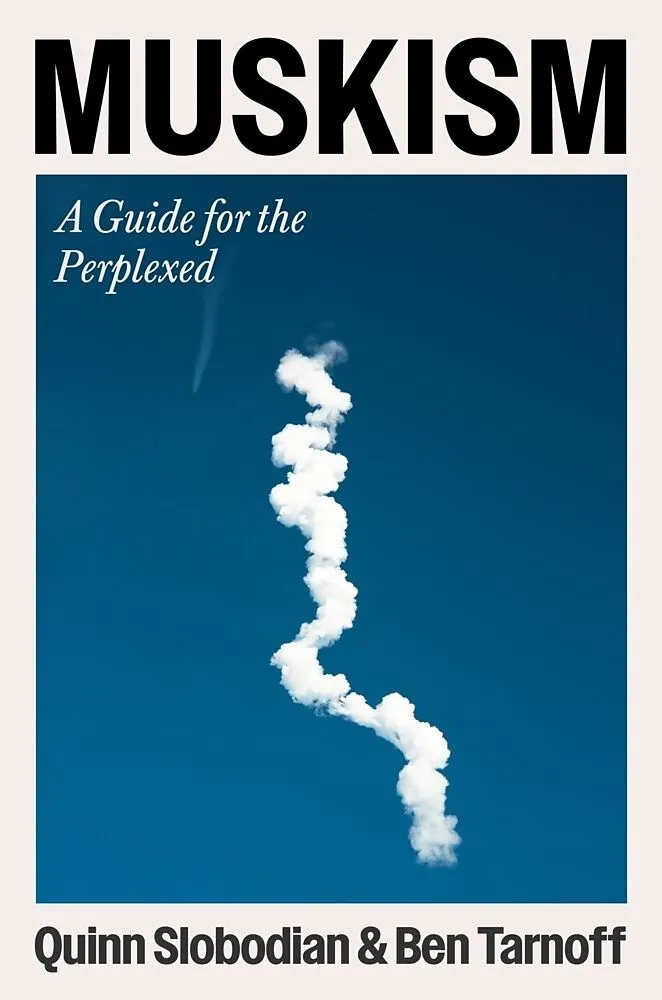
A map of the worlds that made Elon Musk, and a guide to the ideas behind his attempt to redesign reality. After Henry Ford published his autobiography in 1922, his name became an "-ism." Out of one man emerged an ideology that defined capitalism in the twentie...A map of the worlds that made Elon Musk, and a guide to the ideas behind his attempt to redesign reality. After Henry Ford published his autobiography in 1922, his name became an "-ism." Out of one man emerged an ideology that defined capitalism in the twentieth century. Now, a century later, Elon Musk has similarly captured the popular imagination. He has been hailed as a messianic genius and dismissed as a reckless buffoon. But, as Quinn Slobodian and Ben Tarnoff argue, Musk is much more: an avatar for an entire worldview. Muskism is an operating system for the twenty-first century. It envisions governments run like startups, where software programmed by a small clique implements policy automatically and at scale. In both politics and industry, human labor evaporates, and power flows to those who own the machines. Muskism presents itself as a modernizing, forward-looking project, but it wants to harden differences of an enduring and old-fashioned sort. It is futurism in the service of hierarchy. To understand the world that Musk aims to build, Slobodian and Tarnoff believe, we must first understand the worlds that built Musk. The passages of Musk''s life--from South Africa to Silicon Valley, SpaceX to DOGE; his obsession with science fiction, anime and demographics; his addiction to social media and gaming--help us see the origins and dynamics of Muskism. But Muskism isn''t just about Musk. It''s a blueprint for a new global order. As governments and corporations adopt Musk''s playbook, coming to terms with Muskism will become essential for deciphering the forces shaping our future.
Autorentext
Quinn Slobodian is professor of international history at Boston University, and the author of several books including Globalists, Crack-Up Capitalism and Hayek's Bastards. The last won the National Book Critics Circle award for Criticism.
Klappentext
“An illuminating book that examines where Mr. Musk came from and the episodes that shaped his worldview. In many ways it is the inverse of Walter Isaacson’s authorised biography. . . . the authors provide a portrait of his psyche that is arguably more revealing. . . . the resulting book is, you might say, a Musk-read.” –The Economist
"Muskism cuts straight to the core of the man and the moment, explaining how a mercurial, conspiracy-prone, vicious bastard can inspire loyalty and billions in other peoples' money, and the nightmare world he wants to build with those billions." –Cory Doctorow, author of Enshittification
An Economist Best Book of 2026 • A New Yorker Most Anticipated Book of the Year • A Financial Times Most Anticipated Nonfiction Book of the Year • A Kirkus Most Anticipated Nonfiction Book of Spring 2026• A Literary Hub Most Anticipated Book of the Year
A pyrotechnic examination of Elon Musk as a symptom and avatar of our postliberal age
Everyone’s got an Elon take. He’s a messiah. A menace; a genius; a clown. The verdicts differ, but they share one theme: they treat him as an individual.
Muskism argues otherwise. Elon Musk isn’t a glitch in the system—he is the system. His worldview promises sovereignty through technology: plug in, power up, and become self-reliant. But the more you connect, the more he owns you.
If Fordism defined the capitalism of the twentieth century, Muskism may define the twenty-first. Fordism helped build the welfare state. Musk undoes it. He thrives on dependence while preaching freedom. His cars run on subsidies; his satellites run the battlefield; his social networks train the AI that trains us.
Muskism sells itself as the future but entrenches age-old hierarchies. It offers autonomy for some and exclusion for others. It’s pro-natalist but anti-immigrant, futurist but reactionary. It speaks of humanity but warns against empathy.
Quinn Slobodian and Ben Tarnoff cut through the hype and the hate to reveal what Musk really represents: a new political economy, where to be “free” means to serve a Technoking. Muskism isn’t about the man. It’s about the machine that made him—and the world he’s making next. To read Muskism is to understand the machinery that made the man, and the world he’s making next, based on his philosophy of power in the spheres of: