
IHR WARENKORB IST AKTUELL LEER.
Haben Sie noch nichts passendes gefunden? Stöbern Sie durch unser komplettes Sortiment.
Oder melden Sie sich an bzw. registrieren Sie sich.
- Kostenlose Lieferung
- Kauf auf Rechnung
- Ex Libris Tiefpreis
- Filiallieferung und 650+ Abholorte
- Rabatt-Bons als Club-Mitglied
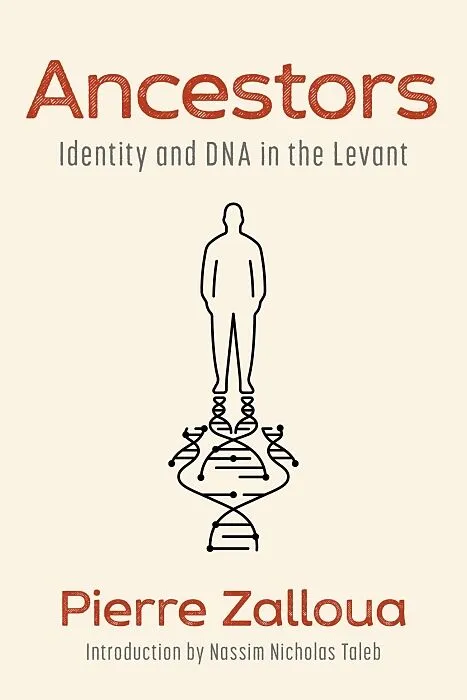
Ancestors
Beschreibung
From a leading authority on population genetics, a deep dive into ancestry and origins;in the Middle East that interrogates culture, identity, migration, and ethnicity to reframe what it means to be indigenous to any land. In recent years, as companies like 23...Format auswählen
- Fester EinbandCHF 34.60

Wird oft zusammen gekauft
Andere Kunden kauften auch
Beschreibung
From a leading authority on population genetics, a deep dive into ancestry and origins;in the Middle East that interrogates culture, identity, migration, and ethnicity to reframe what it means to be indigenous to any land. In recent years, as companies like 23andMe and Ancestry.com have made genetic testing available across the globe, it has become relatively simple to find out where your ancestors came from. But acclaimed geneticist Pierre Zalloua believes that these test results have led to a dangerous oversimplification of what one’s genetic heritage means. People have conflated genetic ancestry with other ways of defining themselves such as “origin,” “ethnicity,” and even “race” but give no attention to the complexities that underlie these concepts. Nowhere is this interplay more important, and more controversial, than in the Levant--an ancient region known as one of the cradles of civilization, and which now includes modern-day Palestine, Israel, Jordan, Lebanon, Syria, and parts of Turkey.;Born in Lebanon, Zalloua grew up surrounded by people for whom this question of identity was one of life or death importance. In Building on years of research, Zalloua tells a history of the Levant through the framework of genetics that spans from 100,000 years ago, when humans first left Africa, to the 21st century and modern nation-states. World-shifting and accessible, <Ancestors< will reshape the way you think about where our culture really comes from.
Autorentext
Pierre Zalloua is a population geneticist focusing primarily on the eastern Mediterranean. He has a Ph.D. in genetics from the University of California, Davis. He has held academic positions at Harvard University, Khalifa University, the American University of Beirut, and the Lebanese American University and has authored or co-authored more than 180 peer-reviewed manuscripts. He is featured in a documentary film about his work produced by National Geographic entitled Quest for the Phoenicians.
Klappentext
"In recent years, as companies like 23andMe and Ancestry.com have made genetic testing available across the globe, it has become relatively simple to find out where your ancestors came from. But acclaimed geneticist Pierre Zalloua believes that these test results have led to a dangerous oversimplification of what one's genetic heritage means. People have conflated genetic ancestry with other ways of defining themselves such as "origin," "ethnicity," and even "race" but give no attention to the complexities that underlie these concepts. Nowhere is this interplay more important, and more controversial, than in the Levant-an ancient region known as one of the cradles of civilization, and which now includes modern-day Palestine, Israel, Jordan, Lebanon, Syria, and parts of Turkey. Born in Lebanon, Zalloua grew up surrounded by people for whom this question of identity was one of life or death importance. In Ancestors, Zalloua uses the Levant to grapple with what being indigenous really means. He finds that DNA does not determine a culture or an ethnicity, but instead, one must look to their own history to understand their identity. Building on years of research, Zalloua tells a history of the Levant through the framework of genetics that spans from 100,000 years ago, when humans first left Africa, to the 21st century and modern nation-states. World-shifting and accessible, Ancestors will reshape the way you think about where our culture really comes from"--
Zusammenfassung
An eye-opening investigation into ancestry and origins in the Middle East that synthesizes thousands of years of genetic history in the region to question what it means to be indigenous to any land
“Ancestors transcends geography to launch an eye-opening inquiry into the relationship of genetics and identity. It’s a transformational read for us all.”—Jason Roberts, author of Every Living Thing and A Sense of the World
In recent years, genetic testing has become easily available to consumers across the globe, making it relatively simple to find out where your ancestors came from. But what do these test results actually tell us about ourselves?
In Ancestors, Pierre Zalloua, a leading authority on population genetics, argues that these test results have led to a dangerous oversimplification of what one’s genetic heritage means. Genetic ancestry has become conflated with anthropological categories such as “origin,” “ethnicity,” and even “race” in spite of the complexities that underlie these concepts. And nowhere is this interplay more important and more controversial, Zalloua writes, than in the Levant—an ancient region known as one of the cradles of civilization and that now includes Palestine, Israel, Jordan, Lebanon, Syria, and parts of Turkey.
Born in Lebanon, Zalloua grew up surrounded by people for whom the question of identity was a matter of life or death. Building on years of research, he tells a rich and compelling history of the Levant through the framework of genetics that spans from one hundred thousand years ago, when humans first left Africa, to the twenty-first century and modern nation-states.
A timely, paradigm-shifting investigation into ancestry and origins in the Middle East, Ancestors ultimately reframes what it means to be indigenous to any land—urging us to reshape how we think about home, belonging, and where culture really comes from.
Leseprobe
Chapter 1
Origins and Identities
When people leave their homelands, do they leave their identity? Do they need to acquire a new one?
Why do people move? How do they adapt? And how do they identify with one another around the globe? When people leave the place of their birth, when they leave the neighborhood where they grew up, some take with them images of olive orchards, mountains of pine and cedar trees, and a soothing smell of the land. Personally, my first approach to characterizing identity is a nostalgic one. An identity is a basket of memories and collectibles, and wherever you go, you take them with you, and you keep on adding more and more to this basket. Identity is not a static concept; it is a state of perpetual evolution, shaped by events, exposure, and interactions. At an early age, you identify with faces that you see on a daily basis—your family, your friends, then the neighborhood—and the community. It is people and places, cultures, habits, and expressions with which one identifies. Communities are identifiable units that form the basis of cultural identities. Then you leave, like many of us do, and now there are new places, faces, habits, and expressions with which you may or may not initially identify. But your identity evolves, you adapt and/or adopt. The more you share with others the more you identify with them, and you collect new memories that continue to shape your identity.
I grew up on the eastern shores of the Mediterranean Sea, in the heart of the Levant, the land of Phoenicia. With the genetic information that I have gathered over the last decades on the Levantine populations, I felt compelled to write about the richness of these Levantine identities and cultures that are often lost in translation or stolen by religious and political ideologies. I have summarized in the pages that follow, not without difficulties, in a few thousand words, several thousand years of rich and complex Levantine history. In doing so, I wanted to give a historical perspective that can provide a context for the events that led to the major human mobilities that populated the Levant. But I also wanted to mix my knowledge of genetics with my own interpretations and share my own experiences of identities, cultures, and origins, using the Levant as my playing field. I wanted to free the Levantine identity fro…