
IHR WARENKORB IST AKTUELL LEER.
Haben Sie noch nichts passendes gefunden? Stöbern Sie durch unser komplettes Sortiment.
Oder melden Sie sich an bzw. registrieren Sie sich.
- Kostenlose Lieferung
- Kauf auf Rechnung
- Ex Libris Tiefpreis
- Filiallieferung und 650+ Abholorte
- Rabatt-Bons als Club-Mitglied
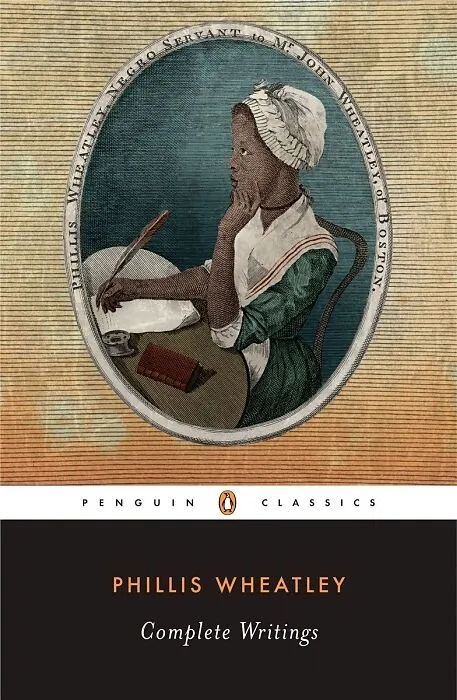
Complete Writings
Beschreibung
Zusatztext "What a marvelous edition of Phillis Wheatley's COMPLETE WRITINGS Vincent Carretta has produced for Penguin Classics. Here are all her poems including extant verse not included in her first volume as well as variants of others. Here are also her let...Format auswählen
- TaschenbuchCHF 16.30

Wird oft zusammen gekauft
Andere Kunden kauften auch
Beschreibung
Zusatztext "What a marvelous edition of Phillis Wheatley's COMPLETE WRITINGS Vincent Carretta has produced for Penguin Classics. Here are all her poems including extant verse not included in her first volume as well as variants of others. Here are also her letters and the important proposals for her volumes of poetry. Additionally! Carretta has added work by her black contemporaries Lucy Terry Prince! Jupiter Hammon! and Francis Williams to help readers contextualize black literary activity in the late eighteenth century. Carretta has also written an illuminating introduction and included suggestions for further read and notes. In short! this is a fantastic edition for the specialist! the student! and the informed general reader. It will be widely used." -- Kathryn Zabelle Derounian-Stodola ! Univ of Arkansas at Little Rock "Vincent Carretta's edition of the works of Phillis Wheatley is the definitive collection of her work. Expertly edited! it is a masterpiece of textual scholarship. Every scholar and student seeking to understand Wheatley's life and work will want to obtain this book." -- Henry Louis Gates Informationen zum Autor Phillis Wheatley (1753?-1784) was born in western Africa, most likely in present-day Gambia or Ghana. Having failed to find an American publisher for a second volume of her works, Wheatley died in Boston largely forgotten and impoverished. Vincent Carretta is professor of English at the University of Maryland, College Park. He is the editor of the Penguin Classics editions of the Complete Writings of Phillis Wheatley , Letters of the Late Ignatius Sancho, an African , and Thoughts and Sentiments on the Evil of Slavery and Other Writings by Ottobah Cugoano. Klappentext The extraordinary writings of Phillis Wheatley, a formerly enslaved woman turned published poet In 1761, a young girl arrived in Boston on a ship of enslaved people, was sold to the Wheatley family, and given the name Phillis Wheatley. After studying English and classical literature, geography, the Bible, and Latin, Phillis published her first poem in 1767 at the age of 14, winning much public attention and considerable fame. When Boston publishers who doubted its authenticity rejected an initial collection of her poetry, Wheatley sailed to London in 1773 and found a publisher there for Poems on Various Subjects, Religious and Moral. This volume collects both Wheatley's letters and her poetry: hymns, elegies, translations, philosophical poems, tales, and epyllions--including a poignant plea to the Earl of Dartmouth urging freedom for America and comparing the country's condition to her own. With her contemplative elegies and her use of the poetic imagination to escape an unsatisfactory world, Wheatley anticipated the Romantic Movement of the following century. The appendices to this edition include poems of Wheatley's contemporary African-American poets: Lucy Terry, Jupiter Harmon, and Francis Williams. For more than seventy years, Penguin has been the leading publisher of classic literature in the English-speaking world. With more than 1,700 titles, Penguin Classics represents a global bookshelf of the best works throughout history and across genres and disciplines. Readers trust the series to provide authoritative texts enhanced by introductions and notes by distinguished scholars and contemporary authors, as well as up-to-date translations by award-winning translators. Table of Contents Introduction PREFACE POEMS ON VARIOUS SUBJECTS. EXTANT POEMS NOT PUBLISHED IN POEMS ON VARIOUS SUBJECTS VARIANTS OF POEMS PUBLISHED IN POEMS ON VARIOUS SUBJECTS LETTERS VARIANT LETTERS PROPOSALS FOR VOLUMES OF POETRY NOTES APPENDIX A APPENDIX B APPENDIX C APPENDIX D From the INTRODUCTION Born around ...
Autorentext
Phillis Wheatley (1753?-1784) was born in western Africa, most likely in present-day Gambia or Ghana. Having failed to find an American publisher for a second volume of her works, Wheatley died in Boston largely forgotten and impoverished.
Vincent Carretta is professor of English at the University of Maryland, College Park. He is the editor of the Penguin Classics editions of the Complete Writings of Phillis Wheatley, Letters of the Late Ignatius Sancho, an African, and Thoughts and Sentiments on the Evil of Slavery and Other Writings by Ottobah Cugoano.
Klappentext
**The extraordinary writings of Phillis Wheatley, a formerly enslaved woman turned published poet
**In 1761, a young girl arrived in Boston on a ship of enslaved people, was sold to the Wheatley family, and given the name Phillis Wheatley. After studying English and classical literature, geography, the Bible, and Latin, Phillis published her first poem in 1767 at the age of 14, winning much public attention and considerable fame. When Boston publishers who doubted its authenticity rejected an initial collection of her poetry, Wheatley sailed to London in 1773 and found a publisher there for *Poems on Various Subjects, Religious and Moral.
*This volume collects both Wheatley's letters and her poetry: hymns, elegies, translations, philosophical poems, tales, and epyllions--including a poignant plea to the Earl of Dartmouth urging freedom for America and comparing the country's condition to her own. With her contemplative elegies and her use of the poetic imagination to escape an unsatisfactory world, Wheatley anticipated the Romantic Movement of the following century. The appendices to this edition include poems of Wheatley's contemporary African-American poets: Lucy Terry, Jupiter Harmon, and Francis Williams.
For more than seventy years, Penguin has been the leading publisher of classic literature in the English-speaking world. With more than 1,700 titles, Penguin Classics represents a global bookshelf of the best works throughout history and across genres and disciplines. Readers trust the series to provide authoritative texts enhanced by introductions and notes by distinguished scholars and contemporary authors, as well as up-to-date translations by award-winning translators.
Leseprobe
Table of Contents
Introduction
PREFACE
POEMS ON VARIOUS SUBJECTS.
EXTANT POEMS NOT PUBLISHED IN POEMS ON VARIOUS SUBJECTS
VARIANTS OF POEMS PUBLISHED IN POEMS ON VARIOUS SUBJECTS
LETTERS
VARIANT LETTERS
PROPOSALS FOR VOLUMES OF POETRY
NOTES
APPENDIX A
APPENDIX B
APPENDIX C
APPENDIX D
From the INTRODUCTION
Born around 1753 somewhere in west Africa, probably between present-day Gambia and Ghana, the little girl who would become Phillis Wheatley was brought to Boston, Massachusetts, on July 11, 1761, aboard the Phillis, a slave ship commanded by captain Peter Gwin and owned by Timothy Fitch. At the time, approximately one thousand of Boston’s more than fifteen thousand residents were slaves, with perhaps twenty free people of African descent in the total population. About seven or eight years old (her front teeth were missing), the sickly child was soon bought from the slave dealer John Avery by John Wheatley, a prosperous Boston merchant, for his wife, Susanna. Named after her new owners and the vessel that had brought her to America, Phillis Wheatley was taken to the Wheatley home at the corner of King Street and Makerel Lane (present-day State and Kilby Streets) to help the Wheatleys’ few other domestic slaves care for their mistress and master, as well as their eighteen-year-old twins, Mary and Nathaniel. The Wheatleys were members of the New South Congregational Church. Susanna was also an active supporter of the evangelical missions of the Calvinist Methodist minister George Whitefield and others. John was gradually turning over to his son the management of his real estate, warehouse, wharf, and wholesale businesses, and the London Packet, a three-masted schooner, used to trade between Boston and London.
Mainly through the tutelage of Mary Wheatley, the obviously precocious Phillis gain…