
IHR WARENKORB IST AKTUELL LEER.
Haben Sie noch nichts passendes gefunden? Stöbern Sie durch unser komplettes Sortiment.
Oder melden Sie sich an bzw. registrieren Sie sich.
- Kostenlose Lieferung
- Kauf auf Rechnung
- Ex Libris Tiefpreis
- Filiallieferung und 650+ Abholorte
- Rabatt-Bons als Club-Mitglied
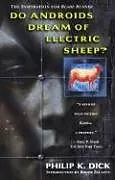
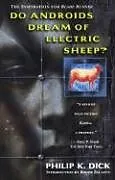
Do Androids Dream of Electric Sheep?
Beschreibung
Zusatztext Praise for Philip K. Dick The most consistently brilliant science fiction writer in the world. John Brunner A kind of pulp-fiction Kafka! a prophet. The New York Times Informationen zum Autor Born in Chicago in 1928, Philip K. Dick would go on to be...Format auswählen
- Kartonierter EinbandCHF 21.10

Wird oft zusammen gekauft
Andere Kunden kauften auch
Beschreibung
Zusatztext Praise for Philip K. Dick The most consistently brilliant science fiction writer in the world. John Brunner A kind of pulp-fiction Kafka! a prophet. The New York Times Informationen zum Autor Born in Chicago in 1928, Philip K. Dick would go on to become one of the most celebrated science fiction authors of all time. The author of 44 published novels and 120 short stories, Dick won a Hugo Award in 1963, and a John W. Campbell Memorial Award in 1975, and was nominated five separate times for the Nebula Award. Eleven of his works have been turned into films, including Blade Runner, Total Recall, Minority Report, and A Scanner Darkly . He died in 1982. Klappentext A masterpiece ahead of its time, a prescient rendering of a dark future, and the inspiration for the blockbuster film Blade Runner By 2021, the World War has killed millions, driving entire species into extinction and sending mankind off-planet. Those who remain covet any living creature, and for people who can't afford one, companies built incredibly realistic simulacra: horses, birds, cats, sheep. They've even built humans. Immigrants to Mars receive androids so sophisticated they are indistinguishable from true men or women. Fearful of the havoc these artificial humans can wreak, the government bans them from Earth. Driven into hiding, unauthorized androids live among human beings, undetected. Rick Deckard, an officially sanctioned bounty hunter, is commissioned to find rogue androids and "retire" them. But when cornered, androids fight back-with lethal force. Praise for Philip K. Dick "The most consistently brilliant science fiction writer in the world."-John Brunner "A kind of pulp-fiction Kafka, a prophet."-The New York Times "[Philip K. Dick] sees all the sparkling-and terrifying-possibilities . . . that other authors shy away from."-Rolling Stone Leseprobe chapter 1 A merry little surge of electricity piped by automatic alarm from the mood organ beside his bed awakened Rick Deckard. Surprisedit always surprised him to find himself awake without prior noticehe rose from the bed, stood up in his multicolored pajamas, and stretched. Now, in her bed, his wife Iran opened her gray, unmerry eyes, blinked, then groaned and shut her eyes again. You set your Penfield too weak, he said to her. I'll reset it and you'll be awake and Keep your hand off my settings. Her voice held bitter sharpness. I don't want to be awake. He seated himself beside her, bent over her, and explained softly. If you set the surge up high enough, you'll be glad you're awake; that's the whole point. At setting C it overcomes the threshold barring consciousness, as it does for me. Friendlily, because he felt well-disposed toward the worldhis setting had been at Dhe patted her bare, pale shoulder. Get your crude cop's hand away, Iran said. I'm not a cop. He felt irritable, now, although he hadn't dialed for it. You're worse, his wife said, her eyes still shut. You're a murderer hired by the cops. I've never killed a human being in my life. His irritability had risen now; had become outright hostility. Iran said, Just those poor andys. I notice you've never had any hesitation as to spending the bounty money I bring home on whatever momentarily attracts your attention. He rose, strode to the console of his mood organ. Instead of saving, he said, so we could buy a real sheep, to replace that fake electric one upstairs. A mere electric animal, and me earning all that I've worked my way up to through the years. At his console he hesitated between dialing for a thalamic suppressant (which would abolish his mood of rage) or a thalamic stimulant (which would make him irked enough to win the argument). ...
Praise for Philip K. Dick
“The most consistently brilliant science fiction writer in the world.”—John Brunner
“A kind of pulp-fiction Kafka, a prophet.”—The New York Times
Autorentext
Born in Chicago in 1928, Philip K. Dick would go on to become one of the most celebrated science fiction authors of all time. The author of 44 published novels and 120 short stories, Dick won a Hugo Award in 1963, and a John W. Campbell Memorial Award in 1975, and was nominated five separate times for the Nebula Award. Eleven of his works have been turned into films, including Blade Runner, Total Recall, Minority Report, and A Scanner Darkly. He died in 1982.
Klappentext
A masterpiece ahead of its time, a prescient rendering of a dark future, and the inspiration for the blockbuster film Blade Runner
By 2021, the World War has killed millions, driving entire species into extinction and sending mankind off-planet. Those who remain covet any living creature, and for people who can't afford one, companies built incredibly realistic simulacra: horses, birds, cats, sheep. They've even built humans. Immigrants to Mars receive androids so sophisticated they are indistinguishable from true men or women. Fearful of the havoc these artificial humans can wreak, the government bans them from Earth. Driven into hiding, unauthorized androids live among human beings, undetected. Rick Deckard, an officially sanctioned bounty hunter, is commissioned to find rogue androids and "retire" them. But when cornered, androids fight back-with lethal force.
Praise for Philip K. Dick
"The most consistently brilliant science fiction writer in the world."-John Brunner
"A kind of pulp-fiction Kafka, a prophet."-The New York Times
"[Philip K. Dick] sees all the sparkling-and terrifying-possibilities . . . that other authors shy away from."-Rolling Stone
Leseprobe
chapter 1
A merry little surge of electricity piped by automatic alarm from the mood organ beside his bed awakened Rick Deckard. Surprised—it always surprised him to find himself awake without prior notice—he rose from the bed, stood up in his multicolored pajamas, and stretched. Now, in her bed, his wife Iran opened her gray, unmerry eyes, blinked, then groaned and shut her eyes again.
“You set your Penfield too weak,” he said to her. “I’ll reset it and you’ll be awake and—”
“Keep your hand off my settings.” Her voice held bitter sharpness. “I don’t want to be awake.”
He seated himself beside her, bent over her, and explained softly. “If you set the surge up high enough, you’ll be glad you’re awake; that’s the whole point. At setting C it overcomes the threshold barring consciousness, as it does for me.” Friendlily, because he felt well-disposed toward the world—his setting had been at D—he patted her bare, pale shoulder.
“Get your crude cop’s hand away,” Iran said.
“I’m not a cop.” He felt irritable, now, although he hadn’t dialed for it.
“You’re worse,” his wife said, her eyes still shut. “You’re a murderer hired by the cops.”
“I’ve never killed a human being in my life.” His irritability had risen now; had become outright hostility.
Iran said, “Just those poor andys.”
“I notice you’ve never had any hesitation as to spending the bounty money I bring home on whatever momentarily attracts your attention.” He rose, strode to the console of his mood organ. “Instead of saving,” he said, “so we could buy a real sheep, to replace that fake electric one upstairs. A mere electric animal, and me earning all that I’ve worked my way up to through the years.” At his console he hesitated between dialing for a thalamic suppressant (which would abolish his mood of rage) or a thalamic stimulant (which would make him irked enough to win the argument).
“If you dial,” Iran said, eyes op…