
IHR WARENKORB IST AKTUELL LEER.
Haben Sie noch nichts passendes gefunden? Stöbern Sie durch unser komplettes Sortiment.
Oder melden Sie sich an bzw. registrieren Sie sich.
- Kostenlose Lieferung
- Kauf auf Rechnung
- Ex Libris Tiefpreis
- Filiallieferung und 650+ Abholorte
- Rabatt-Bons als Club-Mitglied
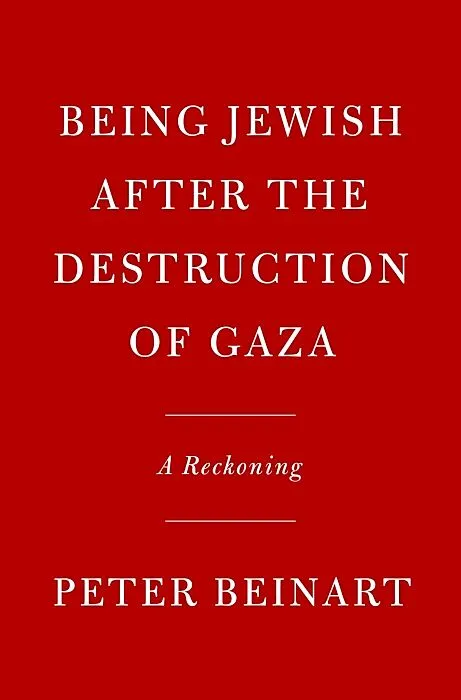
Being Jewish After the Destruction of Gaza
Beschreibung
A bold, urgent appeal from the acclaimed columnist and political commentator, addressing one of the most important issues of our time In Peter Beinart’s view, one story has long dominated Jewish communal life: that of persecution and victimhood. It is a ...Format auswählen
- Fester EinbandCHF 27.60
Wird oft zusammen gekauft
Andere Kunden kauften auch
Beschreibung
A bold, urgent appeal from the acclaimed columnist and political commentator, addressing one of the most important issues of our time In Peter Beinart’s view, one story has long dominated Jewish communal life: that of persecution and victimhood. It is a story that erases much of the nuance of sacred Jewish tradition and history, and also warps our understanding of modern history. After Gaza, where Jewish texts, history and language have been deployed to justify mass slaughter and starvation, he argues, Jews must tell a new story. After this war, whose horror will echo for generations, they must do nothing less than offer a new answer to the question: What does it mean to be a Jew? Beinart imagines an alternate story that would draw on other nations’ efforts at moral reconstruction and a different reading of Jewish history. A story in which Jews have the right to equality, not supremacy, and in which Jewish and Palestinian safety is not mutually exclusive but intertwined. One in which we inhabit a world that recognizes the infinite value of all human life, beginning in the Gaza Strip. <Being Jewish After the Destruction of Gaza< is a provocative and fearless argument that will expand and inform one of the defining conversations of our time. It is a book that only Peter Beinart could write: a passionate yet measured work that brings together his personal experience, his commanding grasp of history, his keen understanding of political and moral nuance, and a clear vision for the future.
Autorentext
PETER BEINART is professor of journalism and political science at the Craig Newmark Graduate School of Journalism at the City University of New York. He is also editor at large of Jewish Currents, a contributing opinion writer at The New York Times, an MSNBC political commentator, and a nonresident fellow at the Foundation for Middle East Peace. He writes the Beinart Notebook newsletter on Substack.com. He lives in New York with his family.
Klappentext
**A NEW YORK TIMES NOTABLE BOOK • NEW YORK TIMES BESTSELLER • A bold, urgent appeal from the acclaimed columnist and political commentator, addressing one of the most important issues of our time
“In Being Jewish After the Destruction of Gaza, Peter Beinart offers a model for writing a new story when inherited narratives no longer hold. . . . Stylistically restrained and uncompromising, the book stands as a brave and vital contribution to contemporary American intellectual life, challenging readers to reckon with the demands of justice, equity, and accountability in the face of one of the most consequential and divisive issues of our time.” —Judges’ Citation, PEN/John Kenneth Galbraith Award for Nonfiction**
In Peter Beinart’s view, one story dominates Jewish communal life: that of persecution and victimhood. It is a story that erases much of the nuance of Jewish religious tradition and warps our understanding of Israel and Palestine. After Gaza, where Jewish texts, history, and language have been deployed to justify mass slaughter and starvation, Beinart argues, Jews must tell a new story. After this war, whose horror will echo for generations, they must do nothing less than offer a new answer to the question: What does it mean to be a Jew?
Beinart imagines an alternate narrative, which would draw on other nations’ efforts at moral reconstruction and a different reading of Jewish tradition. A story in which Israeli Jews have the right to equality, not supremacy, and in which Jewish and Palestinian safety are not mutually exclusive but intertwined. One that recognizes the danger of venerating states at the expense of human life.
Being Jewish After the Destruction of Gaza is a provocative argument that will expand and inform one of the defining conversations of our time. It is a book that only Peter Beinart could write: a passionate yet measured work that brings together his personal experience, his commanding grasp of history, his keen understanding of political and moral dilemmas, and a clear vision for the future.
Leseprobe
1
They Tried to Kill Us, We Survived, Let’s Eat
Every year, on the holiday of Purim, Jews dress in silly costumes, eat triangular pastries, and listen to an ancient story about attempted genocide. It comes from the book of Esther. The tale begins with a dissolute Persian king. He hosts a banquet, gets drunk, orders his queen to “display her beauty” to the revelers, and, when she refuses, banishes her from the throne. As her replacement he chooses Esther, a beautiful young maiden who, unbeknownst to him, is a Jew. Then he makes a calamitous personnel decision: He selects Haman, a pathological Jew-hater, to be his right-hand man. The stage is now set for an epic clash.
Haman persuades the king to sign an edict exterminating the Jews. Esther’s uncle, Mordechai, hears the news and sends word that she must save her people. Although protesting puts her own life at risk, Esther appeals to the king and, through a series of daring maneuvers, turns him against Haman. Haman is hanged. Mordechai takes his job. Good triumphs over evil.
When we tell the story of Purim today, many of us stop there. But that’s not quite right. The book of Esther doesn’t end with Haman’s death. It continues because although Haman is gone, his edict to kill the Jews remains. The king can’t reverse it. What he can do is empower Mordechai and his kinsmen to take matters into their own hands. Which they do. “The Jews struck at their enemies with the sword,” proclaims the book of Esther, “slaying and destroying; they wreaked their will upon their enemies.” On the thirteenth day of the month of Adar, the Jews kill seventy-five thousand people. They make the fourteenth “a day of feasting and merrymaking.” With the blood of their foes barely dry, the Jews feast and make merry. That’s the origin of Purim.
Purim isn’t only about the danger gentiles pose to us. It’s also about the danger we pose to them.
For most of our history, when Jews had little capacity to impose our will via the sword, the conclusion of the book of Esther was a harmless and even understandable fantasy. Who can blame a tormented people for dreaming of a world turned upside down? But the ending reads differently when Jews wield life-and-death power over millions of Palestinians who lack even a passport, let alone an army. Today, these blood-soaked verses should unsettle us. When we recite them aloud in synagogue, we should employ the anguished, sorrowful tune in which we chant the book of Lamentations, which depicts the destruction of our ancient temples.
Instead, most of us ignore the violence that concludes the Esther scroll. Some contemporary Jews justify it as self-defense. On the far right, some revel in it. But they’re the exception. More often, we look away. We focus on what they tried to do to us. There’s a joke that every Jewish holiday has the same plot: “They tried to kill us, we survived, let’s eat.” That’s how many Jews narrate not only Purim but many of our other best-loved holidays. Passover recounts our liberation from bondage in Egypt. Chanukah celebrates the Maccabees, who freed us from persecution by the Syrian-Greek emperor Antiochus.
Festivals we can’t fit into this script tend not to capture our collective imagination. Why is Shavuot, which commemorates the giving of the Torah, less well-known among contemporary Jews than Purim and Chanukah, holidays of lesser religious significance? There are various reasons: American Jews like Chanukah because it’s our answer to Christmas; Israeli Jews like Chanukah because they’ve made it a Zionist-style story of re…