
IHR WARENKORB IST AKTUELL LEER.
Haben Sie noch nichts passendes gefunden? Stöbern Sie durch unser komplettes Sortiment.
Oder melden Sie sich an bzw. registrieren Sie sich.
- Kostenlose Lieferung
- Kauf auf Rechnung
- Ex Libris Tiefpreis
- Filiallieferung und 650+ Abholorte
- Rabatt-Bons als Club-Mitglied
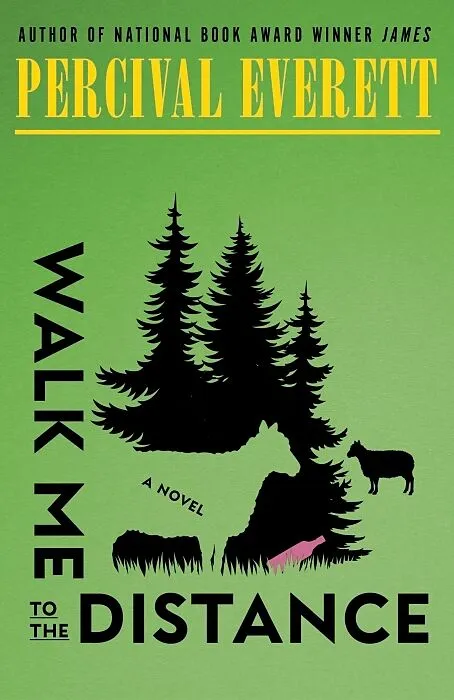
Walk Me to the Distance
Beschreibung
Now with a brilliant new package, a re-issue of the sophomore novel ;by Percival Everett, Haunting, provocative and bleakly funny, In self-imposed exile after returning home from the war in Vietnam, David Larson meanders into the barren town of Slut’s Ho...Format auswählen
- Kartonierter Einband (Kt)CHF 15.40

Wird oft zusammen gekauft
Andere Kunden kauften auch
Beschreibung
Now with a brilliant new package, a re-issue of the sophomore novel ;by Percival Everett, Haunting, provocative and bleakly funny, In self-imposed exile after returning home from the war in Vietnam, David Larson meanders into the barren town of Slut’s Hole, Wyoming, where a local widow takes him under her wing. After making a sort of home among the town’s hardscrabble locals, David grudgingly adopts a young Vietnamese girl abandoned along the highway. This sets in motion a set of tragic turns as Western mythos and frontier justice clash against the tides of a changing world. First published in 1985 by Clarion Books, <Walk Me to the Distance < was the sophomore novel of an iconic American voice. Over the course of his five decade career, Everett has written over twenty five books and been shortlisted for the Pulitzer Prize (for 2020’s <Telephone<), twice longlisted for the Booker Prize, and the recipient of the 2024 National Book Award for the “genius” (<The Atlantic<) <James<, a brilliantly imagined retelling of <The Adventures of Huckleberry Finn< told from the enslaved Jim’s point of view. <James< was a #1 <New York Times< bestseller and is being developed into film by Stephen Spielberg.
Autorentext
PERCIVAL EVERETT is a Distinguished Professor of English at USC, and the author of New York Times bestseller and National Book Award winner James. His other recent books include Dr. No (finalist for the NBCC Award for Fiction and winner of the PEN/ Jean Stein Book Award), The Trees (finalist for the Booker Prize and the PEN/Faulkner Award for Fiction), Telephone (finalist for the Pulitzer Prize), So Much Blue, Erasure, and I Am Not Sidney Poitier. He has received the NBCC Ivan Sandrof Life Achievement Award and The Windham Campbell Prize from Yale University. American Fiction, the feature film based on his novel Erasure, was released in 2023 and was awarded the Academy Award for Best Adapted Screenplay. He lives in Los Angeles with his wife, the writer Danzy Senna, and their children.
Klappentext
Now with a brilliant new package, a re-issue of the sophomore novel by Percival Everett, New York Times bestselling author of National Book Award winner James.
Haunting, provocative and bleakly funny, Walk Me to the Distance is Percival Everett’s brilliant reexamination of the Western, and a laconic tragicomedy about what it takes to survive in the last days of a bygone big-sky country.
In self-imposed exile after returning home from the war in Vietnam, David Larson meanders into the barren town of Slut’s Hole, Wyoming, where a local widow takes him under her wing. After making a sort of home among the town’s hardscrabble locals, David grudgingly adopts a young Vietnamese girl abandoned along the highway. This sets in motion a number of tragic turns as Western mythos and frontier justice clash against the tides of a changing world.
First published in 1985 by Clarion Books, Walk Me to the Distance was the sophomore novel of an iconic American voice. Over the course of his five decade career, Everett has written over twenty five books and been shortlisted for the Pulitzer Prize (for 2020’s Telephone), twice longlisted for the Booker Prize, and the recipient of the 2024 National Book Award for the “genius” (The Atlantic) James, a brilliantly imagined retelling of The Adventures of Huckleberry Finn told from the enslaved Jim’s point of view. James was a #1 New York Times bestseller and is being developed into film by Stephen Spielberg.
Leseprobe
Chapter 1
It wasn’t that David Larson returned home from Vietnam to find that his girl had taken up with another man; he didn’t have a girl when he left. He’d spent his time in the army telling people that he was from Georgia, then trying to explain to them and, with time, to himself, why he didn’t have a southern accent; finally coming to “I guess I never had one.” He did have parents when he boarded that transport plane in San Francisco, but in his absence, their car had plunged from a bridge into the Savannah River and they had died. He did have a sister. But while he was gone, she had married a man who claimed to be the eighth and unrecognized (rightly so, thought David) member of the Chicago Seven. Of course, Jill and her new husband wanted nothing to do with a “soldier.” David hadn’t had the good sense, the keen foresight to get wounded and lose a limb, and though certainly affected by his tour, he did not come home emotionally or mentally scarred, suffering from flashbacks or a fear of thin people on bicycles. He returned as unremarkable as he had been when he left, in the last wave of States-bound personnel, having been asked to sit, stupidly, around Saigon for three months before leaving. Just a soldier, a man without the courage, conviction, or cowardice to have run north to Montreal or Toronto.
“I don’t think it’s a good idea that you come by,” Jill had said on the phone.
David didn’t understand. He looked out the window of his motel room at Interstate 95 and then, for a lack of anything else to say, “I’m your brother.”
“I’ve changed.”
“What do you mean, you’ve changed? We have things to discuss.”
“We have nothing to discuss. Mom and Dad left us very little. Give me your address.”
“I don’t have an address.”
“Well, when you get settled, write me and I’ll send you what’s coming to you.”
“I’d like to see you.”
“It’s the times, David.”
David threw one of the motel glasses, still wrapped in paper, against the wall, breaking it. “What the hell is that supposed to mean? It’s the times. What kind of shit are you giving me? I’ve been in the jungle protecting you and your hippie husband.”
Click.
David bought a used Dodge Dart and left Savannah and Georgia. West was the direction he chose. The car performed well in the summer heat. He drove across Iowa, then Nebraska, stopping in the town of Chadron to look up a buddy. He didn’t find his friend, so he drove west across the prairie, his .45 in his lap. The game he played went one bullet per jackrabbit as he spotted them along the roadside. He’d hit only one, knicked its ear, hardly disturbed its stride. Then one of the tall, slender hares leaped across the highway in front of the car. He fired over the hood of the Dart, missed the rabbit, but got his engine. The bullet passed through the radiator. He studied the wound, the afternoon sun hitting the back of his neck. Slowly, a short distance at a time, allowing the engine to cool, he made his way to a gas station.
The station attendant, a lanky man with a salt-and-pepper beard, stepped toward the car, wiping his hands with an oily rag. He looked at the radiator, then at David. “Get him?” he asked. “You were shootin’ jackbunnies, weren’t you?”
David just looked at the man. “Can you fix my car?” he asked finally.
The man spat and slipped his oily rag into his hip pocket. “You need a new radiator.” He slammed the hood. “Two weeks.”
“Two weeks?”
“Maybe one. Depends on when I can get to Casper.” He scratched his head. “Might be able to find one in Ross.”
David was not ready for this. He looked out over the rolling grass and down the road at a little store and some other buildings.
“Yep, at least a week.” The mechanic walked over and lifted the lid of the pop machine, pulled out two Cokes. &ldquo…