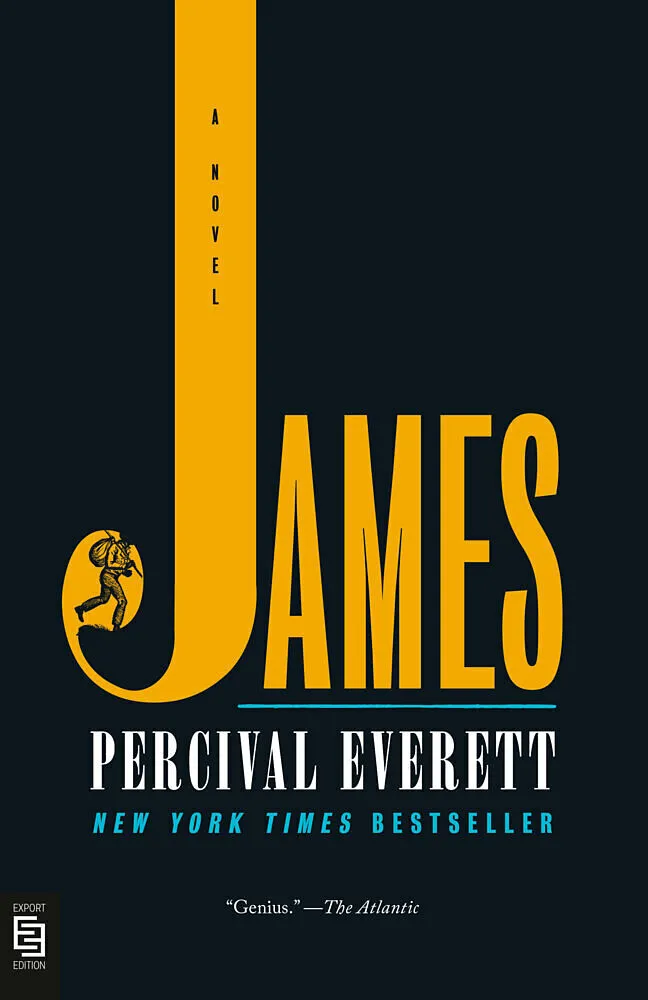

James (Pulitzer Prize Winner)
Beschreibung
AN INSTANT In development as a feature film to be produced by Steven Spielberg •; A Best Book of the Year of the Year so Far for 2024: "Genius" When the enslaved Jim overhears that he is about to be sold to a man in New Orleans, separated from his wife an...Format auswählen
- Kartonierter EinbandCHF 16.00
- Fester EinbandCHF 23.60
- Kartonierter EinbandCHF 16.90
- Kartonierter Einband (Kt)CHF 25.30

Wird oft zusammen gekauft
Andere Kunden kauften auch
Beschreibung
AN INSTANT In development as a feature film to be produced by Steven Spielberg •; A Best Book of the Year of the Year so Far for 2024: "Genius" When the enslaved Jim overhears that he is about to be sold to a man in New Orleans, separated from his wife and daughter forever, he decides to hide on nearby Jackson Island until he can formulate a plan. Meanwhile, Huck Finn has faked his own death to escape his violent father, recently returned to town. As all readers of American literature know, thus begins the dangerous and transcendent journey by raft down the Mississippi River toward the elusive and too-often-unreliable promise of the Free States and beyond. While many narrative set pieces of Brimming with the electrifying humor and lacerating observations that have made Everett a “literary icon” (<Oprah Daily<), and one of the most decorated writers of our lifetime, <James <is destined to be a major publishing event and a cornerstone of twenty-first century American literature....
Autorentext
Percival Everett
Klappentext
**PULITZER PRIZE WINNER • #1 NEW YORK TIMES BESTSELLER • NATIONAL BOOK AWARD WINNER • A brilliant, action-packed reimagining of Adventures of Huckleberry Finn, both harrowing and darkly humorous, told from the enslaved Jim's point of view
NATIONAL BOOK CRITICS CIRCLE AWARD FINALIST • ONE OF THE NEW YORK TIMES BOOK REVIEW'S 10 BEST BOOKS OF THE YEAR • SHORTLISTED FOR THE BOOKER PRIZE • KIRKUS PRIZE WINNER • A LOS ANGELES TIMES BEST FICTION BOOK OF THE LAST 30 YEARS
In development as a feature film to be produced by Steven Spielberg • A Best Book of the Year: The New York Times Book Review, LA Times, The New Yorker, The Atlantic, The Economist, TIME, and more.
"Genius"—The Atlantic • "A masterpiece that will help redefine one of the classics of American literature, while also being a major achievement on its own."—Chicago Tribune • "A provocative, enlightening literary work of art."—The Boston Globe • "Everett’s most thrilling novel, but also his most soulful."—The New York Times**
When Jim overhears that he is about to be sold to a man in New Orleans, separated from his wife and daughter forever, he runs away until he can formulate a plan. Meanwhile, Huck has faked his own death to escape his violent father. As all readers of American literature know, thus begins the dangerous and transcendent journey by raft down the Mississippi River toward the elusive and unreliable promise of the Free States and beyond.
Brimming with the electrifying humor and lacerating observations that have made Everett a literary icon, this brilliant and tender novel radically illuminates Jim’s agency, intelligence, and compassion as never before. James is destined to be a major publishing event and a cornerstone of twenty-first century American literature.
Leseprobe
Chapter 2
That evening I sat down with Lizzie and six other children in our cabin and gave a language lesson. These were indispensable. Safe movement through the world depended on mastery of language, fluency. The young ones sat on the packed-dirt floor and I was on one of our two homemade stools. The hole in the roof pulled the smoke from the fire that burned in the middle of the shack.
“Papa, why do we have to learn this?”
“White folks expect us to sound a certain way and it can only help if we don’t disappoint them,” I said. “The only ones who suffer when they are made to feel inferior is us. Perhaps I should say ‘when they don’t feel superior.’ So, let’s pause to review some of the basics.”
“Don’t make eye contact,” a boy said.
“Right, Virgil.”
“Never speak first,” a girl said.
“That’s correct, February,” I said.
Lizzie looked at the other children and then back to me. “Never address any subject directly when talking to another slave,” she said.
“What do we call that?” I asked.
Together they said, “Signifying.”
“Excellent.” They were happy with themselves, and I let that feeling linger. “Let’s try some situational translations. Something extreme first. You’re walking down the street and you see that Mrs. Holiday’s kitchen is on fire. She’s standing in her yard, her back to her house, unaware. How do you tell her?”
“Fire, fire,” January said.
“Direct. And that’s almost correct,” I said.
The youngest of them, lean and tall five-year-old Rachel, said, “Lawdy, missum! Looky dere.”
“Perfect,” I said. “Why is that correct?”
Lizzie raised her hand. “Because we must let the whites be the ones who name the trouble.”
“And why is that?” I asked.
February said, “Because they need to know everything before us. Because they need to name everything.”
“Good, good. You all are really sharp today. Okay, let’s imagine now that it’s a grease fire. She’s left bacon unattended on the stove. Mrs. Holiday is about to throw water on it. What do you say? Rachel?”
Rachel paused. “Missums, that water gone make it wurs!”
“Of course, that’s true, but what’s the problem with that?”
Virgil said, “You’re telling her she’s doing the wrong thing.”
I nodded. “So, what should you say?”
Lizzie looked at the ceiling and spoke while thinking it through. “Would you like for me to get some sand?”
“Correct approach, but you didn’t translate it.”
She nodded. “Oh, Lawd, missums ma’am, you wan fo me to gets some sand?”
“Good.”
“‘Gets some’ is hard to say.” This from Glory, the oldest child. “The s’s.”
“That’s true,” I said. “And it’s okay to trip over it. In fact, it’s good. You wan fo me to ge-gets s-s-some s-sand, Missum Holiday?”
“What if they don’t understand?” Lizzie asked.
“That’s okay. Let them work to understand you. Mumble sometimes so they can have the satisfaction of telling you not to mumble. They enjoy the correction and thinking you’re stupid. Remember, the more they choose to not want to listen, the more we can say to one another around them.”
“Why did God set it up like this?” Rachel asked. “With them as masters and us as slaves?”
“There is no God, child. There’s religion but there’s no God of theirs. Their religion tells that we will get our reward in the end. However, it apparently doesn’t say anything about their punishment. But when we’re around them, we believe in God. Oh, Lawdy Lawd, we’s be believin’. Religion is just a controlling tool they employ and adhere to when convenient.”
“There must be something,” Virgil said.
“I’m sorry, Virgil. You might be right. There might be some higher power, children, but it’s not their white God. However, the more you talk about God and Jesus and heaven and hell, the better they feel.”
The children said together, “And the better they feel, the safer we are.”
“February, translate that.”
“Da mo’ betta dey feels, da mo’ safer we be.”
“Nice.”