Beschreibung
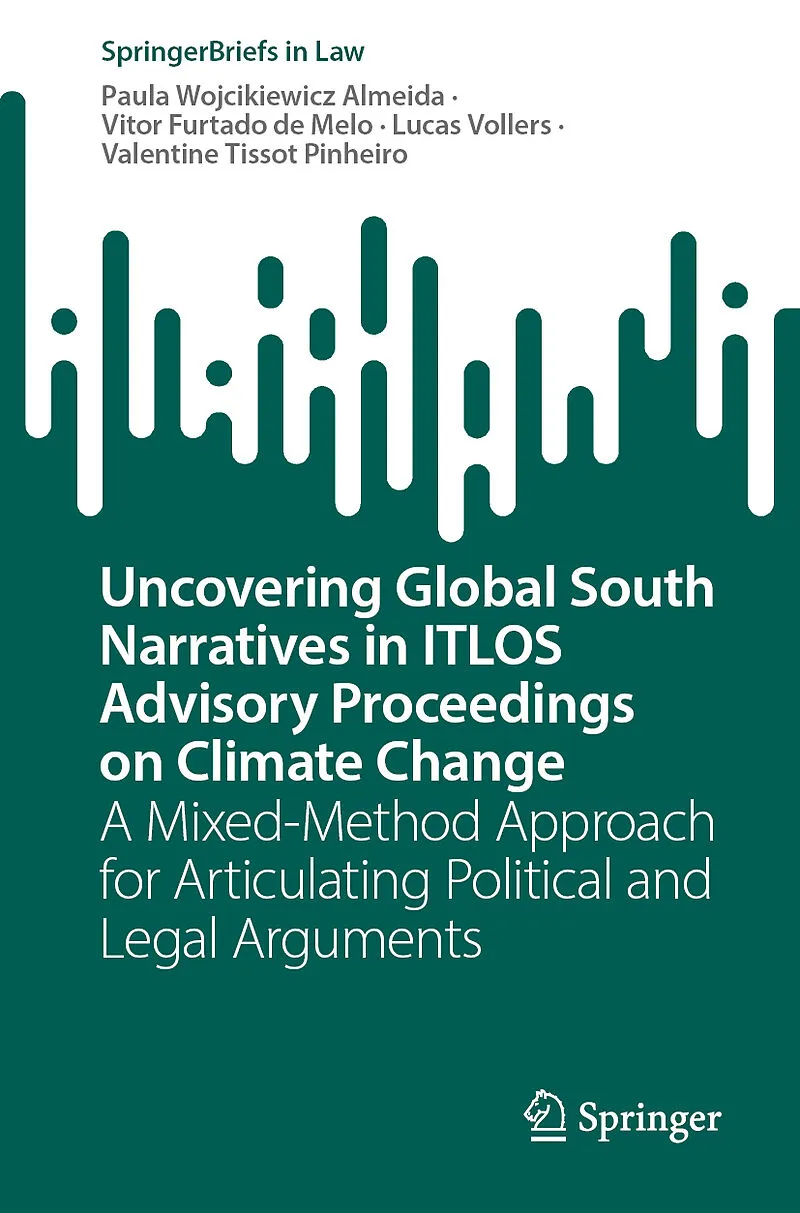
This book explores how Global South states shape narratives on climate change in international courts and tribunals. Specifically, it examines Global South narratives advanced before the ITLOS advisory proceedings on climate change, which provide a platform f...This book explores how Global South states shape narratives on climate change in international courts and tribunals. Specifically, it examines Global South narratives advanced before the ITLOS advisory proceedings on climate change, which provide a platform for states to frame their political positions and influence legal discourse on global issues.
Through the lens of international law and politics, this study investigates how narrativesrooted in historical experiences and contemporary vulnerabilitiesserve as tools for articulating and influencing legal outcomes. While recognizing the diversity of voices within the Global South, the book explores whether a shared history of colonialism and varying degrees of climate vulnerability play a significant role in forming cohesive narratives in the ITLOS advisory proceedings on climate change.
The book develops a unique methodological approach, which goes beyond international law and deploys social science techniques to critically assess states' narratives before ICTs. It examines the Global South's submissions to the ITLOS alongside their political discourse at the UNFCCC's COPs 26, 27, and 28. This innovative method explores the intersection of law and politics and reveals how these states articulate their positions across different arenas, highlighting the strategic deployment of legal arguments within broader climate governance initiatives.
Offering a deep analysis of how narratives advanced before international courts and tribunals intersect with global climate politics and may shape decision-making processes, this book is essential for scholars, policymakers, and practitioners in international law, international relations, climate politics, and global governance.
Reveals how the Global South shapes narratives influences legal reasoning in international courts and tribunals Develops a novel method using social science tools to analyze narratives before international courts and tribunals Bridges law and politics to explain the Global South's climate change narratives
Autorentext
Paula Wojcikiewicz Almeida is Professor of International Law at the Getulio Vargas Foundation Law School in Rio de Janeiro (FGV Rio Law). She is the Director of the Jean Monnet Centre of Excellence on EU-LA Global Challenges, sponsored by the European Commission at the FGV Rio Law. She also serves as the Director of the Centre for Global Law at the FGV Rio Law. She is Associate Researcher at the Institute of International and European Law at the Sorbonne (IREDIES). She holds a doctorate with honors summa cum laude in International and European Law from the Université Paris 1 Panthéon-Sorbonne. Gabriel Ralile de Figueiredo Magalhães is researcher at FGV Rio Law's Centre for Global Law and at the Jean Monnet Centre of Excellence on EU-LA Global Challenges, sponsored by the European Commission at FGV Rio Law. He is a PhD candidate in Regulatory Law at FGV Rio Law and holds a Master's in Maritime Studies from the Brazilian Naval War College (EGN). He also holds an MBE/A in International Trade from Federal University of Rio de Janeiro (UFRJ), a LL.B. from the Federal University of the State of Rio de Janeiro (UNIRIO), and a B.A. in International Relations from the Pontifical Catholic University of Rio de Janeiro (PUC-Rio). Lucas Vollers is researcher at FGV Rio Law's Centre for Global Law and assistant at FGV Rio Law’s Graduate Program. He holds a Master's in International Law from the Rio de Janeiro State University (UERJ) and an LL.B. from the Pontifical Catholic University of Rio de Janeiro (PUC-Rio). Vitor Furtado de Melo is researcher at FGV Rio Law's Centre for Global Law and a Master’s degree candidate in Social Anthropology at the National Museum/Federal University of Rio de Janeiro (MN/UFRJ). He holds a Master’s degree in Political Science from the Federal University of the State of Rio de Janeiro (UNIRIO) and an LL.B. from the Federal University of the State of Rio de Janeiro (UNIRIO).
Inhalt
Chapter 1: INTRODUCTION.- Chapter 2: UNDERSTANDING CORE CONCEPTS: A THEORETICAL FRAMEWORK TO ANALYSE STATES' NARRATIVES.- Chapter 3: UNLOCKING STATE NARRATIVES BEFORE ICTS: A MIXED-METHOD APPROACH.- Chapter 4: POLITICAL CONTEXT SURROUNDING GLOBAL SOUTH STATES NARRATIVES ON CLIMATE CHANGE.- Chapter 5: GLOBAL SOUTH NARRATIVES BEFORE THE ITLOS ADVISORY PROCEEDINGS ON CLIMATE CHANGE.- Chapter 6: ARTICULATING STATES' NARRATIVES IN POLITICAL AND LEGAL ARENAS: UNCOVERING A SOUTH-SOUTH DIVIDE.- Chapter 7: CONCLUSION.