
IHR WARENKORB IST AKTUELL LEER.
Haben Sie noch nichts passendes gefunden? Stöbern Sie durch unser komplettes Sortiment.
Oder melden Sie sich an bzw. registrieren Sie sich.
- Kostenlose Lieferung
- Kauf auf Rechnung
- Ex Libris Tiefpreis
- Filiallieferung und 650+ Abholorte
- Rabatt-Bons als Club-Mitglied
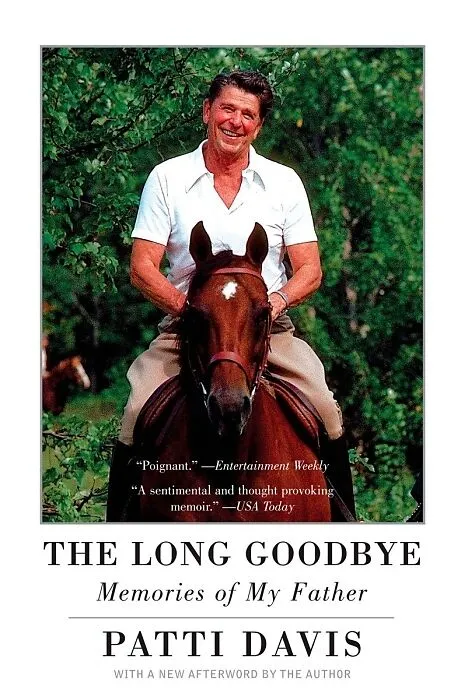

The Long Goodbye
Beschreibung
Zusatztext "A sentimental and thought provoking memoir." USA Today "[A] frank reflection on the often difficult, sometime tumultuous relations between parents and children." Seattle Post-Intelligencer "[A] genuine and heartfelt chronology of one person's passi...Format auswählen
- Kartonierter EinbandCHF 30.00

Wird oft zusammen gekauft
Andere Kunden kauften auch
Beschreibung
Zusatztext "A sentimental and thought provoking memoir." USA Today "[A] frank reflection on the often difficult, sometime tumultuous relations between parents and children." Seattle Post-Intelligencer "[A] genuine and heartfelt chronology of one person's passing and its effect on those who are unwitting bystanders." San Diego Union-Tribune Informationen zum Autor Patti Davis Klappentext "Genuine and heartfelt."-San Diego Union-TribuneRonald Reagan's daughter writes with a moving openness about losing her father to Alzheimer's disease. The simplicity with which she reveals the intensity, the rush, the flow of her feelings encompasses all the surprises and complexities that ambush us when death gradually, unstoppably invades life.In this moving and illuminating portrait of a woman and her father, Patti Davis describes saying goodbye in stages, helpless against the onslaught of a disease that steals what is most precious-a person's memory. "Alzheimer's," she writes, "snips away at the threads, a slow unraveling, a steady retreat; as a witness all you can do is watch, cry, and whisper a soft stream of goodbyes." She writes of needing to be reunited at forty-two with her mother, of regaining what they had spent decades demolishing. A truce was necessary to bring together a splintered family, a few weeks before her father released his letter telling the country and the world of his illness. She delves into her memories to touch her father again, to hear his voice, to keep alive the years she had with him. Leseprobe April 1995 When I got married in 1984, my father gave a toast at my wedding. I don't remember his exact words, but they had to do with his recollection of how tiny my hand once was, as a child holding on to his, and how so many years later, he was giving my hand in marriage. An older hand, a woman's hand. These days, I find myself looking at my father's hands. They seem to have grown smaller, a bit more frail. It's as if they no longer need to grasp life, stretch themselves around it; rather, they are learning to let it go. It's a soft release, not like the Dylan Thomas poem I once embraced: Do not go gentle into that good night, / Old age should burn and rave at close of day. I still like that poem; I like its fury and its fierce passion. But I think my father's way is sweeter. I watch his eyes these days, too. They shimmer across some unfathomable distance, content to watch from wherever his mind has alighted. If I turn into his eyes, it's like turning into a calm breeze. The serenity is contagious. The tendency when you're around someone with Alzheimer's is to try to reel them back in, include them in the conversation, pique their interest in whatever you happen to be discussing. But I stopped doing that because it seemed to me that I was intruding. Wherever he was, he was content. Wherever he was, he shouldn't be disturbed. At the ranch we owned when I was younger, my father taught me that when a horse was growing older, when riding it would be unkind and possibly harmful, the horse should be allowed a more peaceful life, roaming in the acres of pasture that ourranch provided. I remember several of our horses living out the remainder of their days in wide, green fields, grazing. That's how I think of my father now; it's what I see in his eyes. Things are calmer where he ismost of the time, anyway. And he grazeson the moments and hours that are left to him. On the sight of afternoon sun gilding the lawn or clouds skimming across the sky. On his family, who have finally learned how to laugh together, and how to love. He grazes on the taste of life as it slips awaythe rich, fertile moments that must be released into the wind, because that's what you do if you're like my father, his hand reaching for God's, leaving ours behind, saying goodbye in small ways, getting u...
"A sentimental and thought provoking memoir."—USA Today
"[A] frank reflection on the often difficult, sometime tumultuous relations between parents and children."—Seattle Post-Intelligencer
"[A] genuine and heartfelt chronology of one person’s passing and its effect on those who are unwitting bystanders."—San Diego Union-Tribune
Autorentext
Patti Davis
Klappentext
"Genuine and heartfelt."-San Diego Union-Tribune Ronald Reagan's daughter writes with a moving openness about losing her father to Alzheimer's disease. The simplicity with which she reveals the intensity, the rush, the flow of her feelings encompasses all the surprises and complexities that ambush us when death gradually, unstoppably invades life. In this moving and illuminating portrait of a woman and her father, Patti Davis describes saying goodbye in stages, helpless against the onslaught of a disease that steals what is most precious-a person's memory. "Alzheimer's," she writes, "snips away at the threads, a slow unraveling, a steady retreat; as a witness all you can do is watch, cry, and whisper a soft stream of goodbyes."She writes of needing to be reunited at forty-two with her mother, of regaining what they had spent decades demolishing. A truce was necessary to bring together a splintered family, a few weeks before her father released his letter telling the country and the world of his illness. She delves into her memories to touch her father again, to hear his voice, to keep alive the years she had with him.
Zusammenfassung
"Genuine and heartfelt."—San Diego Union-Tribune
Ronald Reagan’s daughter writes with a moving openness about losing her father to Alzheimer’s disease. The simplicity with which she reveals the intensity, the rush, the flow of her feelings encompasses all the surprises and complexities that ambush us when death gradually, unstoppably invades life.
In this moving and illuminating portrait of a woman and her father, Patti Davis describes saying goodbye in stages, helpless against the onslaught of a disease that steals what is most precious—a person’s memory. “Alzheimer’s,” she writes, “snips away at the threads, a slow unraveling, a steady retreat; as a witness all you can do is watch, cry, and whisper a soft stream of goodbyes.” She writes of needing to be reunited at forty-two with her mother, of regaining what they had spent decades demolishing. A truce was necessary to bring together a splintered family, a few weeks before her father released his letter telling the country and the world of his illness. She delves into her memories to touch her father again, to hear his voice, to keep alive the years she had with him.
Leseprobe
April 1995
When I got married in 1984, my father gave a toast at my wedding. I don’t remember his exact words, but they had to do with his recollection of how tiny my hand once was, as a child holding on to his, and how so many years later, he was giving my hand in marriage. An older hand, a woman’s hand.
These days, I find myself looking at my father’s hands. They seem to have grown smaller, a bit more frail. It’s as if they no longer need to grasp life, stretch themselves around it; rather, they are learning to let it go. It’s a soft release, not like the Dylan Thomas poem I once embraced: “Do not go gentle into that good night, / Old age should burn and rave at close of day.”
I still like that poem; I like its fury and its fierce passion. But I think my father’s way is sweeter.
I watch his eyes these days, too. They shimmer across some unfathomable distance, content to watch from wherever his mind has alighted. If I turn into his eyes, it’s like turning into a calm breeze. The serenity is contagious.
The tendency when you’re around someone with Alzheimer’s is to try to reel them back in, include them in the conversation, pique their interest in whatever you happen to be discussing. B…