
IHR WARENKORB IST AKTUELL LEER.
Haben Sie noch nichts passendes gefunden? Stöbern Sie durch unser komplettes Sortiment.
Oder melden Sie sich an bzw. registrieren Sie sich.
- Kostenlose Lieferung
- Kauf auf Rechnung
- Ex Libris Tiefpreis
- Filiallieferung und 650+ Abholorte
- Rabatt-Bons als Club-Mitglied
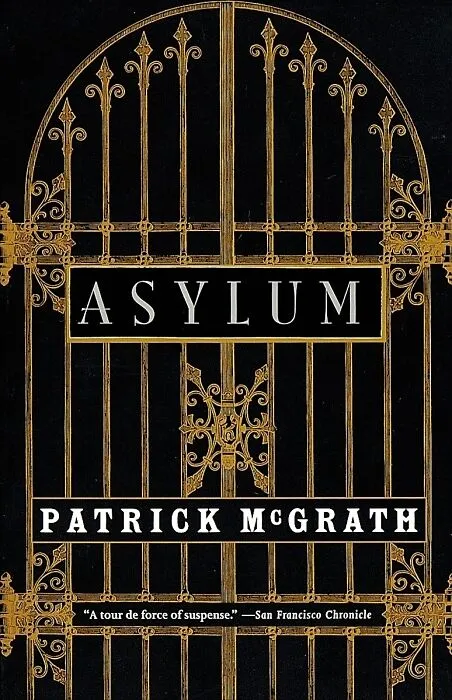
Asylum
Beschreibung
Informationen zum Autor Patrick McGrath Klappentext From our most celebrated writer of the psychological thriller comes this nerve-wracking yet eerily beautiful work of erotic obsession and madness. In the summer of 1959 Stella Raphael joins her psychiatrist h...Format auswählen
- Kartonierter EinbandCHF 21.90

Wird oft zusammen gekauft
Andere Kunden kauften auch
Beschreibung
Informationen zum Autor Patrick McGrath Klappentext From our most celebrated writer of the psychological thriller comes this nerve-wracking yet eerily beautiful work of erotic obsession and madness. In the summer of 1959 Stella Raphael joins her psychiatrist husband, Max, at his new posting--a maximum-security hospital for the criminally insane. Beautiful and headstrong, Stella soon falls under the spell of Edgar Stark, a brilliant and magnetic sculptor who has been confined to the hospital for murdering his wife in a psychotic rage. But Stella's knowledge of Edgar's crime is no hindrance to the volcanic attraction that ensues--a passion that will consume Stella's sanity and destroy her and the lives of those around her.1 The catastrophic love affair characterized by sexual obsession has been a professional interest of mine for many years now. Such relationships vary widely in duration and intensity but tend to pass through the same stages. Recognition. Identification. Assignation. Structure. Complication. And so on. Stella Raphael's story is one of the saddest I know. A deeply frustrated woman, she suffered the predictable consequences of a long denial collapsing in the face of sudden overwhelming temptation. And she was a romantic. She translated her experience with Edgar Stark into the stuff of melodrama, she made of it a tale of outcast lovers braving the world's contempt for the sake of a great passion. Four lives were destroyed in the process, but whatever remorse she may have felt she clung to her illusions to the end. I tried to help but she deflected me from the truth until it was too late. She had to. She couldn't afford to let me see it clearly, it would have been the ruin of the few flimsy psychic structures she had left. Stella was married to a forensic psychiatrist called Max Raphael and they had a son, Charlie, aged ten when all this happened. She was the daughter of a diplomat who'd been disgraced in a scandal years before. Both her parents were dead now. She was barely out of her teens when she married Max. He was a reserved, rather melancholy man, a competent administrator but weak; and he lacked imagination. It was obvious to me the first time I met them that he wasn't the type to satisfy a woman like Stella. They were living in London when he applied for the position of deputy superintendent. He came down for an interview, impressed the board and, more important, impressed the superintendent, Jack Straffen. Against my advice Jack offered him the job, and a few weeks later the Raphaels arrived at the hospital. It was the summer of 1959 and the Mental Health Act had just been passed into law. This is a desolate sort of a place, though God knows it's had the best years of my life. It is maximum-security, a walled city that rises from a high ridge to dominate the surrounding country: dense pine forest to the north and west, low-lying marshland to the south. It is built on the standard Victorian linear model, with wings radiating off the main blocks so that all the wards have an unobstructed view across the terraces to the open country beyond the Wall. This is a moral architecture, it embodies regularity, discipline, and organization. All doors open outward to make them impossible to barricade. All windows are barred. Only the terraces, descending by flights of stone steps to the perimeter wall at the foot of the hill, and planted with trees, grassy banks, and flower gardens, soften and civilize the grim carceral architecture standing over them. The deputy superintendent's house is just a hundred yards from the Main Gate. It is a large dark house of the same gray stone as the hospital, set back from the estate road and hidden by pine trees. It was much too big for the Raphaels, having been built at a time when doctors came with large families and at least two servants. For several years before their arrival it had stood empty, and the garde...
Autorentext
Patrick McGrath
Klappentext
From our most celebrated writer of the psychological thriller comes this nerve-wracking yet eerily beautiful work of erotic obsession and madness.
In the summer of 1959 Stella Raphael joins her psychiatrist husband, Max, at his new posting--a maximum-security hospital for the criminally insane. Beautiful and headstrong, Stella soon falls under the spell of Edgar Stark, a brilliant and magnetic sculptor who has been confined to the hospital for murdering his wife in a psychotic rage.
But Stella's knowledge of Edgar's crime is no hindrance to the volcanic attraction that ensues--a passion that will consume Stella's sanity and destroy her and the lives of those around her.
Leseprobe
1
The catastrophic love affair characterized by sexual obsession has been a professional interest of mine for many years now. Such relationships vary widely in duration and intensity but tend to pass through the same stages. Recognition. Identification. Assignation. Structure. Complication. And so on. Stella Raphael's story is one of the saddest I know. A deeply frustrated woman, she suffered the predictable consequences of a long denial collapsing in the face of sudden overwhelming temptation. And she was a romantic. She translated her experience with Edgar Stark into the stuff of melodrama, she made of it a tale of outcast lovers braving the world's contempt for the sake of a great passion. Four lives were destroyed in the process, but whatever remorse she may have felt she clung to her illusions to the end. I tried to help but she deflected me from the truth until it was too late. She had to. She couldn't afford to let me see it clearly, it would have been the ruin of the few flimsy psychic structures she had left.
Stella was married to a forensic psychiatrist called Max Raphael and they had a son, Charlie, aged ten when all this happened. She was the daughter of a diplomat who'd been disgraced in a scandal years before. Both her parents were dead now. She was barely out of her teens when she married Max. He was a reserved, rather melancholy man, a competent administrator but weak; and he lacked imagination. It was obvious to me the first time I met them that he wasn't the type to satisfy a woman like Stella. They were living in London when he applied for the position of deputy superintendent. He came down for an interview, impressed the board and, more important, impressed the superintendent, Jack Straffen. Against my advice Jack offered him the job, and a few weeks later the Raphaels arrived at the hospital. It was the summer of 1959 and the Mental Health Act had just been passed into law.
This is a desolate sort of a place, though God knows it's had the best years of my life. It is maximum-security, a walled city that rises from a high ridge to dominate the surrounding country: dense pine forest to the north and west, low-lying marshland to the south. It is built on the standard Victorian linear model, with wings radiating off the main blocks so that all the wards have an unobstructed view across the terraces to the open country beyond the Wall. This is a moral architecture, it embodies regularity, discipline, and organization. All doors open outward to make them impossible to barricade. All windows are barred. Only the terraces, descending by flights of stone steps to the perimeter wall at the foot of the hill, and planted with trees, grassy banks, and flower gardens, soften and civilize the grim carceral architecture standing over them.
The deputy superintendent's house is just a hundred yards from the Main Gate. It is a large dark house of the same gray stone as the hospital, set back from the estate road and hidden by pine trees. It was much too big for the Raphaels, having been built at a time when doctors came with large families and at least two servants. For several years before their arrival it had stood empty, and the garden was neglected and wild. To my surprise Max took an immediate interest in…