
IHR WARENKORB IST AKTUELL LEER.
Haben Sie noch nichts passendes gefunden? Stöbern Sie durch unser komplettes Sortiment.
Oder melden Sie sich an bzw. registrieren Sie sich.
- Kostenlose Lieferung
- Kauf auf Rechnung
- Ex Libris Tiefpreis
- Filiallieferung und 650+ Abholorte
- Rabatt-Bons als Club-Mitglied
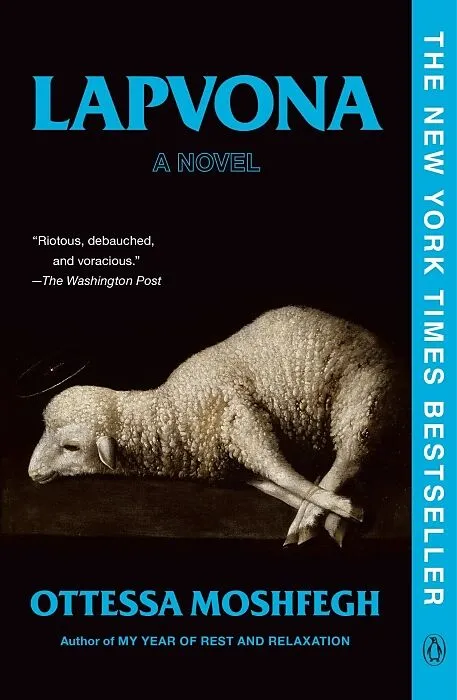
Lapvona
Beschreibung
Informationen zum Autor Ottessa Moshfegh Klappentext An Instant New York Times Bestseller! Lapvona flips all the conventions of familial and parental relations, putting hatred where love should be or a negotiation where grief should be . . . Through a mix of w...Format auswählen
- Kartonierter EinbandCHF 20.30
- Kartonierter EinbandCHF 31.90

Wird oft zusammen gekauft
Andere Kunden kauften auch
Beschreibung
Informationen zum Autor Ottessa Moshfegh Klappentext An Instant New York Times Bestseller! Lapvona flips all the conventions of familial and parental relations, putting hatred where love should be or a negotiation where grief should be . . . Through a mix of witchery, deception, murder, abuse, grand delusion, ludicrous conversations, and cringeworthy moments of bodily disgust, Moshfegh creates a world that you definitely don't want to live in, but from which you can't look away. The Atlantic In a village buffeted by natural disasters, a motherless shepherd boy finds himself part of a power struggle that puts the community's faith to a savage test, in a spellbinding novel that represents Ottessa Moshfegh's most exciting leap yet Little Marek, the abused and delusional son of the village shepherd, believes his mother died giving birth to him. One of Marek's few consolations is his enduring bond with the blind village midwife, Ina, who suckled him when he was a baby. For some people, Ina's ability to receive transmissions of sacred knowledge from the natural world is a godsend. For others, Ina's home in the woods is a godless place. The people's desperate need to believe that there are powers that be who have their best interests at heart is put to a cruel test by their depraved lord and governor, especially in this year of record drought and famine. But when fate brings Marek into violent proximity to the lord's family, new and occult forces arise to upset the old order. By year's end, the veil between blindness and sight, life and death, and the natural world and the spirit world will prove to be very thin indeed. Leseprobe spring The bandits came again on Easter. This time they slaughtered two men, three women, and two small children. Some smelting tools were stolen from the blacksmith, but no gold or silver, as there was none. One of the bandits was injured by an ax wielded by the slain children's mother-she smashed his left foot. Then he was restrained by neighbors and dragged to the village square, where he was beaten and put in the pillory. Villagers pelted him with mud and animal excrement until nightfall. Grigor, the dead children's grandfather, was too bereft to sleep, so he got up in the night, went to the square, cut off the bandit's ear with a garden knife, and flung it in a lemon tree laden with blossoms. 'For the birds to eat!' he yelled at the bleeding man and sobbed as he slunk away. Nobody could say what specific acts of horror this one pilloried bandit had committed. The rest of the bandits got away and took with them six geese, four goats, six wheels of cheese, and a cask of honey, in addition to the iron tools. No lambs were stolen, as the lamb herder, Jude, lived in a pasture several miles from the center of the village, and he had his lambs penned and sleeping soundly that night as usual. The pasture was at the foot of a hill, on top of which sat the large stone manor where Villiam, Lapvona's lord and governor, resided. His guards were in position to defend him should any menacing individual ever climb the hill. Between the echoing screams from the village, Jude thought he could hear the gut strings of the guards' bows tighten from where he lay awake by the fire that night. It was not by chance that Jude and his son, Marek, lived in the pasture below the manor. Villiam and Jude shared a blood relation, their great-grandfather. Jude thought of Villiam as his cousin, though the two men had never met. On Monday, Marek, age thirteen, walked to the village to assist the men in digging a trench to bury the dead. He wanted to be helpful, but cowered when the bodies were laid out on the thick grass of the cemetery and the men took up their shovels. The heads of the dead were covered only in thin cloths. Marek imagined that their faces were still alive. He could see the...
Autorentext
Ottessa Moshfegh
Klappentext
**An Instant New York Times Bestseller!
“Lapvona flips all the conventions of familial and parental relations, putting hatred where love should be or a negotiation where grief should be . . . Through a mix of witchery, deception, murder, abuse, grand delusion, ludicrous conversations, and cringeworthy moments of bodily disgust, Moshfegh creates a world that you definitely don’t want to live in, but from which you can’t look away.” —The Atlantic
In a village buffeted by natural disasters, a motherless shepherd boy finds himself part of a power struggle that puts the community’s faith to a savage test, in a spellbinding novel that represents Ottessa Moshfegh’s most exciting leap yet
Little Marek, the abused and delusional son of the village shepherd, believes his mother died giving birth to him. One of Marek’s few consolations is his enduring bond with the blind village midwife, Ina, who suckled him when he was a baby. For some people, Ina’s ability to receive transmissions of sacred knowledge from the natural world is a godsend. For others, Ina’s home in the woods is a godless place.
The people’s desperate need to believe that there are powers that be who have their best interests at heart is put to a cruel test by their depraved lord and governor, especially in this year of record drought and famine. But when fate brings Marek into violent proximity to the lord’s family, new and occult forces arise to upset the old order. By year’s end, the veil between blindness and sight, life and death, and the natural world and the spirit world will prove to be very thin indeed.
Zusammenfassung
In a village in a medieval fiefdom buffeted by natural disasters, a motherless shepherd boy finds himself the unlikely pivot of a power struggle that puts all manner of faith to a savage test, in a spellbinding novel that represents Ottessa Moshfegh’s most exciting leap yet
Little Marek, the abused and delusional son of the village shepherd, believes his mother died giving birth to him. One of Marek’s few consolations is his enduring bond with the blind village midwife, Ina, who suckled him when he was a baby. For some people, Ina’s ability to receive transmissions of sacred knowledge from the natural world is a godsend. For others, Ina’s home in the woods is a godless place.
The people’s desperate need to believe that there are powers that be who have their best interests at heart is put to a cruel test by their depraved lord and governor, especially in this year of record drought and famine. But when fate brings Marek into violent proximity to the lord’s family, new and occult forces arise to upset the old order. By year’s end, the veil between blindness and sight, life and death, and the natural world and the spirit world will prove to be very thin indeed.