
IHR WARENKORB IST AKTUELL LEER.
Haben Sie noch nichts passendes gefunden? Stöbern Sie durch unser komplettes Sortiment.
Oder melden Sie sich an bzw. registrieren Sie sich.
- Kostenlose Lieferung
- Kauf auf Rechnung
- Ex Libris Tiefpreis
- Filiallieferung und 650+ Abholorte
- Rabatt-Bons als Club-Mitglied
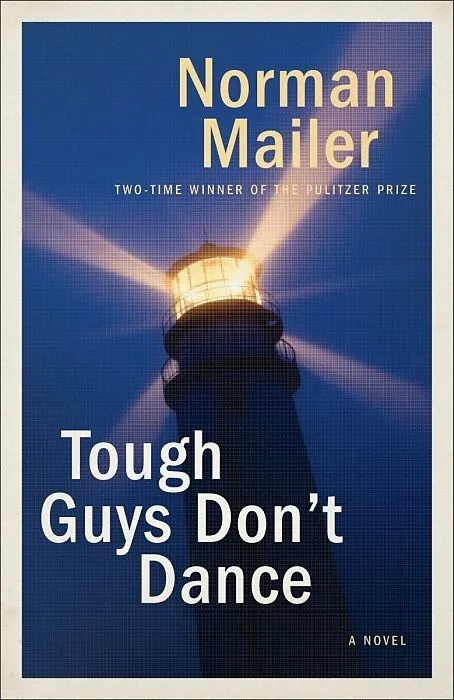
Tough Guys Don't Dance
Beschreibung
“Spectacular . . . [Norman Mailer] makes every word count, like a master knife thrower zinging stilettos in a circle around your head.”-- People Norman Mailer peers into the recesses and buried virtues of the modern American male in a brilliant cri...Format auswählen
- Kartonierter EinbandCHF 24.00

Wird oft zusammen gekauft
Andere Kunden kauften auch
Beschreibung
“Spectacular . . . [Norman Mailer] makes every word count, like a master knife thrower zinging stilettos in a circle around your head.”-- People Norman Mailer peers into the recesses and buried virtues of the modern American male in a brilliant crime novel that transcends genre. When Tim Madden, an unsuccessful writer living on Cape Cod, awakes with a gruesome hangover, a painful tattoo on his upper arm, and a severed female head in his marijuana stash, he has almost no memory of the night before. As he reconstructs the missing hours, Madden runs afoul of retired prizefighters, sex addicts, mediums, former cons, a world-weary ex-girlfriend, and his own father, old now but still a Herculean figure. Stunningly conceived and vividly composed, Tough Guys Don’t Dance represents Mailer at the peak of his powers. Praise for Tough Guys Don’t Dance “As brash, brooding and ultimately mesmerizing as the author himself . . . [Mailer strikes a] dazzling balance between humor and horror.” --New York Daily News “A first-rate page-turner of a murder mystery . . . full of great characters, littered with dead bodies and replete with plausible suspects.” -- Chicago Tribune “[ Tough Guys Don’t Dance ] has that charming Mailer bravado.” -- The New York Times
Praise for Tough Guys Don’t Dance
“Spectacular . . . [Norman Mailer] makes every word count, like a master knife thrower zinging stilettos in a circle around your head.”—People
“As brash, brooding and ultimately mesmerizing as the author himself . . . [Mailer strikes a] dazzling balance between humor and horror.”—New York Daily News
“A first-rate page-turner of a murder mystery . . . full of great characters, littered with dead bodies and replete with plausible suspects.”—Chicago Tribune
“[Tough Guys Don’t Dance] has that charming Mailer bravado.”—The New York Times
Praise for Norman Mailer
“[Norman Mailer] loomed over American letters longer and larger than any other writer of his generation.”—The New York Times
“A writer of the greatest and most reckless talent.”—The New Yorker
“Mailer is indispensable, an American treasure.”—The Washington Post
“A devastatingly alive and original creative mind.”—Life
“Mailer is fierce, courageous, and reckless and nearly everything he writes has sections of headlong brilliance.”—The New York Review of Books
“The largest mind and imagination [in modern] American literature . . . Unlike just about every American writer since Henry James, Mailer has managed to grow and become richer in wisdom with each new book.”—Chicago Tribune
“Mailer is a master of his craft. His language carries you through the story like a leaf on a stream.”—The Cincinnati Post
Autorentext
Norman Mailer
Leseprobe
At dawn, if it was low tide on the flats, I would awaken to the chatter of gulls. On a bad morning, I used to feel as if I had died and the birds were feeding on my heart. Later, after I had dozed for a while, the tide would come up over the sand as swiftly as a shadow descends on the hills when the sun lowers behind the ridge, and before long the first swells would pound on the bulkhead of the deck below my bedroom window, the shock rising in one fine fragment of time from the sea wall to the innermost passages of my flesh. Boom! the waves would go against the wall, and I could have been alone on a freighter on a dark sea.
In fact, I was awakening alone in bed, on the twenty-fourth drear morning after my wife had decamped. That evening, still alone, I would celebrate the twenty-fourth night. It must have proved quite an occasion. Over days to come, when I would be searching for a clue to my several horrors, I would attempt to peer through the fogbanks of memory to recall just what acts I might or might not have committed on all of that twenty-fourth night.
Little came back to me, however, of what I did after I got out of bed. It may have been a day like all the others. There is a joke about a man who is asked on his first visit to a new doctor to describe his daily routine. He promptly offers: “I get up, I brush my teeth, I vomit, I wash my face …” at which point the doctor inquires, “You vomit every day?”
“Oh, yes, Doctor,” replies the patient. “Doesn’t everyone?”
I was that man. Each morning, after breakfast, I could not light a cigarette. I had no more than to put one in my mouth and was ready to retch. The foul plenitude of losing a wife was embracing me.
For twelve years I had been trying to give up smoking. As Mark Twain said—and who does not know the remark?—“It’s nothing to stop. I’ve quit a hundred times.” I used to feel I had said it myself, for certainly I had tried on ten times ten occasions, once for a year, once for nine months, once for four months. Over and over again I gave them up, a hundred times over the years, but always I went back. For in my dreams, sooner or later, I struck a match, brought flame to the tip, then took in all my hunger for existence with the first puff. I felt impaled on desire itself—those fiends trapped in my chest and screaming for one drag. Change the given!
So I learned what addiction is. A beast had me by the throat and its vitals were in my lungs. I wrestled that devil for twelve years and sometimes I beat him back. Usually it was at great loss to myself, and great loss to others. For when I did not smoke, I grew violent. My reflexes lived in the place where the match used to strike, and my mind would lose those bits of knowledge that keep us serene (at least if we are American). In the throes of not smoking, I might rent a car and never notice whether it was a Ford or a Chrysler. That can be seen as the beginning of the end. On one occasion, when I did not smoke, I went on a long trip with a girl I loved named Madeleine to meet up with a married couple who wanted to have a weekend of wife-swapping. We indulged them. Driving back, Madeleine and I had a quarrel, and I wrecked the car. Madeleine’s insides were badly hurt. I went back to smoking.
I used to say: “It’s easier to give up the love of your life than to kick cigarettes,” and suspect I was right in such a remark. But then last month, twenty-four days ago, my wife took off. Twenty-four days ago. I learned a little more about addiction. It may be simpler to give up love than dispense with your smokes, but when it comes to saying goodbye to love-and-hate—ah, that reliable standby of the head shrinkers, the love-hate relationship!—why, ending your marriage is easily as difficult as relinquishing your nicotine, and much the same, for I can tell you that after twelve years, I had gotten to hate the filthy stuff just so much as a bitter wife. Even the first inhale of the morning (whose sure bliss once seemed the ineradicable reason I could never give up tobacco) had now become a convulsion of coughing. No more might remain than the addiction itself, but addiction is still a signature on the bottom line of your psyche.
That is how it was with my marriage, now that Patty Lareine was gone. If I had loved her once while knowing her frightful faults—even as we smoke like happy fiends and shrug away the thought of a lung cancer still decades away, so did I always perceive that Patty Lareine could be my doom around the…