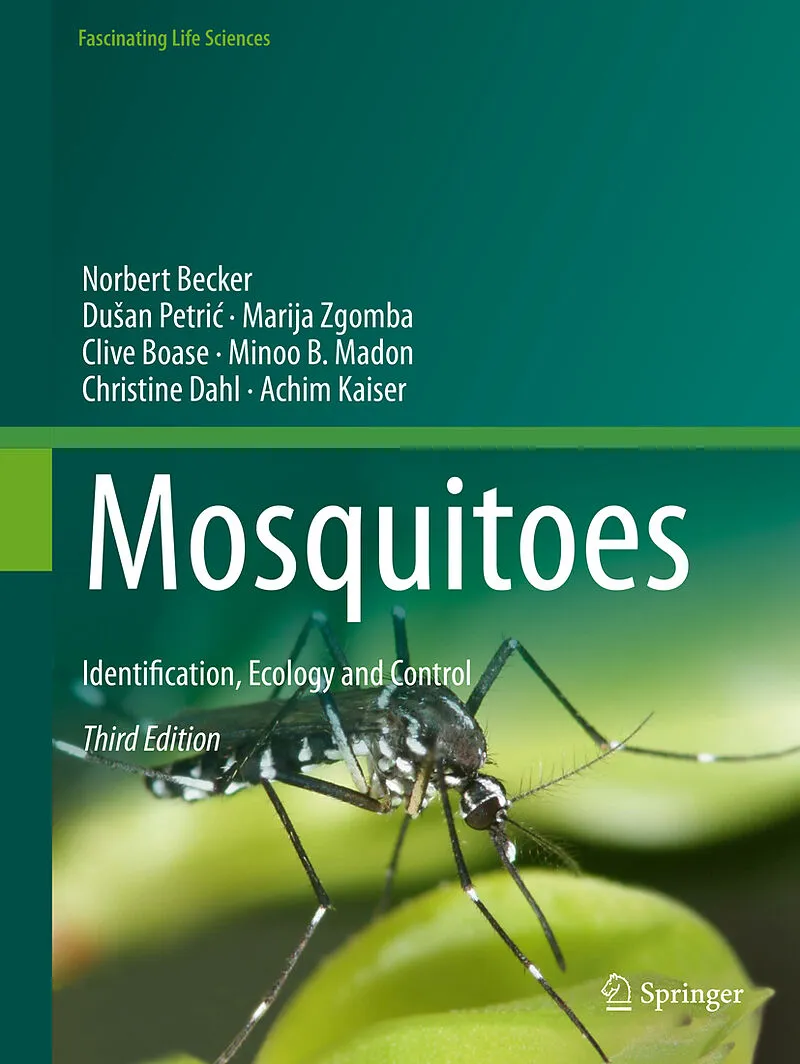
Mosquitoes
Beschreibung
Including a wealth of information on the bionomics, systematics, ecology, research techniques and control of both nuisance and disease vector this readable volume provides practical guidelines and key information for professionals and laymen alike. Presents a ...Format auswählen
- Fester EinbandCHF 173.20
- E-Book (pdf)CHF 189.90
- Fester EinbandCHF 334.40
- E-Book (pdf)CHF 389.90

Wird oft zusammen gekauft
Andere Kunden kauften auch
Beschreibung
Including a wealth of information on the bionomics, systematics, ecology, research techniques and control of both nuisance and disease vector this readable volume provides practical guidelines and key information for professionals and laymen alike.
Presents a multitude of information on bionomics, systematics, ecology and control of both pestiferous (nuisance) and disease vectors mosquitoes Contains revised and new data, for instance on Zika outbreak, autochthonous Dengue, Chikungunya and Malaria in Europe Provides an overview on how global warming affects vector species and associated diseases with relevance for human health
Autorentext
Norbert Becker ist Professor für medizinische Entomologie und Ökologie an der Universität Heidelberg. Er leitete vier Jahrzehnte die Stechmückenbekämpfung am Oberrhein (KABS) und berät die Weltgesundheitsorganisation (WHO/TDR) in Fragen der Vektorbekämpfung. Duan Petri war als medizinischer Entomologe Professor an der Universität Novi Sad, Serbien, Leiter des Zentrums "Excellence One Health" zur Untersuchung von stechenden Insekten und ist Berater vieler internationaler Organisationen. Marija Zgomba war Professorin an der Universität in Novi Sad, Serbien und setzte sich für die Anwendung biologischer und chemischer Strategien zur Bekämpfung von Stech- und Kriebelmücken auf nationaler und internationaler Basis ein. Clive Boase entwickelt als medizinischer Entomologe und Berater der "Pest Management Consultancy" weltweit Strategien zur Bekämpfung von Schädlingen im städtischen Bereich. Nil Rahola ist medizinischer Entomologe am nationalen Forschungsinstitut für nachhaltige Entwicklung (IRD) in Montpellier, Frankreich, und beschäftigt sich international mit Arthropoden von medizinischer und veterinärmedizinischer Bedeutung. Jonas Schmidt-Chanasit ist Professor für Arbovirologie an der Universität Hamburg und leitet als Humanmediziner die Abteilung für Arbovirologie und Entomologie am Bernhard-Nocht-Institut für Tropenmedizin (BNITM) in Hamburg, wo er stellvertretender Direktor des Kooperationszentrums der WHO für Arboviren ist. Achim Kaiser ist seit mehr als drei Jahrzehnten als international aktiver Entomologe bei der "Kommunalen Aktionsgemeinschaft zur Bekämpfung der Stechmückenplage" (KABS) mit den Schwerpunkten Systematik, Lebensweise und Bekämpfung der Stechmücken beschäftigt.
Klappentext
Mosquitoes I dentification, E cology and C ontrol presents a wealth of information on the bionomics, systematics, ecology, research techniques and control of both nuisance and disease vector mosquitoes. It provides practical guidance and important information in an easily readable style, suitable for anyone involved with, or interested in mosquitoes and their management.
In this new edition, 102 European species including the most important invasive species and more than 100 globally important vector and nuisance species are described . Most of them, including all European species, are presented in the fully illustrated identification keys, followed by a detailed description of the morphology, biology, distribution and medical importance of each species, including over 700 detailed drawings.
****Mosquitoes I dentification, Ec ology and C ontrol **** includes:
· systematics and biology
· medical significance
· research techniques
· morphological characteristics used for identification of larvae and adults
· illustrated identification keys for larval and adult mosquito genera
· morphology, ecology, and distribution of the species identified in the keys
· biological, genetic, physical and chemical control of mosquitoes
Mosquitoes I dentification, E cology and C ontrol **** is a valuable tool for vector ecologists, medical entomologists, students and all those involved with mosquito systematics, biology, ecology, and control world-wide.
Society as a whole benefit from the implementation of carefully designed and sustainable programs for the management of mosquitoes, and the diseases they transmit. The third edition of this successful publication has been comprehensively updated and expanded, to provide the foundation of a more enlightened and informed approach to mosquito management.
Zusammenfassung
Mosquitoes Identification, Ecology and Control presents a wealth of information on the bionomics, systematics, ecology, research techniques and control of both nuisance and disease vector mosquitoes. It provides practical guidance and important information in an easily readable style, suitable for anyone involved with, or interested in mosquitoes and their management.
In this new edition, 102 European species including the most important invasive species and more than 100 globally important vector and nuisance species are described**.** Most of them, including all European species, are presented in the fully illustrated identification keys, followed by a detailed description of the morphology, biology, distribution and medical importance of each species, including over 700 detailed drawings.
Mosquitoes Identification, Ecology and Control includes:
· systematics and biology
· medical significance
· research techniques
· morphological characteristics used for identification of larvae and adults
· illustrated identification keys for larval and adult mosquito genera
· morphology, ecology, and distribution of the species identified in the keys
· biological, genetic, physical and chemical control of mosquitoes
Mosquitoes Identification, Ecology and Control**** is a valuable tool for vector ecologists, medical entomologists, students and all those involved with mosquito systematics, biology, ecology, and control world-wide.
Society as a whole benefit from the implementation of carefully designed and sustainable programs for the management of mosquitoes, and the diseases they transmit. The third edition of this successful publication has been comprehensively updated and expanded, to provide the foundation of a more enlightened and informed approach to mosquito management.
Inhalt
PART I General Aspects.- Systematics.- Biology of Mosquitoes.- Medical Importance of Mosquitoes.- Mosquito Research Techniques.-Morphology of Mosquitoes.- PART II Identification Keys Morphology Ecology and Distribution of European Species.- Key to Female Mosquitoes.- Key to Male Mosquitoes.- Key to Mosquito IV Instar Larvae.- Subfamily Anophelinae.- Subfamily Culicinae.- PART III Identification Keys Morphology Ecology and Distribution of Important Vector and Nuisance Species World Wide.- Africa.- Asia.- Australia.- Central and South America.- North America.- PART IV Control of Mosquitoes.- Biological control.- Environmental management.- Chemical control.- Physical control.- Genetical control.- Personal protection.- Integration and implementation of mosquito management.- Literature.


