Space Psychology and Psychiatry
Beschreibung
The first edition is the winner of the 2004 IAA Life Science Book Award ! 1st edition: Winner of the 2004 IAA Life Sciences Book Award! This 2nd Edition represents a complete revision with about 23% more pages and new material compared to the first edition; it...Format auswählen
- Kartonierter EinbandCHF 205.20
- Fester EinbandCHF 205.20
- E-Book (pdf)CHF 208.00

Wird oft zusammen gekauft
Andere Kunden kauften auch
Beschreibung
The first edition is the winner of the 2004 IAA Life Science Book Award !
1st edition: Winner of the 2004 IAA Life Sciences Book Award!
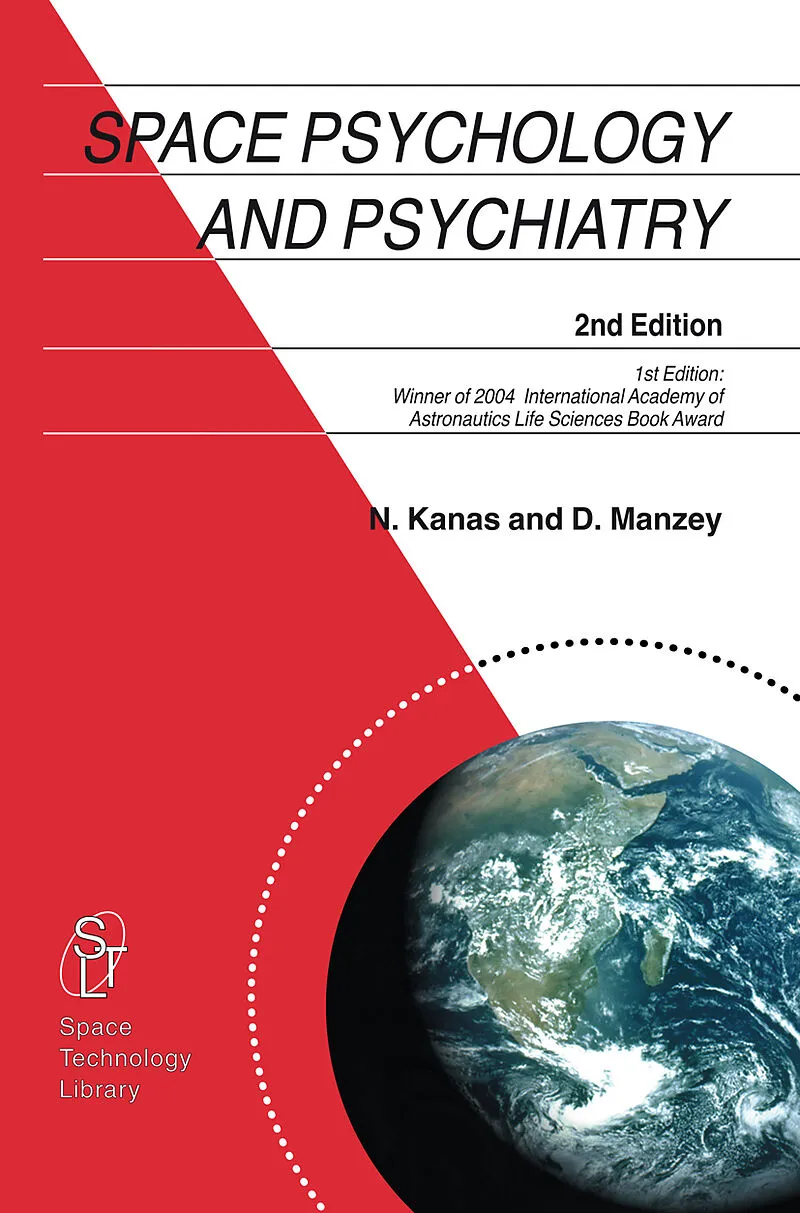
This 2nd Edition represents a complete revision with about 23% more pages and new material compared to the first edition; it includes several recent studies involving astronauts and cosmonauts; and discusses the new field of space tourism. It deals with psychological, psychiatric, and psychosocial issues that affect people who live and work in space. Unlike other books that focus on anecdotal reports and ground-based simulation studies, this book emphasizes the findings from psychological research conducted during actual space missions. Both authors have been active in such research. What is presented in this readable text has previously been found only in scientific journal articles. Topics that are discussed include: behavioral adaptation to space; human performance and cognitive effects; crewmember interactions; psychiatric responses; psychological countermeasures related to habitability factors, work-design, selection, training, and in-flight monitoring and support; and the impact of expeditionary missions to Mars and beyond.
People finding this book of interest will include psychology and social science students and professors in universities, medical students and residents in psychiatry and aerospace medicine, human factors workers in space and aviation professions, individuals involved with isolated environments on Earth (e.g., the Antarctic, submarines), aerospace workers in businesses and space agencies such as NASA and ESA, and anyone who is interested in learning the facts about the human side of long-duration space missions.
1st edition reviews:
'Drs. Kanas and Manzey have produced a comprehensive review of the issues and research in the areas of space psychology and psychiatry. This includes a long overdue up-to-date compilation of findings from research performed in space as well as anecdotal reports. The authors' personal involvementand experience in space research and operations shows throughout the book in its presentation and research of the issues as well as in the insights offered. Highly informative, well organized and written at a level appropriate for a broad range of readers, this book will be a reference source for space professionals, researchers, students, and interested laymen alike. '
Leena Tomi, Deputy Director, Operational Space Medicine, Canadian Space Agency
Jean-Marc Comtois, B.Eng., M.D. Director, Operational Space Medicine, Canadian Space Agency
'An excellent book by two outstanding experts. The refreshing mix between review and original research results spiced with personal experiences makes it interesting for every reader.'
Oliver Angerer, M.D., Human Exploration Science Coordinator, European Space Agency
"This book is not just a record of what can go wrong with regard to mental health and performance, but explores a number of prudent psychological, ergonomic, and design engineering countermeasures to help guide future mission planners and spacecraft engineers[]Written in a clear and engaging style, this book will not only interest the general space enthusiast, but all human factors specialists and anyone else studying the human reaction to extreme and unusual environments. As a comprehensive account of what we have learned so far about the psychological challenges of space travel, Space Psychology and Psychiatry should also be on the bookshelf of any researcher plotting the future course of human spaceflight."
Ergonomics in Design
Winner of the 2004 International Academy of Astronautics Life Sciences Award
Autorentext
Dr. Nick Kanas is an Emeritus Professor of Psychiatry at the University of California, San Francisco, where he directed the group therapy training program and wrote a book entitled Group Therapy for Schizophrenic Patients. For over 20 years, he conducted research in group therapy, and for over 15 years after that he was the Principal Investigator of NASA-funded psychological research on astronauts and cosmonauts. In 1999, Dr. Kanas received the Aerospace Medical Association Raymond F. Longacre Award for Outstanding Accomplishment in the Psychological and Psychiatric Aspects of Aerospace Medicine. In 2008, he received the International Academy of Astronautics Life Science Award. He has over 230 scientific publications.Dr. Kanas is the coauthor of Space Psychology and Psychiatry (now in its 2nd edition), which won the 2004 International Academy of Astronautics Life Science Book Award. In 2015, he authored Humans in Space: The Psychological Hurdles, which won the 2016 International Academy of Astronautics Life Science Book Award. Dr. Kanas has been an amateur astronomer for over 50 years. He has collected antiquarian celestial maps for over 30 years and has given talks on the history of celestial cartography to amateur and professional groups. He is the author of Star Maps: History, Artistry, and Cartography (now in its 2nd edition), and Solar System Maps: From Antiquity to the Space Age. An avid science fiction reader, Dr. Kanas has given talks and participated on panels at numerous World Science Fiction Conventions. He has published articles for Analog Science Fiction and Fact magazine and won the Analog AnLab 2015 readers' poll award for Best Fact Article of the year. He has published three science fiction novels for the Springer Science and Fiction series: The New Martians, The Protos Mandate, and The Caloris Network. Except for his group therapy book, all of his books are published by Springer.
Klappentext
1st edition: Winner of the 2004 IAA Life Sciences Book Award! This 2nd Edition represents a complete revision with about 23% more pages and new material compared to the first edition; it includes several recent studies involving astronauts and cosmonauts; and discusses the new field of space tourism. It deals with psychological, psychiatric, and psychosocial issues that affect people who live and work in space. Unlike other books that focus on anecdotal reports and ground-based simulation studies, this book emphasizes the findings from psychological research conducted during actual space missions. Both authors have been active in such research. What is presented in this readable text has previously been found only in scientific journal articles. Topics that are discussed include: behavioral adaptation to space; human performance and cognitive effects; crewmember interactions; psychiatric responses; psychological countermeasures related to habitability factors, work-design, selection, training, and in-flight monitoring and support; and the impact of expeditionary missions to Mars and beyond. People finding this book of interest will include psychology and social science students and professors in universities, medical students and residents in psychiatry and aerospace medicine, human factors workers in space and aviation professions, individuals involved with isolated environments on Earth (e.g., the Antarctic, submarines), aerospace workers in businesses and space agencies such as NASA and ESA, and anyone who is interested in learning the facts about the human side of long-duration space missions. 1st edition reviews: Drs. Kanas and Manzey have produced a comprehensive review of the issues and research in the areas of space psychology and psychiatry. This includes a long overdue up-to-date compilation of findings from research performed in space as well as anecdotal reports. The authors' personal involvementand experience in space research and operations shows throughout the book in its presentation and research of the issues as well as in the insights offered. Highly informative, well organized and written at a level appropriate for a broad range of readers, this book will be a reference source for space professionals, researchers, students, and interested laymen alike. Leena Tomi, Deputy…
Produktinformationen
Weitere Produkte aus der Reihe "Space Technology Library"


Tief- preis
- Space Psychology and Psychiatry
- Nick Kanas, Dietrich Manzey

