Beschreibung
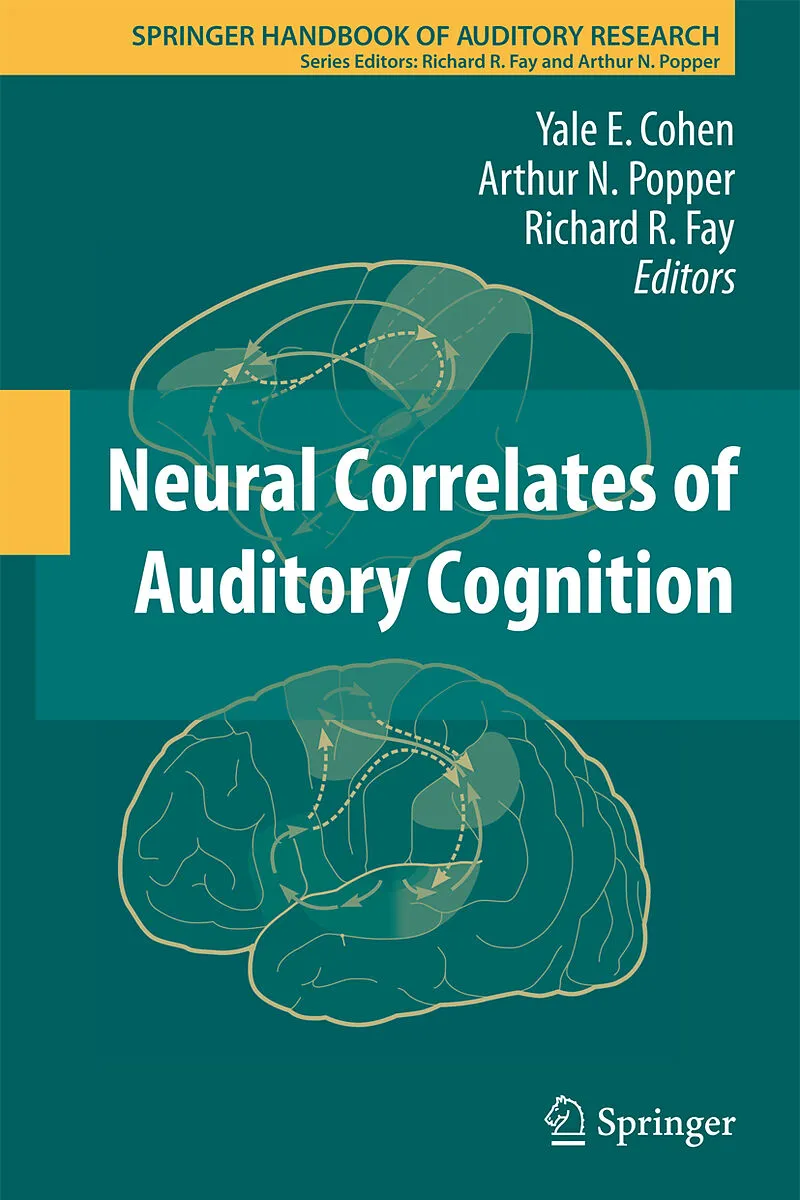
Hearing and communication present a variety of challenges to the nervous system. To be heard and understood, a communication signal must be transformed from a time-varying acoustic waveform to a perceptual representation to an even more abstract representation...Hearing and communication present a variety of challenges to the nervous system. To be heard and understood, a communication signal must be transformed from a time-varying acoustic waveform to a perceptual representation to an even more abstract representation that integrates memory stores with semantic/referential information. Finally, this complex, abstract representation must be interpreted to form categorical decisions that guide behavior. Did I hear the stimulus? From where and whom did it come? What does it tell me? How can I use this information to plan an action? All of these issues and questions underlie auditory cognition. Since the early 1990s, there has been a re-birth of studies that test the neural correlates of auditory cognition with a unique emphasis on the use of awake, behaving animals as model. Continuing today, how and where in the brain neural correlates of auditory cognition are formed is an intensive and active area of research. Importantly, our understanding of the role that the cortex plays in hearing has the potential to impact the next generation of cochlear- and brainstem-auditory implants and consequently help those with hearing impairments. Thus, it is timely to produce a volume that brings together this exciting literature on the neural correlates of auditory cognition. This volume compliments and extends many recent SHAR volumes such as Sound Source Localization (2005) Auditory Perception of Sound Sources (2007), and Human Auditory Cortex (2010). For example, in many of these volumes, similar issues are discussed such as auditory-object identification and perception with different emphases: in Auditory Perception of Sound Sources, authors discuss the underlying psychophysics/behavior, whereas in the Human Auditory Cortex, fMRI data are presented. The unique contribution of the proposed volume is that the authors will integrate both of these factors to highlight the neural correlates of cognition/behavior. Moreover, unlike other these other volumes, the neurophysiological data will emphasize the exquisite spatial and temporal resolution of single-neuron [as opposed to more coarse fMRI or MEG data] responses in order to reveal the elegant representations and computations used by the nervous system.
Complements and extends many recent SHAR volumes such as Sound Source Localization (2005) Auditory Perception of Sound Sources (2007), and Human Auditory Cortex (2011) The neurophysiological data will emphasize the exquisite spatial and temporal resolution of single-neuron Brings together this exciting literature on the neural correlates of auditory cognition Includes supplementary material: sn.pub/extras
Klappentext
fince the early 1990s, there has been a re-birth of studies that test the neural correlates of auditory cognition with a unique emphasis on the use of awake, behaving animals as models. Continuing today, how and where in the brain neural correlates of auditory cognition are formed is an intensive and active area of research. Importantly, our understanding of the role that the cortex plays in hearing has the potential to impact the next generation of cochlear- and brainstem-auditory implants and consequently help those with hearing impairments. This volume brings together this exciting literature on the neural correlates of auditory cognition.Auditory Cognition: The Integration of Psychophysics with Neurophysiology Yale E. CohenProcessing Streams in Auditory Cortex Josef P. RauscheckerTask-Related Activation of Auditory Cortex Henning Scheich and Michael BroschThe Role of Auditory Cortex in Spatial Processing Gregg H. RecanzoneNeural Correlates of Auditory Object Perception Jan W. H. Schnupp, Christian Honey, and Ben D. B. WillmoreNeurophysiology of Attention and Memory Processing Amy Poremba and James BigelowPhonemic Representations and Categories Mitchell SteinschneiderThe Influence of Vision on Auditory Communication in Primates Asif A. Ghazanfar and Chandramouli ChandrasekaranAttention and Dynamic, Task-Related Receptive Field Plasticity in Adult Auditory Cortex Jonathan B. Fritz, Stephen David, and Shihab ShammaExperience-Dependent Plasticity and Auditory Cortex Kathryn N. Shepard, Michael P. Kilgard, and Robert C. Liu About the Editors:Yale Cohen is Associate Professor of Otorhinolaryngology: Head and Neck Surgery and Neuroscience at The University of Pennsylvania, Philadelphia. Arthur N. Popper is Professor in the Department of Biology and Co-Directorof the Center for Comparative and Evolutionary Biology of Hearing at the University of Maryland, College Park. Richard R. Fay is Distinguished Research Professor of Psychology at Loyola University Chicago.About the Series: The Springer Handbook of Auditory Research presents a series of synthetic reviews of fundamental topics dealing with auditory systems. Each volume is independent and authoritative; taken as a set, this series is the definitive resource in the field.
Inhalt
Tief- preis
Tief- preis
Tief- preis