
IHR WARENKORB IST AKTUELL LEER.
Haben Sie noch nichts passendes gefunden? Stöbern Sie durch unser komplettes Sortiment.
Oder melden Sie sich an bzw. registrieren Sie sich.
- Kostenlose Lieferung
- Kauf auf Rechnung
- Ex Libris Tiefpreis
- Filiallieferung und 650+ Abholorte
- Rabatt-Bons als Club-Mitglied
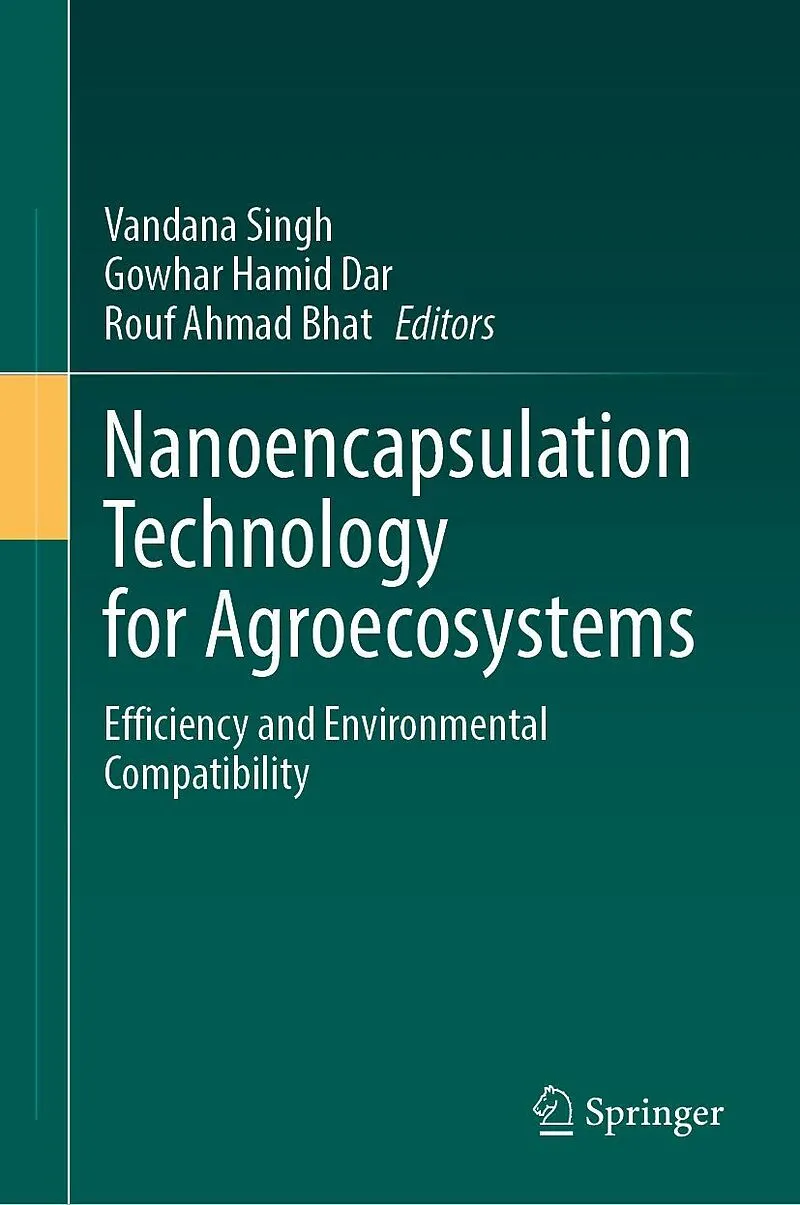
Nanoencapsulation Technology for Agroecosystems
Beschreibung
This volume provides a comprehensive examination of the function of nanoencapsulation in promoting sustainable agricultural practices via the application of nanomaterials in agrochemical formulations. The book explores recent advancements in the synthesis, fu...
Format auswählen
- Fester EinbandCHF 172.40

Wird oft zusammen gekauft
Andere Kunden kauften auch
Beschreibung
This volume provides a comprehensive examination of the function of nanoencapsulation in promoting sustainable agricultural practices via the application of nanomaterials in agrochemical formulations. The book explores recent advancements in the synthesis, functionalisation, and application of nanocarriers, highlighting the ways in which these technologies improve targeted delivery, stability, and controlled release of agrochemicals such as pesticides, herbicides, fertilizers, and biopesticides. The chapters emphasize advanced innovations in encapsulation methods, including the application of biodegradable polymers, liposomes, and mesoporous nanoparticles. These techniques facilitate precise regulation of agrochemical release profiles, thereby decreasing environmental contamination, minimizing pesticide runoff, and enhancing nutrient efficiency. In-depth analysis of the processes involved in regulated pesticide release and the development of nanoencapsulated herbicides underscore their capacity to enhance weed management while reducing unintended consequences. The integration of nanoencapsulated biopesticides within comprehensive pest management frameworks illustrates a sustainable methodology, where advancements in nanotechnology facilitate the application of biologically sourced agents for pest regulation while ensuring a reduced environmental impact. The book will function as an extensive resource for researchers, industry professionals, and policymakers, providing insights into how nanoencapsulation can improve the efficiency, sustainability, and environmental compatibility of agricultural systems.
Autorentext
Dr. Vandana Singh is an associate professor in the Sharda School of Allied Health Sciences, Sharda University, India. She earned her M.Sc. in Microbiology from the University of Pune and completed her PhD in Microbiology at Noida International University. With more than 15 years of teaching and research experience, she has developed expertise across diverse domains of microbiology, including medical and environmental microbiology, food microbiology, microbial nanotechnology, nanomaterials, and microbial biotechnology. Her research is directed towards the application of microbiological and biotechnological approaches for sustainable environmental and health solutions, with a strong emphasis on microbial fuel cells, wastewater and biological treatment technologies, bioremediation of industrial and agricultural pollutants, biodegradation pathways, microbial food technology, and the molecular basis of biofilm and biosurfactant production. Her work integrates fundamental microbiology with applied nanotechnology and biotechnology, enabling the design of microbial and nano-based systems for environmental and biomedical applications. She has made significant scholarly contributions, reflected in her portfolio of numerous patents, research/review papers, edited books, and chapters with leading reputed publishers such as Elsevier, Springer, and CRC Press. She has also contributed extensively to curriculum design, academic training, and evidence-based microbiological education, while guiding numerous research projects at undergraduate, postgraduate, and PhD levels. Her long-term research vision focuses on advancing sustainable microbial and nanobiotechnological interventions for food technology, energy generation, pollutant remediation, and microbial resource management, thereby addressing critical challenges in health, food security, and environmental sustainability.
Dr. Gowhar Hamid Dar serves as a senior assistant professor and head of the department of Environmental Science at Government Degree College Kulgam, Higher Education Department, Government of Jammu & Kashmir, since 13 December 2023. Previously, he was posted at Government Sri Pratap College, Srinagar, from 21 February 2017 to 12 December 2023, where he played a key role in steering the institution's NAAC accreditation from Grade A to A+. During this tenure, he was actively involved in teaching postgraduate (M.Sc.) environmental science and undergraduate courses in environment and water management under Cluster University, Srinagar. Dr. Dar holds a PhD in Environmental Science from the University of Kashmir titled Profiling and Effect of Pathogenic Bacteria in Fishes of Jammu and Kashmir State and Correlation of Disease Incidence with the Trophic Status of Water Bodies. He also earned an M.Phil. in environmental science from the same department, with research focused on Isolation, Identification and Characterization of Penicillium Isolates for Alpha-Amylase Activity. His areas of specialization include environmental microbiology, fish microbiology and pathology, industrial microbiology, microbial taxonomy, pollution, and limnology. He has worked on a nationally funded research project sponsored by SERB-DST, Government of India, focusing on the assessment of bacterial and protozoan diseases in fish fauna of Jammu & Kashmir triggered by pollution and climate change. His research expertise includes the isolation, identification, and characterization of microbes, their pathogenic behavior, and the impact of pollution on fish health, with implications for industrial, economic, and environmental sustainability. Dr. Dar has an extensive publication record, with over 80 research publications (h-index: 19; i10-index: 31; total citations >1600) in reputed national and international journals, including high-impact journals such as Science of the Total Environment and Chemosphere. He has also authored and edited several books and book chapters published by leading international publishers including Springer, Elsevier, CRC Press (Taylor & Francis), Apple Academic Press, John Wiley, and IGI Global. He supervises several PhD and Master's students in Environmental Science. In recognition of his contributions, he has received multiple awards and commendations for excellence in research, teaching, and scientific development. Dr. Dar has served as Principal Investigator and Co-principal Investigator for research projects funded by JKST&IC, Government of J&K, and SERB-DST, Government of India. He is a member of the Board of Studies (BOS) and Board of Research Studies (BORS), Cluster University Srinagar, and has contributed to various academic and research committees. He also serves as Coordinator, Committee for Promotion for Research at Government Degree College Kulgam. Previously, he served as Nodal Officer, Interdisciplinary Research Centre/HUB for Biological Sciences at Sri Pratap College, Cluster University, Srinagar.
Dr. Rouf Ahmad Bhat pursued his doctorate at Sher-e-Kashmir University of Agricultural Sciences and Technology, Kashmir (Division of Environmental Sciences). He works in the Department of School Education, Government of Jammu and Kashmir. Dr. Bhat has been teaching for the past nine years and has authored over 55 research articles (h-index 36; i-index 64; total citation 5600) and 50 chapters, and has published more than 50 books with international publishers. Besides, he has worked as an associate environmental expert in World Bank-funded Flood Recovery Project and the environmental support staff in the Asian Development Bank funded development projects.
Inhalt
Chapter 1: Nanomaterials In Agrochemical Formulations: Innovations In Encapsulation Technologies.- Chapter 2: Nanoencapsulated Bioinoculants: A Green Approach To Sustainable Agriculture.- Chapter 3: Environmental Fate And Transport of Nanoencapsulated Agrochemicals In Agricultural Systems.- Chapter 4: Nanoencapsulation In Foliar And Soil Fertilizer Applications: New Insights.- Chapter 5: Nanoencapsulation Technology For Agroecosystems: Efficiency And Environmental Compatibility Actions.- Chapter 6: Regulatory And Safety Considerations In The Commercialization of Nanoencapsulated Agrochemicals.- Chapter 7: Optimizing Fertilizer Delivery With Nanoencapsulation: Efficiency And Sustainability…