Beschreibung
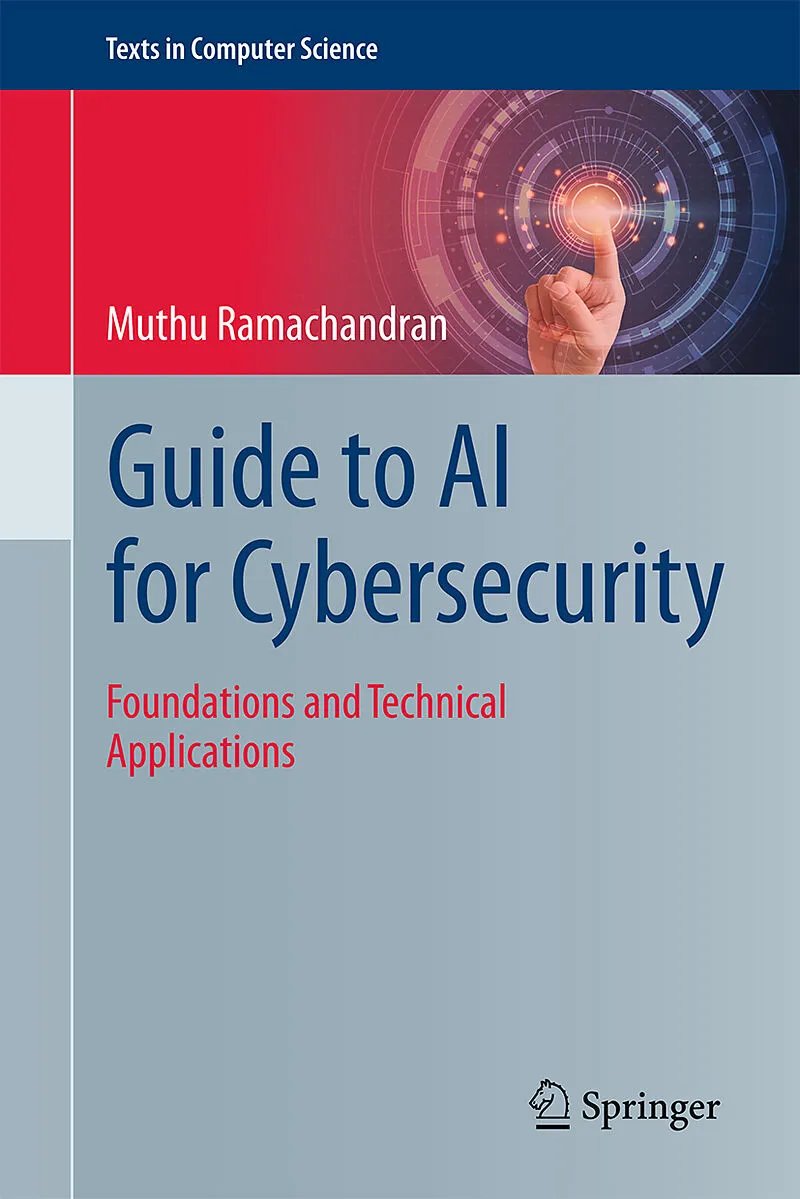
With cybercrime costs exceeding $10.5 trillion annually and ransomware attacks predicted every two seconds by 2031, traditional signature-based security has reached critical breaking points. Guide to AI for Cybersecurity provides the essential roadmap for har...With cybercrime costs exceeding $10.5 trillion annually and ransomware attacks predicted every two seconds by 2031, traditional signature-based security has reached critical breaking points. Guide to AI for Cybersecurity provides the essential roadmap for harnessing artificial intelligence as a force multiplier against sophisticated, AI-powered threats.
This comprehensive textbook bridges the gap between artificial intelligence theory and practical cybersecurity applications through 18 chapters organized around an innovative detection, response, prediction, and prevention (DRPP) framework. Drawing from recent high-impact incidentsincluding the 2025 Collins Aerospace cyberattack, the Marks & Spencer ransomware attack, and the Co-op data breach readers progress from foundational concepts to advanced implementations, gaining hands-on experience with production-ready code examples, real-world case studies, and comprehensive deployment guidance for AI-powered security solutions.
Topics and features:
• Introduces the DRPP framework for systematically implementing AI security across the complete security lifecycle
• Includes complete instructor resources for flexible course adoptionPowerPoint slides, laboratory exercises, assessment questions, and implementation projects
• Provides comprehensive coverage of machine learning (ML) for threat detection, adversarial AI defenses, and automated incident response
• Integrates ethics, governance, and regulatory compliance (GDPR, CCPA, AI Act) throughout, with dedicated coverage of privacy-preserving techniques
• Offers detailed guidance on integrating AI capabilities with industry standards while maintaining compliance requirements
This essential textbook/guide provides comprehensive coverage suitable for graduate students in computer science, cybersecurity, or AI/ML programs, as well as cybersecurity professionals seeking to master AI-powered defense techniques. Software architects building secure AI systems, academic instructors developing AI security courses, and researchers investigating adversarial machine learning also will find the volume invaluable.
Muthu Ramachandran is Research Consultant at Forti5 Technologies Ltd, UK, and Visiting Professor Extraordinarius at University of South Africa.
Provides comprehensive, pedagogically driven coverage, from foundations to advanced applications Offers students and others a practical focus, with real-world case studies and failure analyses Integrates established cybersecurity frameworks with AI implementation
Autorentext
Professor Muthu Ramachandran is currently a Cybersecurity, AI, and Blockchain Research
Consultant at Forti5 Technologies, UK, and a Professor Extraordinarius at University of South Africa
(UNISA). Muthu is a certified IASME CE, ICA, IoT Cyber & IoT Assurance professional with
extensive experience spanning academia, industry research, and standards development.
Previously, Muthu served as Associate Professor at Leeds Beckett University for 18 years and held
visiting professorships at Indian Institute of Technology (ISM) Dhanbad and University of
Southampton. His industrial experience includes nearly eight years at Philips Research Labs, Volantis
Systems Ltd, and DRDO Hyderabad.
As a Fellow of BCS, Senior Fellow of Advance HE, and Senior Member of IEEE and ACM, Muthu has
authored numerous books, book chapters, journal articles, and conference papers. He has chaired and
delivered keynote speeches at major conferences including SE-CLOUD, SECE, IoTBDS, and DSC.
Inhalt
.- **Cybersecurity Foundations for AI Integration.
.- Modern Threat Landscape and AI Opportunities.
.- Cybersecurity Frameworks in the AI Era.
.- AI Security Architecture and Infrastructure.
.- AI-Powered Threat Detection and Analysis.
.- Machine Learning for Threat Detection.
.- Advanced Analytics and Threat Intelligence.
.- Implementation Case Studies.
.- Secure Development with AI Integration.
.- AI-Enhanced Secure Software Development Lifecycle.
.- Threat Modeling and Secure Design Best Practices for AI-Enhanced Applications: New Vectors and Mitigations.
.- AI-Powered Secure Software Development & Best Practice Static Code Analysis: Automated Vulnerability Detection.
.- Security Testing, Validation & Deployment Automation.
.- Secure Software Development Frameworks & Standards: A Critical Analysis of National and International Standards.
.- Data Protection and Privacy in AI Systems.
.- Application Security with Machine Learning.
.- Secure Coding Best Practices for AI Application Development: A Comprehensive Framework Approach.
.- Advanced AI Security Applications.**
.- Automated Incident Response and Orchestration.
.- Ethics, Governance, Risks, Compliance, Sovereignty of AI for Cybersecurity.
.- AI Security and Adversarial Defences.
.- Future Directions and Emerging Threats.