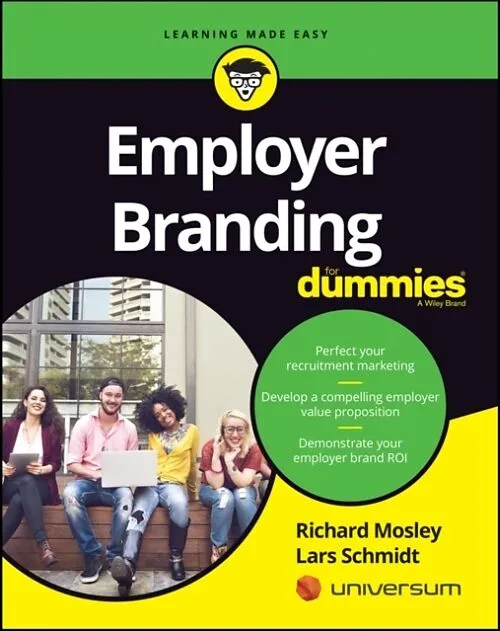
Employer Branding For Dummies
Beschreibung
Autorentext Richard Mosley, Universum's Global Head of Strategy, is widely recognized as a leading global authority on the subject of employer branding. He regularly chairs or delivers keynote presentations at many of the world's leading employer brand events....Format auswählen
- Kartonierter EinbandCHF 34.00
Wird oft zusammen gekauft
Andere Kunden kauften auch
Beschreibung
Autorentext
Richard Mosley, Universum's Global Head of Strategy, is widely recognized as a leading global authority on the subject of employer branding. He regularly chairs or delivers keynote presentations at many of the world's leading employer brand events.
Lars Schmidt, Founder of Amplify Talent and Cofounder of HR Open Source, is a leading strategy consultant, speaker, and writer in the fields of employer branding and recruiting.
Klappentext
- Perfect your recruitment marketing
- Develop a compelling employer value proposition
Demonstrate your employer brand ROI Attract and retain the very best talent The very best employees are the ones with the most options. Why should they choose your company? A strong employer brand makes the decision a no-brainer ? and this book gives you the hard facts and expert insight you need to build your brand as a great place to work. From creating a distinctive employer identity to perfecting your talent-sourcing techniques, it helps create an employer brand that will get the very best talent beating a path to your door. Inside ...
- Create a strong business case
- Develop an effective strategy
- Identify your key target audiences
- Create a compelling brand promise
- Build an attractive career site
- Harness social media
- Deliver an engaging experience
Identify the right metrics and KPIs
Zusammenfassung
Attract the very best talent with a compelling employer brand! Employer Branding For Dummies is the clear, no-nonsense guide to attracting and retaining top talent.Inhalt
Introduction 1
About This Book 1
Foolish Assumptions 2
Icons Used in This Book 3
Beyond the Book 3
Where to Go from Here 3
Part 1: Getting Started with Employer Branding 5
Chapter 1: Building a Strong Employer Brand 7
What Is Employer Branding? 8
Recognizing the benefits of employer branding 8
Stepping through the employer branding process/cycle 9
Laying the Foundation for Your Employer Brand 11
Aligning with business goals and objectives 11
Fitting in with your other brands 12
Rallying the troops (and leaders) 12
Taking an Honest Look at Your Employer Brand 13
Putting the Pieces in Place 14
Defining the give and get of the employment deal 15
Establishing employer brand guidelines 16
Giving your target talent a reason to tune in 17
Spreading the Word through Various Channels 19
Staying True to the Promise of Your Employer Brand 20
Monitoring Your Employer Branding Success 21
Chapter 2: Preparing for the Journey 23
Finding Your Fit within the Overall Company Strategy 24
Aligning with the corporate brand 25
Aligning with the customer brand 27
Supporting the business strategy 29
Getting the right talent onboard 29
Aligning with human resources 34
Building Your Business Case for Employer Branding 34
Considering cost-cutting benefits 35
Checking out possible performance benefits 36
Making Friends and Influencing People 38
Getting senior leadership onboard 38
Convincing marketing and communications to go along with the idea 39
Getting HR comfortable with the language and thinking of brand management 40
Chapter 3: Conducting an Employer Brand Health Check 41
Taking a Look in the Mirror 42
Finding out what you already know 42
Conducting employee surveys and focus groups 43
Taking a Look from the Outside In 47
Gauging employer brand awareness, consideration, and preference 47
Identifying your key talent competitors 49
Evaluating the strength of your organization's employer brand image 50
Evaluating the factors that shape your organization's brand image 53
Weighing Your Competition 54
Benchmarking your competitors' media presence 55
Mapping your competitors' brand positioning 56
Spotting generic plays and opportunities to be different 57
Part 2: Developing an Effective Employer Brand Strategy 61
Chapter 4: Defining Your Employer Value Proposition 63
Setting Your Sights on the Goal: A Sample Employer Value Proposition 64
Brainstorming to Generate Ideas and Content 66
Gathering the right people 67
Drawing insights from your data 67
Conducting a productive employer value proposition development workshop 69
Balancing Competing Perspectives 73
Clarifying the give and get of the employment deal 73
Weighing current strengths and future aspirations 74
Balancing global and local considerations 75
Differentiating Your Organization from the Competition 76
Choosing Your Core Positioning 77
Writing Your Employer Value Proposition 78
Sense Checking and Stress Testing 79
Identifying tangible claims and proof points 79
Field-testing your draft employer value proposition 80
Chapter 5: Building Your Employer Brand Framework 83
Aligning Your Employer Branding with Your Corporate and Customer Branding 84
Working with a monolithic brand 84
Navigating within a house of brands 86
Optimizing the parent-subsidiary house of brands framework 87
Creating a Visual Brand Identity with Impact 88
Developing Overarching Recruitment Campaigns 90
Setting campaign objectives 90
Writing a creative creative brief 91
Choosing the right creatives to work with 92
Testing Creative Solutions 95
Checking whether a creative solution works across different target groups 95
Choosing the best creative solutions 97
Chapter 6: Generating Engaging Content 101
Grasping the Need to Go Beyond Recruitment Advertising 102
Mastering the Principles of Content Marketing 103
Balancing immediate engagement with long-term brand building 104
Local engagement hooks 105
Exploring Different Ways to Pitch Your Story 105
Showcasing existing talent: Employee profiles and stories 106
Be bold: Cutting through the corporate speak 110
Delivering facts, figures, and infographics 112
Making the most of video 113
Gaming your system 114
Promoting Employee-Generated Content 114
Facilitating employee-generated content with the right technology 116
Developing policies to prevent misbehavior and mishaps 116
Managing Your Content 117
Assembling a content marketing and management team 117
Conducting a content audit 118
Tagging and categorizing content to facilitate indexing and raise its search engine ranking 119
Building a content marketing editorial calendar 119
Chapter 7: Rolling Out Your Employer Brand Strategy 121
Winning Internal Hearts and Minds 121
Briefing Managers before Engaging Employees 123
Briefing Key Management Stakeholders 124
Engaging leadership 124
Pitching your plan to the HR/talent community 125
Ensuring alignment with corporate communications and marketing 126
Briefing Your Recruitment Teams 127
Developing your employer brand toolkit 127
Creating content playbooks 128
Providing guidance on localization 129
Getting team managers onboard 130
Engaging Employees 132
Think: Taking a rational, measured approach 134
Feel: Nurturing emotional engagement 135
Do: Inspiring employee commitment and behavior change 136
Maintaining consistency and continuity 137
Part 3: Reaching Out through the Right Channels 139
Chapter 8: Constructing Your Recruitment Marketing Plan 141
Sizing Up Your Audience 142
Segmenting your audience 142
Prioritizing your audience segments 143
Creating talent personas 144
Evaluating Target Talent Media Preferences 146
Mapping out your media options 146
Reaching people on the move (mobile) 147
Connecting with active and passive job seekers 148
Setting Out Your Plan 149
Balancing inbound and outbound marketing activities 150
Putting a recruitment marketing system in place 151
Chapter 9: Creating a Winning Career Site 153
Making a Great First Impression 154
Checking off landing page essentials 154
Integrating with your social properties 155
O…