
IHR WARENKORB IST AKTUELL LEER.
Haben Sie noch nichts passendes gefunden? Stöbern Sie durch unser komplettes Sortiment.
Oder melden Sie sich an bzw. registrieren Sie sich.
- Kostenlose Lieferung
- Kauf auf Rechnung
- Ex Libris Tiefpreis
- Filiallieferung und 650+ Abholorte
- Rabatt-Bons als Club-Mitglied
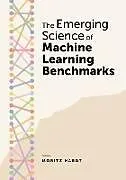
The Emerging Science of Machine Learning Benchmarks
Beschreibung
Autorentext Moritz Hardt Klappentext The first comprehensive introduction to benchmarking, the engine behind progress in AI In machine learning, researchers split their data into training and test sets, let model builders compete on the test set, and call it a...Format auswählen
- Fester EinbandCHF 53.20
Wird oft zusammen gekauft
Andere Kunden kauften auch
Beschreibung
Autorentext
Moritz Hardt
Klappentext
The first comprehensive introduction to benchmarking, the engine behind progress in AI
In machine learning, researchers split their data into training and test sets, let model builders compete on the test set, and call it a benchmark. Statistical tradition prescribed locking test sets in a vault, but machine learning practitioners shared them freely. Benchmarking shouldn’t have worked, but it did, and the machine learning community never figured out the science behind it. How did benchmarking, despite its flaws, lead to advances in AI? In The Emerging Science of Machine Learning Benchmarks, Moritz Hardt investigates why benchmarking works, and what purpose it serves.
Hardt draws on a growing body of work that has begun to lay out the science underpinning benchmarks; what emerges is a rich landscape of theoretical and empirical observations that can inform practitioners. He begins with the foundations, both mathematical and empirical, covering enough background material to make the book self-contained. He finds that model rankings, rather than model evaluation, are the primary scientific product of machine learning benchmarks. Turning to the challenges of benchmarking large language models, Hardt explains how benchmarks influence model training, complicating direct model comparisons. As model capabilities exceed those of human evaluators, researchers are running out of ways to test new models. If benchmarks are to serve us well in the future, we must place them on solid scientific ground. With this book, Hardt lays the foundation.
Inhalt
FiguresPreface
Overview
Who is this book for?
AcknowledgmentsPrologue1 Introduction From its roots, machine learning embraces the anything goes principle of scientific discovery. Machine learning benchmarks become the iron rule to tame the anything goes. But after decades of service, a crisis grips the benchmarking enterprise.
The iron rule
The ImageNet era
The LLM era2 Populations and predictions The mathematical foundations of machine learning follow the astronomical conception of society: Populations are probability distributions. Optimal predictors minimize loss functions on a probability distribution.
2.1 Prediction
2.2 Risk minimization
2.3 Errors and metrics
2.4 Model training
Notes3 Detecting differences A single statistical problem illuminates much of the mathematical tools necessary for benchmarking. The key lesson is that sample requirements grow quadratically in the inverse of the difference we try to detect.
3.1 Model comparisons from samples
3.2 Coin tossing
3.3 Distances between distributions
3.4 Concentration inequalities
3.5 From coin tosses back to benchmarking
Notes4 Holdout method The holdout method separates training and testing data, anything goes on the training data, iron rule on the testing data. Not all uses of the holdout method are alike.
4.1 Testing on the training set
4.2 Generalization
4.3 The holdout method
4.4 What’s the holdout method for?
4.5 Variants of the holdout method
4.6 Error bars and confidence intervals
Notes5 Test set reuse Statistics prescribes the iron vault for test data. But the empirical reality of machine learning benchmarks couldn’t be further from the prescription. Repeated adaptive testing brings theoretical risks and practical power.
5.1 Test set reuse in machine learning benchmarks
5.2 Guarantees of the holdout method under adaptivity
5.3 Alternatives to the holdout method
5.4 Freedman’s paradox
Notes6 Scientific crisis A replication crisis has long gripped the empirical sciences. Statistical practice is vulnerable for fundamental reasons. Under competition, researcher degrees of freedom outwit statistical measurement.
6.1 The replication crisis in the statistical sciences
6.2 Propensity of false positives
6.3 Perspectives on the crisis
6.4 Goodhart’s law
Notes7 Replication in machine learning The preconditions for crisis exist in machine learning, too. And yet, the situation in machine learning is different. While accuracy numbers don’t replicate, model rankings replicate to a significant degree.
7.1 The preconditions for crisis
7.2 Replication in machine learning
7.3 The trouble with absolute benchmark numbers
7.4 Model rankings in the ImageNet era
7.5 Measurement versus ranking
Notes8 Forces against crisis If machine learning thwarted scientific crisis, the question is why. Some powerful explanations emerge. Key are the social norms and practices of the community rather than statistical methodology.
8.1 Beating the previous best
8.2 Biases and heuristics
8.3 Rip Van Winkle’s replication problem
8.4 The touch of the Blenheim Spaniel
8.5 Code and collaboration
8.6 Kaggle versus science
8.7 From benchmarking to scientific progress
Notes9 Labeling and annotation If the holdout method is the greatest unsung hero, data annotation is not far behind. But conventional wisdom clouds the subtle role that annotation plays for benchmarking.
9.1 Annotator errors and annotator agreement
9.2 Labeling as prediction
9.3 Effects of label errors on model comparisons
9.4 Quantity versus quality
9.5 Resilience of rankings to label errors
Notes10 Generative models The ImageNet era ends as attention shifts to powerful generative models trained on the internet. The new era also marks a turning point for machine learning benchmarks.
10.1 Language models
10.2 Scaling
10.3 Early NLP benchmarks
10.4 CLIP and a final look at ImageNet
Notes11 Evaluating language models After training, alignment fits models to human preferences. Part of the post-training pipeline, alignment transforms evaluation results. How post-training makes such a difference brings new challenges for benchmarking.
11.1 Post-training methods
11.2 Generative evaluation
11.3 Confounded evaluations
11.4 Model comparisons and rankings
Notes12 The problem of aggregation Multi-task benchmarks promise a holistic evaluation of complex models. An analogy with voting systems reveals limitations in multi-task benchmarks. Greater diversity comes at the cost of greater sensitivity to artifacts.
12.1 Multi-task benchmarks
12.2 Problems of aggregation and voting systems
12.3 Ranked voting
12.4 Rated voting
12.5 Empirical trade-offs in multi-task benchmarks
12.6 Latent factors in benchmark performance
Notes13 When the model moves the data Models deployed at scale always influence future data, a phenomenon called performativity. Performativity breaks evaluation and creates the problem of data feedback loops. Dynamic benchmarks try to make a virtue out of it.
13.1 Morgenstern’s prophecy about prediction
13.2 Performative prediction
13.3 Repeated risk minimization
13.4 Data feedback loops
13.5 Dynamic benchmarks
Notes14 Evaluation at the frontier As models gain in capabilities, human supervision increasingly becomes a bottleneck. The hope is that models will supervise and evaluate each other, but there are limits to automatic evaluation.
14.1 LLM as a judge
14.2 Debiasing evaluations
14.3 Restricted model evaluation strategies
14.4 Evaluation in the real world
Notes15 EpilogueReferencesIndex