
IHR WARENKORB IST AKTUELL LEER.
Haben Sie noch nichts passendes gefunden? Stöbern Sie durch unser komplettes Sortiment.
Oder melden Sie sich an bzw. registrieren Sie sich.
- Kostenlose Lieferung
- Kauf auf Rechnung
- Ex Libris Tiefpreis
- Filiallieferung und 650+ Abholorte
- Rabatt-Bons als Club-Mitglied
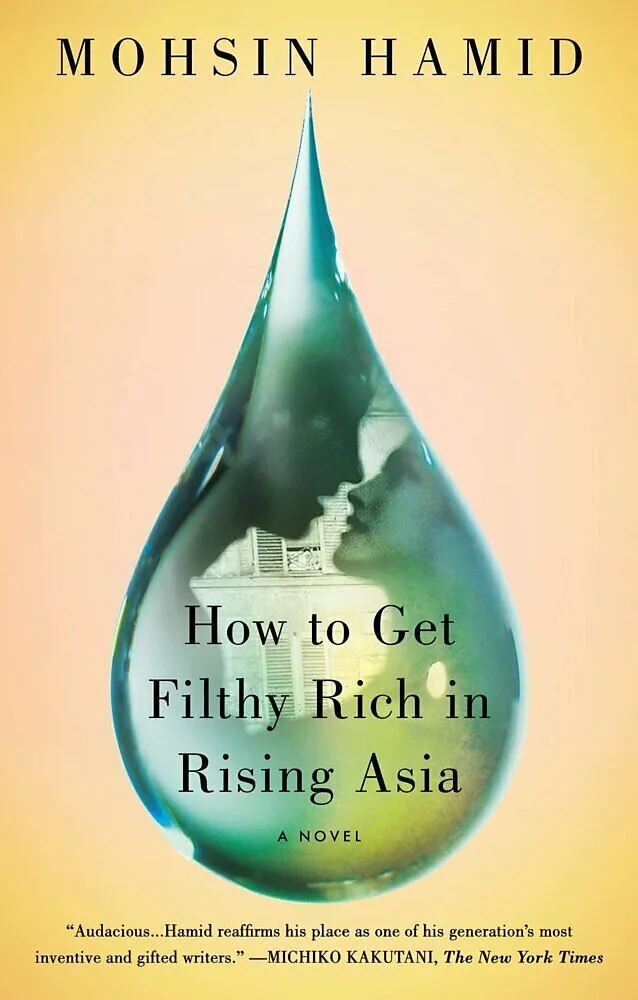
How to Get Filthy Rich in Rising Asia
Beschreibung
From the internationally bestselling author of The Reluctant Fundamentalist, theboldly imagined tale of a poor boys quest for wealth and love . . . Zusatztext 53450992 Informationen zum Autor Mohsin Hamid is the author of the international bestsellers Exit Wes...Format auswählen
- Kartonierter EinbandCHF 18.40

Wird oft zusammen gekauft
Andere Kunden kauften auch
Beschreibung
From the internationally bestselling author of The Reluctant Fundamentalist, theboldly imagined tale of a poor boys quest for wealth and love . . .
Zusatztext 53450992 Informationen zum Autor Mohsin Hamid is the author of the international bestsellers Exit West and The Reluctant Fundamentalist , both finalists for the Man Booker Prize. His first novel, Moth Smoke , won the Betty Trask Award and was a finalist for the PEN/Hemingway Foundation Award. His essays, a number of them collected as Discontent and Its Civilizations , have appeared in The New York Times , the Washington Post , The New York Review of Books , and elsewhere. He lives in Lahore, Pakistan. Klappentext "Mr. Hamid reaffirms his place as one of his generation's most inventive and gifted writers." -Michiko Kakutani, The New York Times "A globalized version of The Great Gatsby . . . [Hamid's] book is nearly that good." -Alan Cheuse, NPR "Marvelous and moving." -TIME Magazine From the internationally bestselling author of The Reluctant Fundamentalist and Exit West, the boldly imagined tale of a poor boy's quest for wealth and love His first two novels established Mohsin Hamid as a radically inventive storyteller with his finger on the world's pulse. How to Get Filthy Rich in Rising Asia meets that reputation-and exceeds it. The astonishing and riveting tale of a man's journey from impoverished rural boy to corporate tycoon, it steals its shape from the business self-help books devoured by ambitious youths all over "rising Asia." It follows its nameless hero to the sprawling metropolis where he begins to amass an empire built on that most fluid, and increasingly scarce, of goods: water. Yet his heart remains set on something else, on the pretty girl whose star rises along with his, their paths crossing and recrossing, a lifelong affair sparked and snuffed and sparked again by the forces that careen their fates along. How to Get Filthy Rich in Rising Asia is a striking slice of contemporary life at a time of crushing upheaval. Romantic without being sentimental, political without being didactic, and spiritual without being religious, it brings an unflinching gaze to the violence and hope it depicts. And it creates two unforgettable characters who find moments of transcendent intimacy in the midst of shattering change. ILLUSIONS MAKING SENSE OF ILLUSIONS An essay by Mohsin Hamid In 2009, after two decades spent mostly in London and on the Atlantic coast of the United States, I moved back to Pakistan to write my third novel. I'd often visited my birth city of Lahore in the interim, sometimes for six months or even a year, but always with a fixed departure date in mind. This return, though, was different. I came with no plans to leave. Pakistan is frequently thought of as a place apart: unique, violent, troubled. And it is. But it also a piece of a whole: a world knitting itself together, an Asia being transformed. I re-entered life in Lahore to find pits being dug for office towers, a surfeit of cell-phone masts and shopping malls, proliferating traffic jams and commuter-hour radio shows. I visited Delhi, Bombay, Dubai, Bangkok and observed the same. I saw an East becoming more like the West, or rather a planet where such sweeping distinctions were dissolving. And much else seemed to be dissolving. Old ways of doing things. Neighborhoods. A stampede for wealth was underway, pulled along by televised lives of previously unimagined opulence, beaten from behind by the switch of crushing poverty. Money was becoming religion; religion was becoming politics. Spirituality, it seemed, could wait. But death does not wait. To be human is to know ever-present mortality. And so we ache. Our selves ache. Dashing forward together, we recognize we will be plucked away, alone. In the face of this, as Asia rises, as the pursuit of money becomes paramount, as past repositories of solace are drained of meaning, what, if anything, can a novel do? Modern sci...
**“A showcase for its author’s audacious talents… both an affecting and highly specific tale of love and ambition, and a larger metaphorical look at the startling social and economic changes that are … changing the lives of millions” -- Michiko Kakutani, in her “10 Favorite Books of 2013,” The New York Times
A Foreign Policy Leading Global Thinker
Shortlisted for the DSC Prize for South Asian Literature
Named a Best or Notable Book of 2013 by The New York Times, National Public Radio, The Chicago Tribune, Vogue, Apple, The Observer (London), The Sunday Times (London), Financial Times, The Christian Science Monitor, Huffington Post, Kansas City Star, Milwaukee Journal-Sentinel, Book Page, Publishers Weekly, and Kirkus Reviews
A Vogue "Favorite Novelist"**
“It is a measure of Mr. Hamid’s audacious talents that he manages to make his protagonist’s story work on so many levels. ‘You’ is, at once, a modern-day Horatio Alger, representing the desires and frustrations of millions in rising Asia; a bildungsroman hero, by turns knavish and recognizably human, who sallies forth from the provinces to find his destiny; and a nameless but intimately known soul, whose bittersweet romance with the pretty girl possesses a remarkable emotional power. With How to Get Filthy Rich in Rising Asia Mr. Hamid reaffirms his place as one of his generation’s most inventive and gifted writers.” –Michiko Kakutani, The New York Times
“Thanks to Hamid's meticulous use of detail—and his sympathy for a man on the make in a society of endemic poverty—we engage deeply with a serious character whose essence remains his own yet who stands as a figure representative of his time and place, an effect only the best novelists can create… This tale of an unscrupulous striver may bring to mind a globalized version of The Great Gatsby. Given the unabashed gimmickry of Hamid's how-to design, it's a pleasant surprise to find that his book is nearly that good.” –Alan Cheuse, NPR
"A love story and bildungsroman disguised as a self-help book, and the result has all the inventiveness, exuberance and pathos that the writer's fans have come to expect… Marvelous and moving." –TIME Magazine
“Extraordinarily clever… Hamid has taken the most American form of literature—the self-help book—and transformed it to tell… a surprisingly moving story.” –Ron Charles, The Washington Post
“The marriage of… two curiously compatible genres—self-help and the old-fashioned bildungroman—is just one of the pleasures of Mohsin Hamid’s shrewd and slippery new novel, a rags-to-rishes story that works on a head-splitting number of levels. It’s a love story and a study of seismic social change. It parodies a get-rich-quick book and gestures to a new direction for the novel, all in prose so pure and purposeful it pases straight through into the bloodstream. It intoxicates.” –Parul Sehgal, The New York Times Book Review
“Wonderfully astringent… Hamid is a sly witness to a traditional culture’s dizzying trajectory—supermodels stalk city billboards; a drone hovers ominously in the sky—but his satiric impulse gives way to compassion for the intimacies that keep us tethered in a rapidly changing world.” –Vogue
“This is one of those original works that are also resonant as a record of human experience and geo-political shift, and a strong argument for Hamid as one of the most important writers working today. An enjoyable read no matter who ‘you’ are.” –The Daily Beast
"Relentlessly brilliant… Hamid is a master stylist, and his third novel is, I think, **his best thus fa…