
IHR WARENKORB IST AKTUELL LEER.
Haben Sie noch nichts passendes gefunden? Stöbern Sie durch unser komplettes Sortiment.
Oder melden Sie sich an bzw. registrieren Sie sich.
- Kostenlose Lieferung
- Kauf auf Rechnung
- Ex Libris Tiefpreis
- Filiallieferung und 650+ Abholorte
- Rabatt-Bons als Club-Mitglied
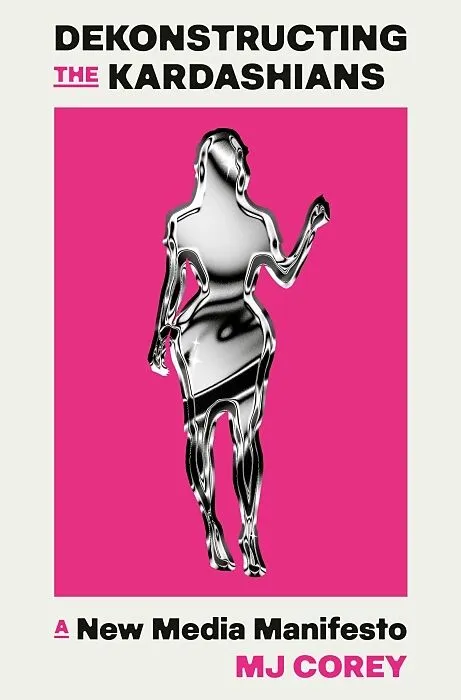
Dekonstructing the Kardashians
Beschreibung
From the creator of the highly popular Kardashian Kolloquium comes a New Media manifesto for the TikTok age, blending theory and cultural analysis to explain the meteoric rise of the Kardashians and explore what their fame can teach us about the way media func...Format auswählen
- Fester EinbandCHF 28.40
Wird oft zusammen gekauft
Andere Kunden kauften auch
Beschreibung
From the creator of the highly popular Kardashian Kolloquium comes a New Media manifesto for the TikTok age, blending theory and cultural analysis to explain the meteoric rise of the Kardashians and explore what their fame can teach us about the way media functions today
Since 2007, Kim Kardashian and the extended Kardashian family have been mesmerizing—and scandalizing—America. Whether we’ve liked it or not, we’ve been inundated with stories of their social lives, scandals, and reality show shenanigans and have witnessed the subsequent ascent of their multibillion-dollar fashion, beauty, and media empire. But the question remains: why are the Kardashians so famous in the first place? And what does this tell us about the New Media that has delivered them to us?
In <Dekonstructing the Kardashians, <MJ Corey, creator of the viral social media presence Kardashian Kolloquium, brings us not only the definitive chronicle of the family that’s captivated a nation, but, perhaps more importantly, the story of how media has transformed in the internet age and how it continues to transform us as individuals and as a culture at large. Part media theory, part cultural analysis, <Dekonstructing the Kardashians <interweaves history from the past 50 years of Western media—from the Old Hollywood studio system to the advent of the 24-hour news cycle to tabloid culture and beyond—with analysis of the cultural influence Kim Kardashian wields over us all and the influences that have shaped her in kind. In so doing, Corey offers proof that the Kardashians are, in fact, the First Family of our image-saturated and deeply divided nation, while also demonstrating how they hold the keys to understanding the schizophrenic, self-referential reality of our current era.
Autorentext
MJ Corey
Klappentext
**From the creator of the highly popular Kardashian Kolloquium comes a new media manifesto for the TikTok age, blending theory and cultural analysis to explain the meteoric rise of the Kardashians and explore what their fame can teach us about the way media functions today
“By far the best book I've ever read on celebrity in the twenty-first century.”—Leigh Stein, author of Self Care
“Dekonstructing the Kardashians is Ways of Seeing for the Instagram Age.*”—*Maris Kreizman, author of Slaughterhouse 90210 **
Since 2007, Kim Kardashian and the extended Kardashian family have been mesmerizing—and scandalizing—America. Whether we’ve liked it or not, we’ve been inundated with stories of their social lives, scandals, and reality show shenanigans and have witnessed the subsequent ascent of their multibillion-dollar fashion, beauty, and media empire. But the question remains: Why are the Kardashians so famous in the first place? And what does this tell us about the new media that have delivered them to us?
In Dekonstructing the Kardashians, MJ Corey, creator of the viral social media presence Kardashian Kolloquium, brings us not only the definitive chronicle of the family that’s captivated a nation, but, perhaps more important, the story of how media has transformed in the internet age and how it continues to transform us as individuals and as a culture at large. Part media theory, part cultural analysis, Dekonstructing the Kardashians interweaves history from the past fifty years of Western media—from the Old Hollywood studio system, to the advent of the twenty-four-hour news cycle, to tabloid culture and beyond—with analysis of the cultural influence Kim Kardashian wields over us all and the influences that have shaped her in kind. In so doing, Corey offers proof that the Kardashians are, in fact, the First Family of our image-saturated and deeply divided nation, while also demonstrating how they hold the keys to understanding the disjointed, self-referential reality of our current era.
Leseprobe
1. Blueprints
Postmodern iconicity and the network society
"What's more American than Marilyn Monroe?”
So inquires the title of a Kardashians episode that follows Kim’s preparation for the 2022 Met Gala. Fretting over dress measurements in her big beige closet and describing herself as a “shape-shifter,” Kim prepares to don the nude sheath originally debuted by Marilyn in 1962 when she sang “Happy Birthday, Mr. President!” to John F. Kennedy. Of course, after the gala, public uproar across the press and social media inevitably coalesced into various hot-take factions:
1.Kim wishes she were Marilyn: “You can put lipstick on a pig but it’s still a pig. Marilyn Monroe in this dress presented the vulnerability, sexuality, and unappreciated talent that were uniquely Marilyn. KK is a made-for-television plastic reproduction of Marilyn,” a user commented on a New York Times article.
2.Won’t someone please think about the dress?: “It was so disrespectful to wear it, if she really cared about Marilyn & her legacy she would’ve just worn the replica. It’s not all on her though, whoever ok’d it gets blame too,” @laura_gee13 opined on Twitter.
3.Kim’s crash diet to fit into the dress offers a dangerous precedent: “Kim Kardashian’s Met Gala Diet Stunt Is Both Outdated and Alarming,” read a Glamour magazine headline by Michelle Konstantinovsky.
4.Kim is an icon, after all: “It makes perfect sense in 2022 why Kim K would be the one chosen to wear this dress. She IS a modern day Marilyn. Incredible,” tweeted @MisterPreda, voicing the minority opinion.
I’m guessing that when you think of the term “American icon,” Marilyn Monroe is one of the first names that comes to mind; it’s just a question of which image your hippocampus pulls up. (For me, it’s the white dress moment from The Seven Year Itch.) Charles Casillo, author of Marilyn Monroe: The Private Life of a Public Icon and The Marilyn Diaries, tells me that an “icon” is a “person who is so celebrated that they come to represent a particular thing or field—often the era that they come to prominence in—like a music icon, movie icon, a sports icon, fashion icon, a political icon. But also, someone who has outstanding and unforgettable characteristics that label them. Like ‘a sex symbol’ or ‘genius,’ or a ‘hero.’ ” The other thing about icons is the enthusiastic emulation they inspire in others. “Let’s face it,” Casillo adds, “almost every female love goddess that has come after her has done a photo shoot or video dressed as Marilyn: Madonna, Drew Barrymore, Lindsay Lohan, Nicole Kidman, Naomi Watts, Scarlett Johansson, Miley Cyrus, Beyonce.” What, exactly, does Marilyn’s image offer them? S. Paige Baty suggests an answer in American Monroe: “By virtue of her familiarity, Marilyn serves as . . . an instantly recognizable expression of a mood, an era, a sexuality. She allows an audience to draw from a common ground.”
This common ground seems to inspire biographers, documentarians, authors, and filmmakers to continually attempt to tackle Marilyn from some new angle. The most recent entry in this genre, as of this writing, is Blonde, the Netflix original adapted from Joyce Carol Oates’s impressionistic novel of the same name, which drew an accurate, albeit bleak, allegory about what it can feel like to be a woman in this world. Perceived as a posthumous assault on Marilyn’s dignity, the film was not well received, especially on the heels of Kim’s boundary-pushing stunt. Baty adds, “Authorings of Marilyn claim to reveal the …