
IHR WARENKORB IST AKTUELL LEER.
Haben Sie noch nichts passendes gefunden? Stöbern Sie durch unser komplettes Sortiment.
Oder melden Sie sich an bzw. registrieren Sie sich.
- Kostenlose Lieferung
- Kauf auf Rechnung
- Ex Libris Tiefpreis
- Filiallieferung und 650+ Abholorte
- Rabatt-Bons als Club-Mitglied
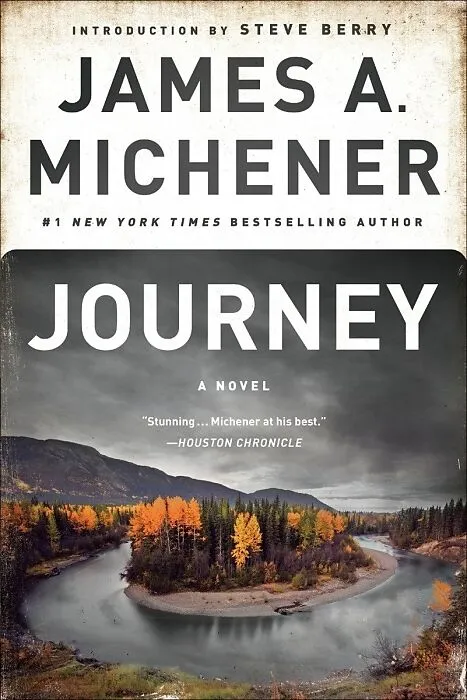
Journey
Beschreibung
Zusatztext Stunning . . . Michener at his best. Houston Chronicle Michener brings sharply into focus the hardships encountered by those who dreamed of striking it rich. Associated Press Michener has amassed a peerless reputation as the heralded dean of the his...Format auswählen
- Kartonierter Einband (Kt)CHF 21.90
Wird oft zusammen gekauft
Andere Kunden kauften auch
Beschreibung
Zusatztext Stunning . . . Michener at his best. Houston Chronicle Michener brings sharply into focus the hardships encountered by those who dreamed of striking it rich. Associated Press Michener has amassed a peerless reputation as the heralded dean of the historical tome. . . . Journey is a book that envelops the reader in an atmosphere of hazardous escapades. Richmond Times-Dispatch Remarkable . . . superb literature. The Pittsburgh Press Informationen zum Autor James A. Michener Klappentext One of the premier novelists of the twentieth century, James A. Michener captures a frenzied time when sane men and women risked their very lives in a forbidding Arctic land to win a dazzling and elusive prize: Yukon gold. In 1897, gold fever sweeps the world. The promise of untold riches lures thousands of dreamers from all walks of life on a perilous trek toward fortune, failure-or death. Journey is an immersive account of the adventures of four English aristocrats and their Irish servant as they haul across cruel Canadian terrain toward the Klondike gold fields. Vivid and sweeping, featuring Michener's probing insights into the follies and grandeur of the human spirit, this is the kind of novel only he could write. Praise for Journey "Stunning . . . Michener at his best."-Houston Chronicle "Michener brings sharply into focus the hardships encountered by those who dreamed of striking it rich."-Associated Press "Michener has amassed a peerless reputation as the heralded dean of the historical tome. . . . Journey is a book that envelops the reader in an atmosphere of hazardous escapades."-Richmond Times-Dispatch "Remarkable . . . superb literature."-The Pittsburgh Press Leseprobe When on 17 July 1897 the steamship Portland docked at Seattle, bringing belated news and hard evidence that an enormously rich strike of gold had been made the summer before along the Klondike River on the extreme western border of Canada, the world was startled by a felicitous sentence scribbled in haste by an excited reporter who visited the ship. Instead of saying that the miners had reached Seattle with a huge amount of gold or a treasure-trove of gold, he wrote words that became immortal: At 3 o'clock this morning the Steamer Portland from St. Michael for Seattle, passed up the Sound with more than a ton of solid gold aboard. Those sensational words, a ton of gold, flashed around the world, evoking wild enthusiasm wherever they appeared. Across the United States and Canada, men who had suffered sore deprivation during the great financial panic of 1893 cried: Gold to be had for the picking! Fortunes for everyone! and off they scrambled, with no knowledge at all of mining or metallurgy, and very little sense of how to protect themselves on a frontier. Shifty manipulators, who realized that they would have little chance of finding gold in riverbeds, nevertheless knew that with the proper card game or attractive young woman to lure those who did find nuggets, they might win fortunes by mining the miners. Proper businessmen also smelled opportunities; actors out of work visualized theaters with dancing girls, and a few born explorers of untested regions, like Lord Evelyn Luton and his military cousin Harry Carpenter of London, made immediate preparations to rush to the gold fields for the sheer adventure. But if the news of the strike could have such electric effect upon so many, why had it taken almost a full year to travel the relatively short distance from the Klondike to Seattle, less than thirteen hundred miles as an eagle would fly? The explanation must be carefully noted, for it explains the tragic events that were about to destroy so many lives. The Klondike was a pitiful little stream, too small to ...
ldquo;Stunning . . . Michener at his best.”—Houston Chronicle
“Michener brings sharply into focus the hardships encountered by those who dreamed of striking it rich.”—Associated Press
“Michener has amassed a peerless reputation as the heralded dean of the historical tome. . . . Journey is a book that envelops the reader in an atmosphere of hazardous escapades.”—Richmond Times-Dispatch
“Remarkable . . . superb literature.”—The Pittsburgh Press
Autorentext
James A. Michener
Klappentext
One of the premier novelists of the twentieth century, James A. Michener captures a frenzied time when sane men and women risked their very lives in a forbidding Arctic land to win a dazzling and elusive prize: Yukon gold. In 1897, gold fever sweeps the world. The promise of untold riches lures thousands of dreamers from all walks of life on a perilous trek toward fortune, failure-or death. Journey is an immersive account of the adventures of four English aristocrats and their Irish servant as they haul across cruel Canadian terrain toward the Klondike gold fields. Vivid and sweeping, featuring Michener's probing insights into the follies and grandeur of the human spirit, this is the kind of novel only he could write.
Praise for Journey
"Stunning . . . Michener at his best."-Houston Chronicle
"Michener brings sharply into focus the hardships encountered by those who dreamed of striking it rich."-Associated Press
"Michener has amassed a peerless reputation as the heralded dean of the historical tome. . . . Journey is a book that envelops the reader in an atmosphere of hazardous escapades."-Richmond Times-Dispatch
"Remarkable . . . superb literature."-The Pittsburgh Press
Leseprobe
When on 17 July 1897 the steamship Portland docked at Seattle, bringing belated news and hard evidence that an enormously rich strike of gold had been made the summer before along the Klondike River on the extreme western border of Canada, the world was startled by a felicitous sentence scribbled in haste by an excited reporter who visited the ship. Instead of saying that the miners had reached Seattle with “a huge amount of gold” or “a treasure-trove of gold,” he wrote words that became immortal: “At 3 o’clock this morning the Steamer Portland from St. Michael for Seattle, passed up the Sound with more than a ton of solid gold aboard.
Those sensational words, “a ton of gold,” flashed around the world, evoking wild enthusiasm wherever they appeared. Across the United States and Canada, men who had suffered sore deprivation during the great financial panic of 1893 cried: “Gold to be had for the picking! Fortunes for everyone!” and off they scrambled, with no knowledge at all of mining or metallurgy, and very little sense of how to protect themselves on a frontier. Shifty manipulators, who realized that they would have little chance of finding gold in riverbeds, nevertheless knew that with the proper card game or attractive young woman to lure those who did find nuggets, they might win fortunes by mining the miners. Proper businessmen also smelled opportunities; actors out of work visualized theaters with dancing girls, and a few born explorers of untested regions, like Lord Evelyn Luton and his military cousin Harry Carpenter of London, made immediate preparations to rush to the gold fields for the sheer adventure.
But if the news of the strike could have such electric effect upon so many, why had it taken almost a full year to travel the relatively short distance from the Klondike to Seattle, less than thirteen hundred miles as an eagle would fly? The explanation must be carefully noted, for it explains the tragic events that were about to destroy so many lives.
The Klondike was a pitiful little stream, too small to admit a boat of any serious size and hidden away in one of the most remote areas of the world. It emptied into the great Yukon River, which rose in the high mountains of the northern coastal range and roamed through Cana…