Beschreibung
Here is a detailed review and analysis of metal oxide nanomaterial sensing principles; synthesis/deposition methods; low temperature sensors; insights gained from analysis of reaction mechanisms and challenges in the fabrication of sensing arrays and devices. ...Here is a detailed review and analysis of metal oxide nanomaterial sensing principles; synthesis/deposition methods; low temperature sensors; insights gained from analysis of reaction mechanisms and challenges in the fabrication of sensing arrays and devices.
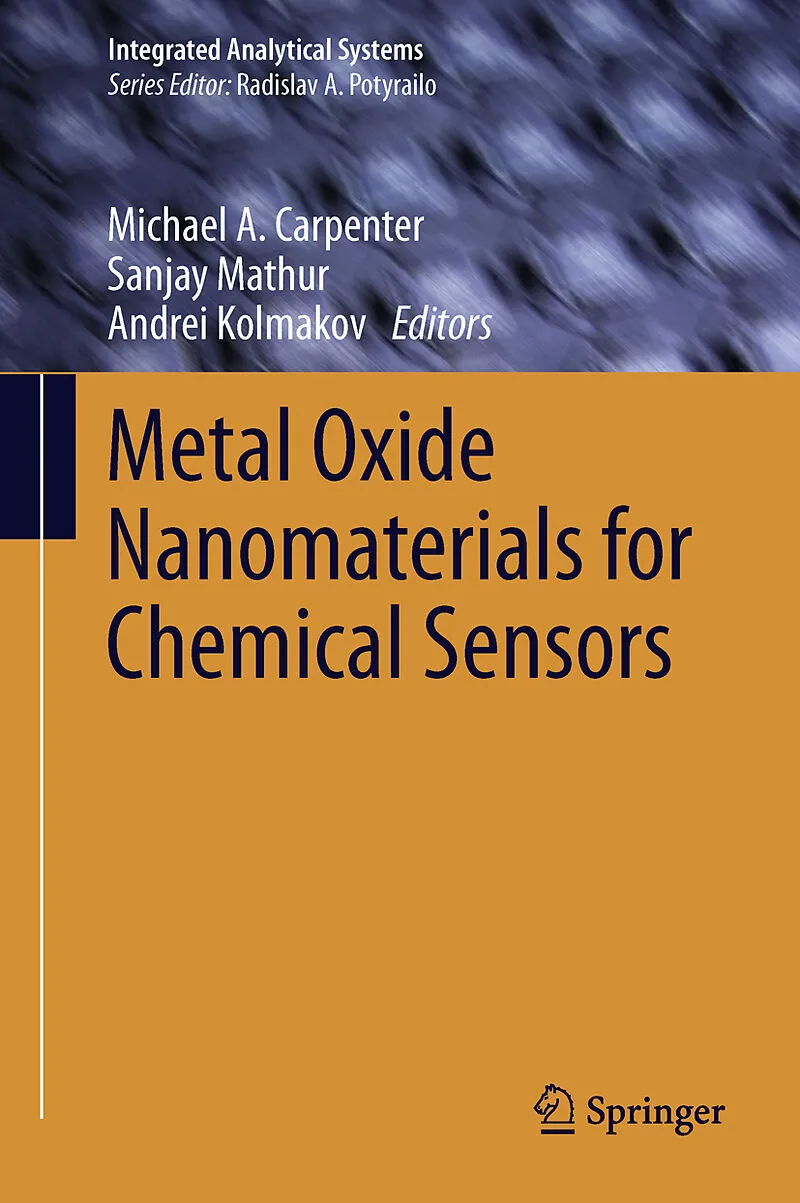
This book presents a state-of-the-art summary and critical analysis of work recently performed in leading research laboratories around the world on the implementation of metal oxide nanomaterial research methodologies for the discovery and optimization of new sensor materials and sensing systems. The book provides a detailed description and analysis of (i) metal oxide nanomaterial sensing principles, (ii) advances in metal oxide nanomaterial synthesis/deposition methods, including colloidal, emulsification, and vapor processing techniques, (iii) analysis of techniques utilized for the development of low temperature metal oxide nanomaterial sensors, thus enabling a broader impact into sensor applications, (iv) advances, challenges and insights gained from the in situ/ex situ analysis of reaction mechanisms, and (v) technical development and integration challenges in the fabrication of sensing arrays and devices.
Metal oxide nanomaterials have not received comprehensive treatment in any other source This book brings together information scattered throughout the literature Metal oxide nanomaterials will permit development of new, smart materials tailored for specific applications These nanomaterials uniquely offer the potential of very powerful reaction characteristics for the next generation of chemical sensors Includes supplementary material: sn.pub/extras
Autorentext
Michael A. Carpenter is an associate professor at the College of Nanoscale Science and Engineering at the University at Albany-SUNY.
Sanjay Mathur is the Chair of Inorganic and Materials Chemistry at the University of Cologne.
Andrei Kolmakov is an associate professor of physics at Southern Illinois University.
Klappentext
This book presents a state-of-the-art account and critical analysis of of the science and technology of metal oxide nanomaterials based chemical sensors. It documents the impact of nanotechnology on sensor science by leading research laboratories and the implementation of metal oxide nanomaterial research methodologies for the discovery and optimization of new sensor materials and sensing systems. The book provides a detailed description of (i) The current understanding of metal oxide sensing principles, (ii) Advances in metal oxide nanomaterial synthesis and multi-material architectures as well as the interplay of structure/composition and function (iii) Analysis of techniques utilized for the development of advanced metal oxide nanomaterial sensors, thus enabling a broad impact into sensor applications, (iv) Advances, challenges and insights gained from the in situ/ex situ analysis of reaction mechanisms and miniaturization, and (v) Technical development and materials integration challenges in the fabrication of sensing arrays and devices.
Inhalt
Introduction.- Understanding, characterization and synthesis of modern metal oxide nanomaterials.- Novel morphologies and signal transduction principles in metal oxide based sensors.- New device architectures and integration challenges.- Concluding remarks and outlook.