Beschreibung
Nowadays, major environmental issues are the object of large public debates de spite the fact that scientific knowledge is often insufficient to draw unequivocal conclusions. Such is the case in the ongoing debate regarding the specific contri butions of anthr...Nowadays, major environmental issues are the object of large public debates de spite the fact that scientific knowledge is often insufficient to draw unequivocal conclusions. Such is the case in the ongoing debate regarding the specific contri butions of anthropogenic greenhouse gas emissions and of natural climate changes to global warming. At least 10 to 20 years of additional observations will be re quired, before we will be able to conclude, with certainty, on this subject. In the mean time, and as directed by their immediate interests, people will continue to promote contradictory opinions. The media are, in part, responsible for perpetuat ing such debates in that they convey indiscriminately the opinion of highly credi ble scientists as that of dogmatic researchers, the latter, unfortunately too often expressing working hypotheses as established facts. Naturally, in a similarly mis informed manner, pressure groups tend to support the researcher whose opinions most closely represent either their particular ideological battles or their economic interests and, hence, in their own way, add further to the confusion and obscurity of the debate. Only a few years ago, mercury (Hg)contamination in hydroelectric reservoirs was the object of such media and social biases. At the time, analytical data used to support the discourse were themselves uncertain and numerous hypotheses, often times fanciful, were proposed and hastily "delivered" to the public.
Shows the clear connection between the geochemical cycle and the influence on organisms Includes supplementary material: sn.pub/extras
Klappentext
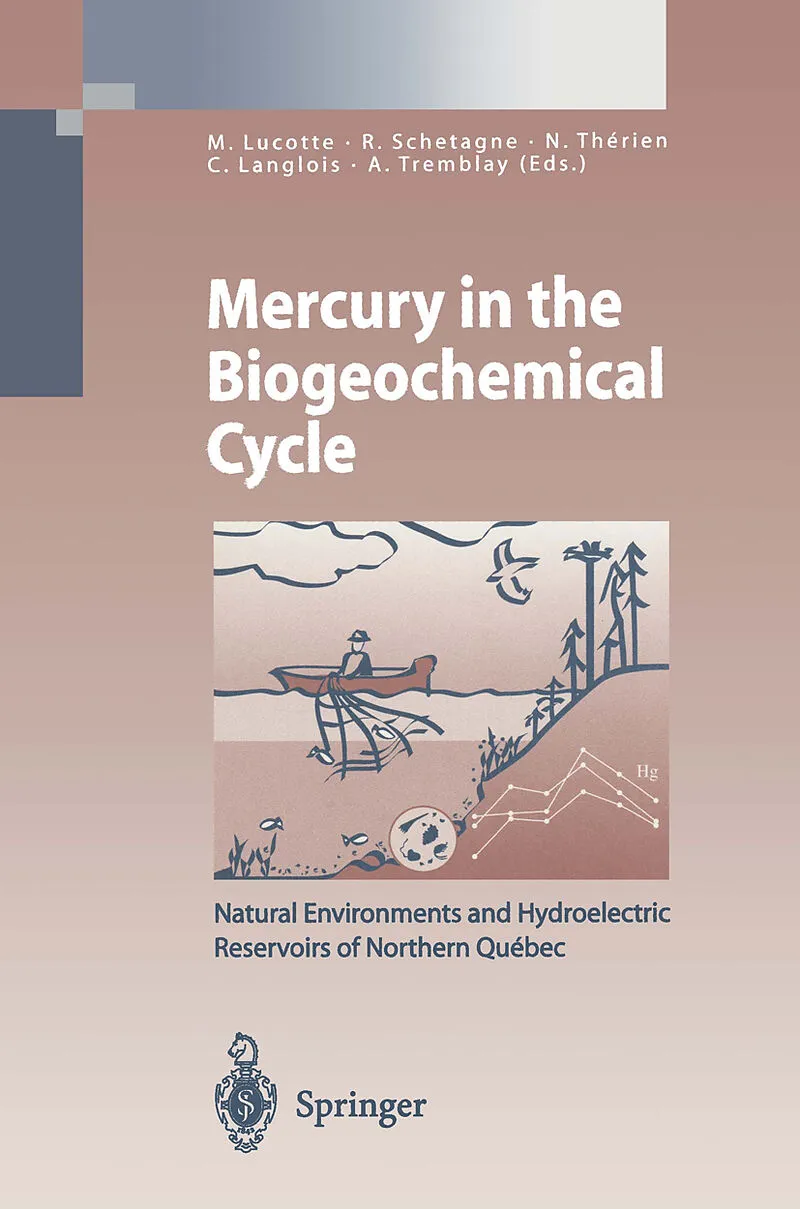
This book presents an exhaustive overview of the biogeochemical cycling of mercury in hydroelectric reservoirs as well as in natural aquatic systems of the boreal forest region of northern Québec (Canada). Presented in the form of 14 papers with an overall synthesis, it marks the conclusion of over 10 years of studies carried out by universities, governmental institutions and industries, using the latest and most appropriate sampling and analytical procedures. The results clearly show a threefold increase in atmospheric fluxes of Hg in remote areas of northern Québec over the last century and, in the case of hydroelectric reservoirs, the critical role played by the extensive flooding of land in the temporary post-impoundment increase in mercury levels in aquatic organisms and fish-eating wildlife.
Inhalt
Résumé et synthèse (French summary).- 1 Introduction.- 1.1 The Mercury Issue in Northern Québec.- 1.2 Geographic Setting.- 1.3 Hydroelectric Developments.- 1.4 Evolution of the Biophysical Environment.- 1.5 Contents and Rationale.- 2 Analysis of Total Mercury and Methylmercury in Environmental Samples.- Abstract.- 2.1 Introduction.- 2.2 Total Mercury Measurements.- 2.3 Methylmercury Measurements.- 2.4 Conclusions.- Mercury and Methylmercury in Natural Ecosystems of Northern Québec.- 3 Mercury in Natural Lakes and Unperturbed Terrestrial Ecosystems of Northern Québec.- 4 Bioaccumulation of Mercury and Methylmercury in Invertebrates from Natural Boreal Lakes.- 5 Mercury in Fish of Natural Lakes of Northern Québec.- 6 Mercury in Birds and Mammals.- Mercury Dynamics at the Flooded Soil-Water Interface in the Reservoirs.- 7 In Vitro Release of Mercury and Methylmercury from Flooded Organic Matter.- 8 Mercury Dynamics at the Flooded Soil-Water Interface in Reservoirs of Northern Québec: in Situ Observations.- Evolution of Mercury Concentrations in Aquatic Organisms from Hydroelectric Reservoirs.- 9 Bioaccumulation of Methylmercury in Invertebrates from Boreal Hydroelectric Reservoirs.- 10 Mercury Accumulation in Fish from the La Grande Complex: Influence of Feeding Habits and Concentrations of Mercury in Ingested Prey.- 11 Post-Impoundment Evolution of Fish Mercury Levels at the La Grande Complex, Québec, Canada (from 1978 to 1996).- 12 Calculated Fluxes of Mercury to Fish in the Robert-Bourassa Reservoir.- Mercury Toxicity for Wildlife Resources.- 13 Assessment of the Ecotoxic Risk of Methylmercury Exposure in Mink (Mustela vison) Inhabiting Northern Québec.- 14 Breeding Success of Osprey under High Seasonal Methylmercury Exposure.- 15 Synthesis.- 16 Conclusion andProspects.- References.