
IHR WARENKORB IST AKTUELL LEER.
Haben Sie noch nichts passendes gefunden? Stöbern Sie durch unser komplettes Sortiment.
Oder melden Sie sich an bzw. registrieren Sie sich.
- Kostenlose Lieferung
- Kauf auf Rechnung
- Ex Libris Tiefpreis
- Filiallieferung und 650+ Abholorte
- Rabatt-Bons als Club-Mitglied
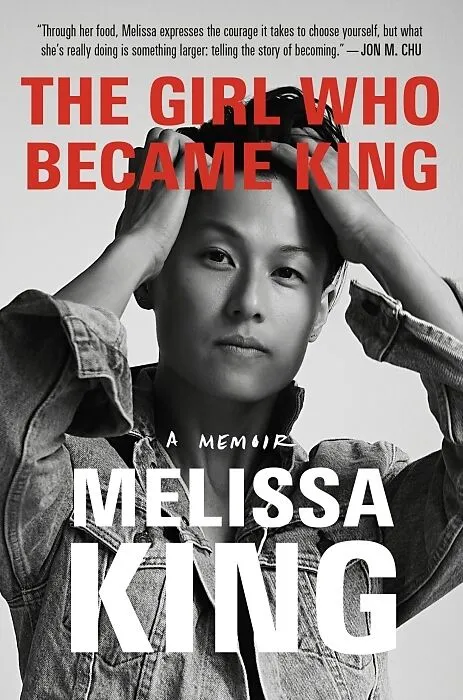
The Girl Who Became King
Beschreibung
From award-winning chef, author, television personality, and activist Melissa King comes an intimate, captivating memoir about family, food, and finding her voice as a queer Chinese American chef Autorentext Melissa King Klappentext From award-winning chef, au...Format auswählen
- Fester EinbandCHF 33.20

Wird oft zusammen gekauft
Andere Kunden kauften auch
Beschreibung
From award-winning chef, author, television personality, and activist Melissa King comes an intimate, captivating memoir about family, food, and finding her voice as a queer Chinese American chef
Autorentext
Melissa King
Klappentext
From award-winning chef, author, and television personality Melissa King comes an intimate, captivating memoir about family, food, and finding her voice as a queer Chinese American chef
“Melissa’s story is a powerful reminder that success comes not from fitting into someone else’s expectations, but from embracing your whole self.”—Chef Kwame Onwuachi
Embracing my love of food has empowered me to embrace every layer of who I am: my Chinese heritage, my American upbringing, and all the parts of me that felt too much and not enough. When I chose myself, I set her free. Just me. The girl who became king.
As a kid, Melissa King lived for the moment she would come from elementary school, grab her prized Chinese meat cleaver, and prepare dinner for her family. She already knew cooking was her future, but she didn’t know how hard she’d have to fight to make that dream a reality.
Growing up, King felt like she was stuck in a box that was only getting smaller. Her Shanghainese and Cantonese immigrant parents had certain expectations—none of which included going to culinary school or falling in love with women. American culture also dictated that kitchens were a man’s world. But trying to live by these rules felt like no life at all.
Determined to forge her own path, she fought her way into the demanding world of Michelin-starred kitchens, while discovering a home in the queer community. When she entered Top Chef as a reluctant contestant, inspired by her grandmother’s advice to follow her heart, she began embracing the flavors, culture, and parts of herself she had once forgotten. This journey of self-discovery through food leads her back to her parents, where love creates room for their strengths and imperfections.
In this heartfelt memoir, Melissa King shows that empowerment comes from embracing all the different ingredients that make up who you are, and models the hard-won courage it takes to believe in yourself against the odds.
Leseprobe
1
Game Boy
Fifteen hours into the longest flight I’d ever been on in my eight years of life, we were finally about to land. My sister and I had left the country for the first time, to see the place we’d come from.
“But I’m from Hacienda Heights,” I’d told my parents. Our tiny suburb of the San Gabriel Valley, just east of Los Angeles, was home. It didn’t seem particularly meaningful to me that my parents were returning to their home after almost twelve years, since before Steph was born. All I cared about was getting to level nine on Tetris on my brand-new Game Boy.
The minute we stepped outside the airport, the humidity smacked me in the face and stuck to my body. We weren’t in San Gabriel anymore.
“Mom, I’m sweaty,” I said.
“I know, Bibi,” she told me. “That’s Hong Kong.”
We piled into a red taxi, and my mom braced my sister and me with her soccer-mom arms as we jolted around in the back seat with each slam of the brakes. Our driver honked and yelled in Cantonese, mostly cuss words that I definitely shouldn’t have known but had already picked up from the Chinese soap operas I’d watch with my mom’s mom. Why is everything so loud? I wanna go home.
By the time we checked in to our hotel, my dad was rambling on about his jet lag, but my mom was excited and ready to go.
“Let’s show them what Hong Kong was like at night when we were kids,” she coaxed. My dad shook his head, and I looked up distractedly from my Game Boy to watch them do their usual dance. My dad threw out no after no, but she knew how to talk to him, and he finally came around.
It was after dark, and by this time in Hacienda Heights, everyone would usually be inside watching Full House and getting ready for bed. But in Hong Kong, the sidewalks were crowded with people and lined with food vendors.
“Oh!” my mom said, stopping us in our tracks in front of a fruit juice stand. I watched in awe as the vendor crushed long stalks of sugarcane through a wheel press.
“This is my childhood. You’ll love it!” my mom freaked out, passing me a styrofoam cup. The drink tasted familiar, like honey water, but with something different too. Now I’d say it has grassy, earthy notes, but back then, I just knew that my mind was blown.
“We used to save up our money and run down to the street to buy sugarcane juice,” my dad said, sipping out of his foam cup.
“Your grandpa used to buy it for us sometimes when we visited the market,” my mom added. These were the streets where my mom walked herself to school with a backbreaking book bag. Here was the ferry stop where my dad would travel an hour alone to primary school across the harbor.
“See them?” my mom asked, nodding at a group of kids still in their Catholic school uniforms. “We used to look just like that,” she said.
But I was distracted by the sound of something sizzling.
“Can we get some food?”
Back home, I’d watch my parents drink English Breakfast tea each morning with a heap of sugar and a splash of milk. I had a vague understanding that Hong Kong used to be a British colony, but mostly that meant that people drive on the left side of the road. My mom still says alumin-i-um, like a Brit.
Cantonese was my first language, but I still feel my mom’s frustration every time she retells the story of when she realized I was American, on my first day of kindergarten. Dropping me off in the morning, she pleaded, “My baby doesn’t speak English.” Her nerves were buzzing. “Please take care of her.”
They had to calm her down and usher her out of the school gates. At work, she worried all day that I wouldn’t know what was going on or make any friends.
But when she came to pick me up, greeting me in Cantonese, I strutted over with a confident “hey, Mom” and a smart-ass chin nod. And after I watched a few episodes of Sesame Street, along with Julia Child’s The French Chef on PBS after school, the damage was done. Whenever my parents would speak to me in Cantonese, I’d stubbornly respond in English.
But in Hong Kong, Cantonese was everywhere. My parents were in their element, lit up with excitement.
An overwhelming funk seeped through the alleyways. It was so intense, it practically incinerated my nostril hairs. Confused and curious, I followed it to a food stall where a single man, sleeves rolled up to his forearms and a cigarette in his mouth, cooked an assortment of things on sticks. Fish balls bobbing in curry broth, glazed cuttlefish, boiled tripe—you name it, it was on a stick. And I wanted it.
But something smelled like stinky feet.
“What’s that smell?” I asked, my nose scrunched up.
“Chau dau fu!” my dad said, suddenly mischievous. “You kids are going to hate this.” He belly-laughed and placed an order.
You’ll never quite forget the smell of chau dau fu 臭豆腐, or stinky tofu, fermented for several months in a brine of dried shrimp and Chinese herbs. For some added drama, the tofu gets heavily deep-fried in a wok before being skewered on a stick and slathered in sweet chili sauce. I tried not to breathe through my nose.
“So,” my dad asked in Cantonese, “what do you think of Hong Kong?”
“It smells like trash,&rdquo…