Beschreibung
This open access book advances a framework for understanding how domestic politics shape foreign aid policy. By examining the influence of domestic forces specifically economic interests and value-based ideas it offers a comprehensive analysis of the societal...
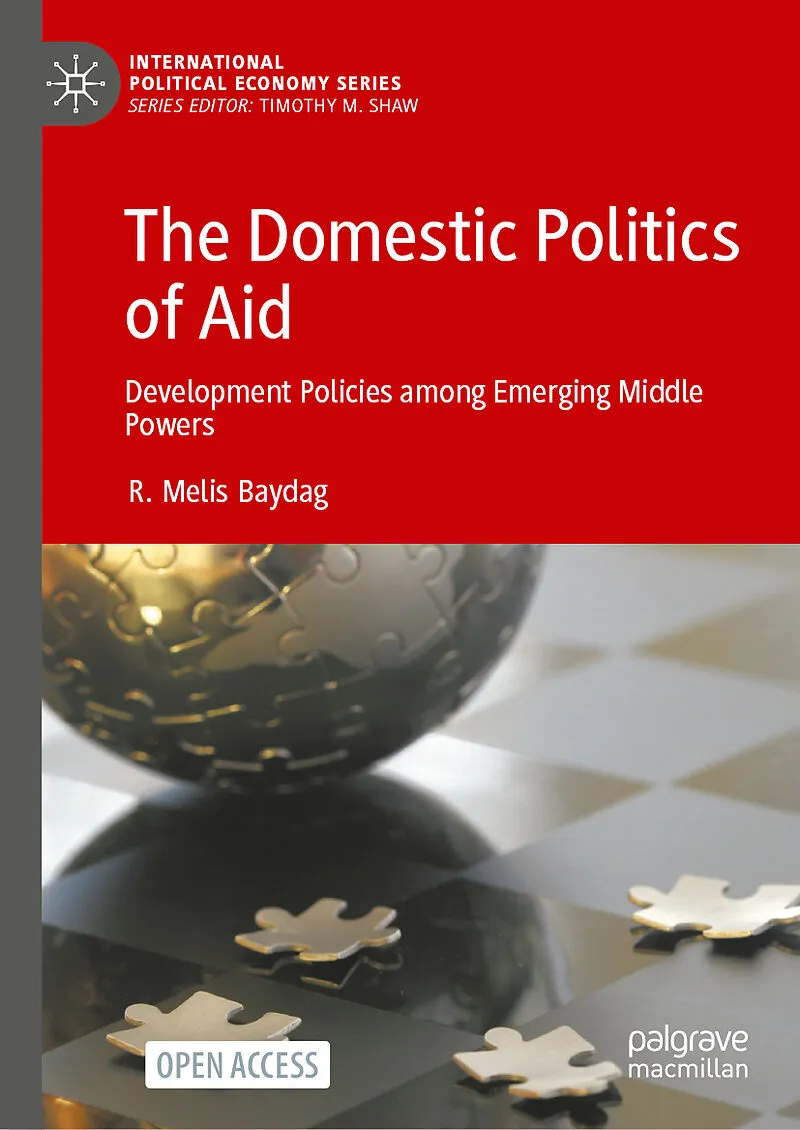
This open access book advances a framework for understanding how domestic politics shape foreign aid policy. By examining the influence of domestic forces specifically economic interests and value-based ideas it offers a comprehensive analysis of the societal dynamics underpinning aid policymaking across three middle powers from different regions. Drawing on case studies of Mexico, South Korea, and Turkey in the post-2008 global context, the book provides a global perspective on how domestic politics shape governmental preferences toward international development cooperation. Combining theoretical innovation within International Political Economy with empirical depth, it is essential reading for scholars, students, and practitioners interested in the politics of aid, the international political economy of middle powers, and the evolving dynamics of global governance.
This book is open access, which means that you have free and unlimited access Sheds light on the material and ideational aspects of their development assistance Looks at the role of domestic factors shaping in development policy Contributes to current knowledge on the strategies of emerging powers in international development cooperation
Autorentext
R. Melis Baydag is a postdoctoral researcher and lecturer at the Chair of International Relations at the University of Freiburg and an associate researcher at the German Institute of Development and Sustainability (IDOS). Previously, she was a researcher at IDOS and a lecturer at the Chair of European and Global Governance at the Technical University of Munich and the Chair of International Politics at Ruhr University Bochum. Her research explores issues related to International Political Economy, how domestic processes shape foreign policy and international cooperation, populism, middle powers and global economic governance. Her recent publications have appeared in Contemporary Politics , Politics & Policy , and Review of Development Economics .
Klappentext
Baydag uniquely helps us understand the mix of ideational and material motivations for foreign aid. The book's carefully chosen cases provide a fascinating analysis of interest to international political economy and international relations scholars.
Dustin Tingley , Thomas Cabot Professor of Public Policy, Harvard University
Melis Baydag's book is a highly convincing comparative analysis of the domestic foundations of middle-sized emerging powers' development policies. It offers a theoretically guided and empirically profound examination by employing the Societal Approach to governmental preference formation.
****Stefan A. Schirm , Professor of International Politics, Ruhr University Bochum
A groundbreaking study of the development policy strategies of three emerging middle powers.
****Jorge A. Schiavon , **** Professor of International Relations, Universidad Iberoamericana
This book provides an important empirical entry point and offers highly relevant insights into current academic and policy-oriented debates.
Stephan Klingebiel , Head of Department 'Inter- and Transnational Cooperation', German Institute of Development and Sustainability (IDOS)
This open access book develops a framework for understanding how domestic politics shape foreign aid. Examining the development policies of Mexico, South Korea, and Turkey in the post-2008 global context, it combines theoretical innovation with empirical depth.
R. Melis Baydag is Lecturer at the University of Freiburg and Associate Researcher at the German Institute of Development and Sustainability (IDOS).
Inhalt
Tief- preis