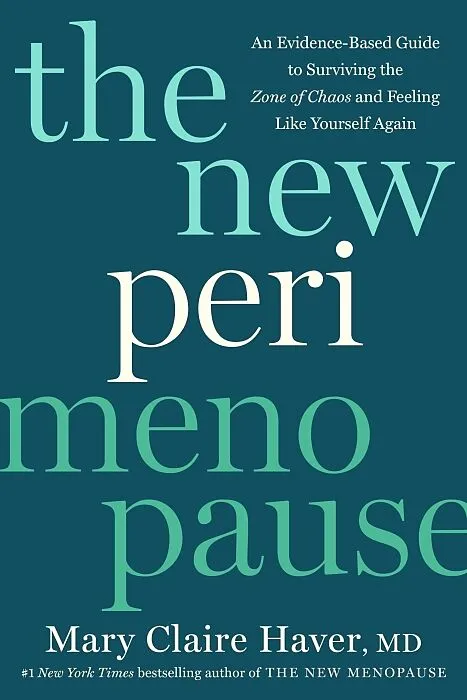
The New Perimenopause
Beschreibung
The #1 Though menstrual cycle changes and the emotional rollercoaster that accompanies them are the hallmarks of the transition to menopause, many women with In A;comprehensive, authoritative book of science-backed information and lived experience, Clear, scie...Format auswählen
- Fester EinbandCHF 32.40

Wird oft zusammen gekauft
Andere Kunden kauften auch
Beschreibung
The #1 Though menstrual cycle changes and the emotional rollercoaster that accompanies them are the hallmarks of the transition to menopause, many women with In A;comprehensive, authoritative book of science-backed information and lived experience, Clear, science-backed explanations of what''s going on in your body, from changes in your menstrual cycle, energy levels, mood, and sexual issues. preventative medicine for your later years. Checklists, questions for your doctor, and how to insist on good care. The;very latest research on the benefits and side effects of;progesterone therapy to help ease your hormonal transition. Whether you have symptoms or not, <The New Perimenopause <helps remove the mystery around this time of change, putting women in control of their health going forward.
Autorentext
Mary Claire Haver, MD, is a board-certified OB/GYN, a Certified Culinary Medicine Specialist, a Certified Menopause Provider, and the founder of The ‘Pause Wellness, a private medical practice that focuses on women in midlife. She is the #1 New York Times bestselling author of The New Menopause and The Galveston Diet. She lives in Galveston, Texas.
Klappentext
**The #1 New York Times bestselling author of The New Menopause explains everything a woman needs to know to thrive during the often-misdiagnosed and medically ignored perimenopausal years
“Don’t tolerate shrugged shoulders from your doctor during your perimenopausal journey. Get ahead of the issues and your potential symptoms with this important, empowering, and scientifically dependable book.”—Vonda Wright, MD, author of Unbreakable**
I’m just not feeling like myself! This is the battle cry of the perimenopausal woman.
Though menstrual cycle changes and the emotional rollercoaster that accompanies them are the hallmarks of the transition to menopause, many women with regular periods as young as 35 can also start to feel irregular, with symptoms that include anxiety, fatigue, joint pain, brain fog, sexual symptoms, and volatile moods. This array of symptoms can be hugely disruptive—all the more so when a doctor dismisses a woman’s complaints as all in her head or prescribes unnecessary and potentially harmful treatment.
In The New Perimenopause, Dr. Mary Claire Haver—the trailblazing voice behind the movement to revolutionize health care for women—sets things straight. She explains that the numerous and varied symptoms of perimenopause occur in direct response to normal endocrine changes; this is the hormonal "zone of chaos."
A comprehensive, authoritative book of science-backed information and lived experience, The New Perimenopause includes:
- Clear, science-backed explanations of what's going on in your body, from changes in your menstrual cycle to energy levels, mood, sleep, and sexual issues.
- How and why dealing with these changes now is preventative medicine for your later years.
- Checklists, questions for your doctor, and how to insist on good care.
- The very latest research on the benefits and side effects of progesterone therapy to help ease your hormonal transition.
Whether you have symptoms or not, The New Perimenopause helps remove the mystery around this time of change, putting women in control of their health going forward.
Leseprobe
Chapter 1
The Status Quo Experience of Perimenopause
Amy had lived her life with purpose and determination. At forty-three, she was successfully juggling the roles of wife, mother, and career professional, raising her kids with care, and navigating the everyday challenges of life with a sense of accomplishment. Her health had always been steady with no major issues to speak of. Like many other women, she followed the cultural prescription for staying healthy: years of dieting and regular exercise, mostly walking. It was a struggle, but she managed. Additional cardio from her spin class kept her happy, and though she sometimes wished for an easier path, she was proud of her ability to stay disciplined.
But then, seemingly out of nowhere, something changed. She began to feel off, as if she wasn’t herself anymore. At first, it was subtle. Weight started accumulating around her midsection, an area that for her had never been an issue. It was frustrating. Everything she had done in the past to maintain her figure now seemed futile. She doubled down, cutting calories and increasing exercise, but nothing worked. Alongside the weight gain came irritability; she began snapping at her loved ones over minor things. At work, she felt perpetually frustrated. She chalked it up to stress, but deep down, she knew something wasn’t right.
Her first visit to her doctor to try to get to the bottom of things didn’t yield a satisfying answer. “This is just what women go through,” her doctor said. “Work out more and eat less. We can prescribe an antidepressant for your mood.” She left feeling dismissed, unseen. Her irritability worsened, and then her sleep began to falter. She would wake up at 3 a.m., staring at the ceiling, unable to drift back into rest. Exhaustion became her constant companion, and the weight gain continued.
Back at the doctor’s office, she received a prescription for sleeping pills. The physician noted an additional five-pound weight gain and recommended a 1,200-calorie diet and more exercise. She wanted to scream as she was already eating 1,000 calories a day and now attending high-intensity interval training classes three times a week. Her hair began to thin, and her libido vanished. At her next well-woman exam, she hesitantly mentioned her loss of sexual desire. “Just relax more and have some wine,” her doctor advised, looking over her glasses and adding, “If you don’t use it, you’ll lose it.”
Her frustration turned to despair when a nurse called to inform her that her cholesterol levels had risen and she was now prediabetic. The nurse offered her prescriptions for metformin and a statin, with the familiar advice: “Eat low fat and continue with your efforts to lose some weight.” Brain fog at work and her constant exhaustion kept her from applying for the promotion she had worked toward for years. Her husband grew frustrated with her lack of interest in intimacy, which only deepened her feelings of inadequacy and isolation.
Next, her periods became heavy and unpredictable, often waking her in the middle of the night to deal with excessive bleeding. Her gynecologist ordered two tests; a painful in-office biopsy and an ultrasound, but each showed no abnormalities. Still, the recommended solution was a hysterectomy, though they advised that because of her age she should remove only her uterus. Her healthy ovaries would continue to produce important hormones, they explained. Anemic and desperate for relief, she agreed to the major surgery.
Afterward, the bleeding stopped, but new problems emerged. A few months later, she began experiencing severe hot flashes and night sweats, and a worsening sense of exhaustion. It occurred to her that this might be menopause, but when she mentioned it to her physician, she dismissed the idea; she still had her ovaries, after all. “You are too young for that,” she said, again advising weight loss.
Desperation drove her to social media, where ads for “hot flash cures” and “libido boosters” filled her feeds. She ordered herbal supplements, each promising relief, but none delivered. Intercourse, when she managed it, became unbearable. The pain was sharp, like razors cutting into her, leaving her in tears. She braved another doctor’s visit and mentioned the pain, only to be told it might be herpes. Mortified, she waited for test results, which eventually came …