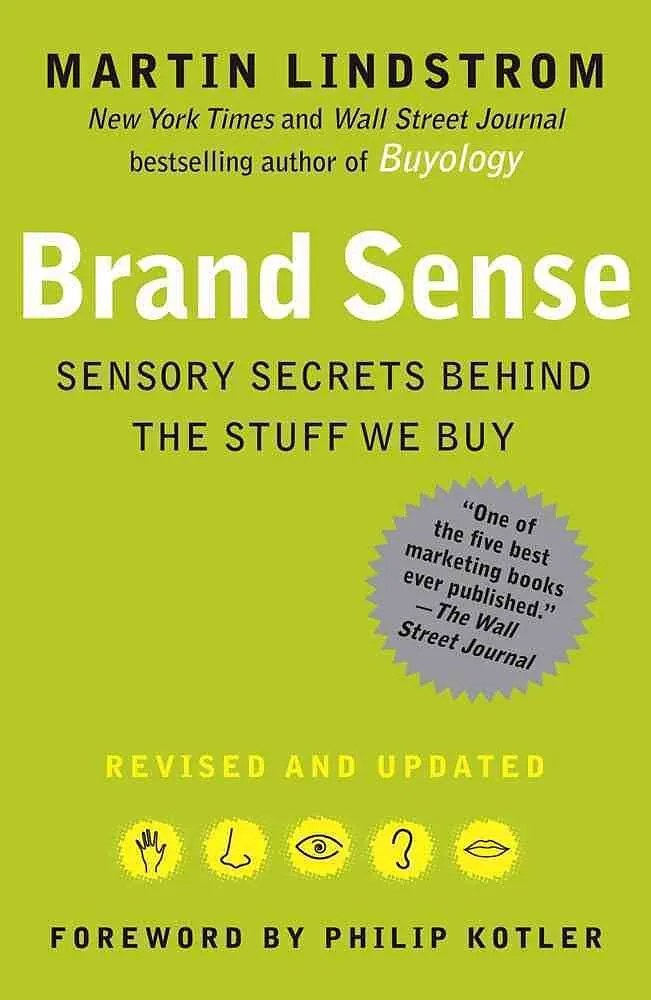
Brand Sense
Beschreibung
Informationen zum Autor Martin Lindstrom is a New York Times and Wall Street Journal bestselling author, the CEO and Chairman of the Lindstrom company and the Chairman of Buyology, Inc. (New York) and BRAND Sense agency (London). In 2009, he was recognised by ...Format auswählen
- Kartonierter EinbandCHF 18.40

Wird oft zusammen gekauft
Andere Kunden kauften auch
Beschreibung
Informationen zum Autor Martin Lindstrom is a New York Times and Wall Street Journal bestselling author, the CEO and Chairman of the Lindstrom company and the Chairman of Buyology, Inc. (New York) and BRAND Sense agency (London). In 2009, he was recognised by Time magazine as one of the world's most influential people. Lindstrom is an advisor to Fortune 100 companies including the McDonald's Corporation, Nestlé, American Express, Microsoft Corporation, The Walt Disney Company and GlaxoSmithKline. Lindstrom speaks to a global audience of close to a million people every year. He has been featured in Wall Street Journal , Newsweek , Time , The Economist , New York Times , BusinessWeek , and The Washington Post and featured on NBC's Today show, ABC News, CNN, CBS, Bloomberg, FOX, Discovery and BBC. His book, BRAND sense , was acclaimed by the Wall Street Journal as one of the five best marketing books ever published. His more recent book Buyology was voted "pick of the year" by USA Today and reached 10 out of the top 10 best-seller lists in the U.S. and worldwide during 2008 and 2009. His five books on branding have been translated into more than thirty languages and published in more than 60 countries worldwide. Visit MartinLindstrom.com to learn more. Klappentext Now available in paperback, "Brand Sense," the definitive book on sensory branding, shows how companies appeal to consumers' five senses. CHAPTER 1 Start Making Sense IN THE WEEKS AND MONTHS FOLLOWING publication of Buyology: Truth and Lies About Why We Buy , I was invited to appear frequently on America's most popular morning program, the Today show. The topics we covered were variousshopping addictions, whether sex in advertising sells, subliminal advertising, and so on. During a recent appearance, I carried out a focus group with a selection of tweens, ages eight through twelve. My goal? To measure the degree to which sensory brandingthat is to say, the use of fragrances, sounds, and even textures to enhance the appeal ofproductsaffected these kids. It was like emceeing a strange new game show called Name That Sense. First I played a handful of well-known songs associated with various well-known companies and TV shows. Most of the children were able to name them immediately, among them Disney, Apple Computer, and the signature theme music from Spongebob Squarepants and NBC. Now it was time for the smell test. The first fragrance that floated out was (and will always be) one of the most evocative aromas in the world. Oh, I know that smell, one said. Every kid knows that smell, another broke in. Okay, I said. On the count of three, you're going to tell me what the brand is. Ready? One two three They all got it: Play-Doh! The next two fragrances? Crayola crayons and Johnson's Baby Powder. The children identified those, too. Next, we graduated to a brand collage board, where only parts or fragments of companies' logos or symbols were visible. Still, the kids were able to identify most if not all of the brands, from Kellogg's to Pepsi-Cola to MTV to Nike. Some, to my surprise, were even able to recognize the logos of Gucci and Tiffany's. After scanning a handful of logos, I brought out a bunch of products from high-end designers, popular department stores, and even some generic clothing I'd picked up from street vendors. Now, blue jeans are a not uncomplicated item for most fashion-and brand-obsessed middle-schoolers. One of the girlsOliviacradled a pair of jeans in her lap. These are from Abercrombie! she announced happily. As offhandedly as I could, I asked, So how do you know those jeans are really from that store, and not fake? Because of their smell , Olivia...
Autorentext
Martin Lindstrom
Klappentext
Now available in paperback, "Brand Sense," the definitive book on sensory branding, shows how companies appeal to consumers' five senses.
Zusammenfassung
The definitive book on sensory branding, shows how companies appeal to consumers’ five senses to sell products.
Did you know that the gratifying smell that accompanies the purchase of a new automobile actually comes from a factory-installed aerosol can containing “new car” aroma? Or that Kellogg’s trademarked “crunch” is generated in sound laboratories? Or that the distinctive click of a just-opened jar of Nescafé freeze-dried coffee, as well as the aroma of the crystals, has been developed in factories over the past decades? Or that many adolescents recognize a pair of Abercrombie & Fitch jeans not by their look or cut but by their fragrance?
In perhaps the most creative and authoritative book on how our senses affect our everyday purchasing decisions, global branding guru Martin Lindstrom reveals how the world’s most successful companies and products integrate touch, taste, smell, sight, and sound with startling and sometimes even shocking results. In conjunction with renowned research institution Millward Brown, Lindstrom’s innovative worldwide study unveils how all of us are slaves to our senses—and how, after reading this book, we’ll never be able to see, hear, or touch anything from our running shoes to our own car doors the same way again.
An expert on consumer shopping behavior, Lindstrom has helped transform the face of global marketing with more than twenty years of hands-on experience. Firmly grounded in science, and disclosing the secrets of all our favorite brands, Brand Sense shows how we consumers are unwittingly seduced by touch, smell, sound, and more.
Leseprobe
CHAPTER 1
Start Making Sense
IN THE WEEKS AND MONTHS FOLLOWING publication of Buyology: Truth and Lies About Why We Buy, I was invited to appear frequently on America’s most popular morning program, the Today show. The topics we covered were various—shopping addictions, whether sex in advertising sells, subliminal advertising, and so on. During a recent appearance, I carried out a focus group with a selection of tweens, ages eight through twelve. My goal? To measure the degree to which sensory branding—that is to say, the use of fragrances, sounds, and even textures to enhance the appeal ofproducts—affected these kids. It was like emceeing a strange new game show called “Name That Sense.”
First I played a handful of well-known songs associated with various well-known companies and TV shows. Most of the children were able to name them immediately, among them Disney, Apple Computer, and the signature theme music from Spongebob Squarepants and NBC. Now it was time for the smell test. The first fragrance that floated out was (and will always be) one of the most evocative aromas in the world.
“Oh, I know that smell,” one said.
“Every kid knows that smell,” another broke in.
“Okay,” I said. “On the count of three, you’re going to tell me what the brand is. Ready? One … two … three—”
They all got it: Play-Doh! The next two fragrances? Crayola crayons and Johnson’s Baby Powder. The children identified those, too. Next, we graduated to a brand “collage board,” where only parts or fragments of companies’ logos or symbols were visible. Still, the kids were able to identify most if not all of the brands, from Kellogg’s to Pepsi-Cola to MTV to Nike. Some, to my surprise, were even able to recognize the logos of Gucci and Tiffany’s.
After scanning a handful of logos, I brought out a bunch of products from high-end designers, popular department stores, and even some generic clothing I’d picked up from street vendors.
Now, blue jeans are a not uncomplicated item for most fashion-and brand-obsessed middle-schoolers. One of the girls—Olivia—cradled a pair of jeans in her lap.
“These are from Abercrombie!…