
IHR WARENKORB IST AKTUELL LEER.
Haben Sie noch nichts passendes gefunden? Stöbern Sie durch unser komplettes Sortiment.
Oder melden Sie sich an bzw. registrieren Sie sich.
- Kostenlose Lieferung
- Kauf auf Rechnung
- Ex Libris Tiefpreis
- Filiallieferung und 650+ Abholorte
- Rabatt-Bons als Club-Mitglied
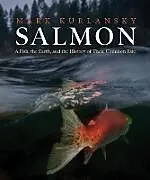
Salmon
Beschreibung
"Attractive enough to reside on your coffee table but small enough to fit on a shelf, the book's 448 pages are filled with more than 150 photographs and illustrations that provide additional insight into the chronicle of these fish and their interaction with m...Format auswählen
- Fester EinbandCHF 34.00

Wird oft zusammen gekauft
Andere Kunden kauften auch
Beschreibung
"Attractive enough to reside on your coffee table but small enough to fit on a shelf, the book's 448 pages are filled with more than 150 photographs and illustrations that provide additional insight into the chronicle of these fish and their interaction with man. . . . In these pages, Kurlansky puts us on notice. The time to act is now." --the Virginia Sportsman
Vorwort
We have a robust marketing plan for this book: Galleys will be available Endorsements by influencers such as Michael Pollan, Alice Waters, James Prosek, Mark Bittman, E.O. Wilson, Robert Redford, etc. Robust author tour -- at least 12 cities -- Patagonia stores, independent bookstores, natural history museums and aquariums, environmental organizations Featured in at least 2 Patagonia catalogs Social promotion through Patagonia (corporate), Patagonia Books, and Patagonia Provisions Promote at fishing trade shows, such as iCast Promote to environmental orgs such as World Trout Submit to college/university First Reads programs Submit to community reads programs Mailing to college and university professors Full pre-publication promotion Promotion to environmental, fishing, natural history, and culinary magazines Galleys available for reps ARC Mailing to booksellers and librarians submit for Premier Pick IndieBound promotion ARC program for Baker and Taylor Distribute egalleys through Edelweiss or NetGalley Galley giveaways at tradeshows Solicit early blurbs from booksellers Amazon Vine Program
Autorentext
Mark Kurlansky is the New York Times bestselling author of Havana, Cod, Salt, Paper, The Basque History of the World, 1968, and The Big Oyster, among other titles. He has received the Dayton Literary Peace Prize, Bon Appetit's Food Writer of the Year Award, the James Beard Award, and the Glenfiddich Award. His articles have appeared in a wide variety of newspapers and magazines, including The International Herald Tribune, The Philadelphia Inquirer, The Miami Herald, The Chicago Tribune, The Los Angeles Times, Time Magazine, Partisan Review, Harper's, The New York Times Sunday Magazine, Audubon Magazine, Food & Wine, Gourmet, Bon Appetit, and Parade. He lives in New York City. www.markkurlansky.com
Klappentext
**“In championing a critically important part of the natural world, Kurlansky sounds an urgent alarm that commands our attention.” –Kirkus Reviews
**
"Henry David Thoreau wrote, 'Who hears the fishes when they cry?' Maybe we need to go down to the river bank and try to listen."
In what he says is the most important piece of environmental writing in his long and award-winning career, Mark Kurlansky, best-selling author of Salt and Cod, *The Big Oyster, 1968, *and Milk, among many others, employs his signature multi-century storytelling and compelling attention to detail to chronicle the harrowing yet awe-inspiring life cycle of salmon.
During his research Kurlansky traveled widely and observed salmon and those who both pursue and protect them in the Pacific and the Atlantic, in Ireland, Norway, Iceland, Japan, and even the robust but not as frequently visited Kamchatka Peninsula. This world tour reveals an eras-long history of man’s misdirected attempts to manipulate salmon and its environments for his own benefit and gain, whether for entertainment or to harvest food.
In addition, Kurlansky’s research shows that all over the world these fish, uniquely connected to both marine and terrestrial ecology as well as fresh and salt water, are a natural barometer for the health of the planet. He documents that for centuries man’s greatest assaults on nature, from overfishing to dams, from hatcheries to fish farms, from industrial pollution to the ravages of climate change, are evidenced in the sensitive life cycle of salmon.
With stunning historical and contemporary photographs and illustrations throughout, Kurlansky’s insightful conclusion is that the only way to save salmon is to save the planet and, at the same time, the only way to save the planet is to save the mighty, heroic salmon.
"In more than 40 years of writing, this is the scariest thing I've ever learned. The oceans, especially the Northern Atlantic, are losing the ability to provide food. If the oceans can no longer feed the things that are supposed to live in it, then we're sunk." - Mark Kurlansky, from an interview on Maine Public Radio
Zusammenfassung
"Henry David Thoreau wrote, 'Who hears the fishes when they cry?' Maybe we need to go down to the river bank and try to listen." In what he says is the most important piece of environmental writing in his long and award-winning career, Mark Kurlansky, best-selling author of Salt and Cod, The Big Oyster, 1968, and Milk, among many others, employs his signature multi-century storytelling and compelling attention to detail to chronicle the harrowing yet awe-inspiring life cycle of salmon. During his research Kurlansky traveled widely and observed salmon and those who both pursue and protect them in the Pacific and the Atlantic, in Ireland, Norway, Iceland, Japan, and even the robust but not as frequently visited Kamchatka Peninsula. This world tour reveals an eras-long history of man's misdirected attempts to manipulate salmon and its environments for his own benefit and gain, whether for entertainment or to harvest food. In addition, Kurlansky's research shows that all over the world these fish, uniquely connected to both marine and terrestrial ecology as well as fresh and salt water, are a natural barometer for the health of the planet. He documents that for centuries man's greatest assaults on nature, from overfishing to dams, from hatcheries to fish farms, from industrial pollution to the ravages of climate change, are evidenced in the sensitive life cycle of salmon. With stunning historical and contemporary photographs and illustrations throughout, Kurlansky's insightful conclusion is that the only way to save salmon is to save the planet and, at the same time, the only way to save the planet is to save the mighty, heroic salmon.
Inhalt
TABLE OF CONTENTS Prologue: A Tale of Two Fisheries PART ONE: The Hero CHAPTER ONE: A Family Matter CHAPTER TWO: A Hero's Life PART TWO: A Human Problem CHAPTER THREE: The Original Salmon CHAPTER FOUR: Old Ways in the New Land CHAPTER FIVE: A Golden Fish Arrives in the EastC CHAPTER SIX: When It Was Working CHAPTER SEVEN: The White Man Comes CHAPTER EIGHT: Nowhere to Run PART THREE: The Problem With Solutions CHAPTER NINE: Why Not Make More? CHAPTER TEN: Sea Cattle CHAPTER ELEVE: The Release PART FOUR: The Dangerous Future CHAPTER TWELVE: Elegy for the Atlantic CHAPTER THIRTEEN: The Dismantling of Myths CHAPTER FOURTEEN: The Ballad of the Pacific CHAPTER FIFTEEN: The Golden Fish Departs EPILOGUE :It Concerns Us Acknowledgments Notes Bibliography Index