
IHR WARENKORB IST AKTUELL LEER.
Haben Sie noch nichts passendes gefunden? Stöbern Sie durch unser komplettes Sortiment.
Oder melden Sie sich an bzw. registrieren Sie sich.
- Kostenlose Lieferung
- Kauf auf Rechnung
- Ex Libris Tiefpreis
- Filiallieferung und 650+ Abholorte
- Rabatt-Bons als Club-Mitglied
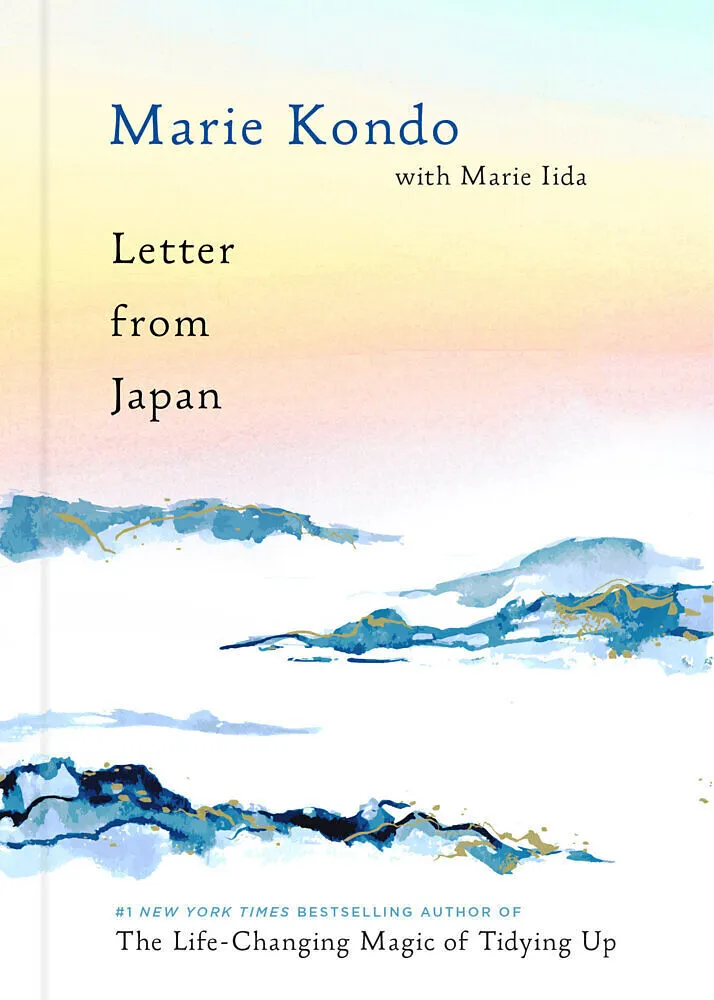
Letter from Japan
Beschreibung
In her most personal book yet, the iconic star of the hit Netflix series Though she’s known for “tidying up” and “sparking joy,” there’s more to Marie Kondo than her fervent desire to help you better appreciate your mess. Ac...Format auswählen
- Fester EinbandCHF 25.10

Wird oft zusammen gekauft
Andere Kunden kauften auch
Beschreibung
In her most personal book yet, the iconic star of the hit Netflix series Though she’s known for “tidying up” and “sparking joy,” there’s more to Marie Kondo than her fervent desire to help you better appreciate your mess. Across book tours and international conferences, it became clear that her audience, while interested in how to keep their lives tidy, was also keen to learn about Marie herself and the culture that is intrinsic to her tidying method. Written with her television co-star Marie Iida, in With subtle and lyrical prose, Marie embarks on her most personal and affirming book yet, unveiling for her readers the customs, traditions, and practices that not only spark joy for her, but also to preserve them for future generations.
Autorentext
Marie Kondo with Marie Iida
Zusammenfassung
In her most personal book yet, the iconic star of the hit Netflix series Tidying Up with Marie Kondo and #1 bestselling author of The Life-Changing Magic of Tidying Up opens up about the cultural traditions that have inspired her philosophy—and can make our lives better today.
“This book represents guiding principles by which I lead my life every day. They also define, at least for me, the values that flow through the customs, traditions, arts and sensibilities of Japan.”
Though she’s known for “tidying up” and “sparking joy,” there’s more to Marie Kondo than her fervent desire to help you better appreciate your mess. Across book tours and international conferences, it became clear that her audience, while interested in how to keep their lives tidy, was also keen to learn about Marie herself and the culture that is intrinsic to her tidying method.
Written with her television co-star Marie Iida, in Letter from Japan, Marie reflects on the myriad questions she received about her inspirations by examining the Japanese customs that she grew up with—minute details of tea ceremonies, the art of taking care of gardens, and the power of passing seasons—with her trademark gentle wisdom. But this book isn’t only a response to her audience’s wish to know the real Marie Kondo; it’s a testament for her three children, a documentation of the foundational elements of their culture, despite the rapidly changing times, which is essential to their understanding of the world around them.
With subtle and lyrical prose, Marie embarks on her most personal and affirming book yet, unveiling for her readers the customs, traditions, and practices that not only spark joy for her, but also to preserve them for future generations.
Leseprobe
Chapter 1
Cherish
愛でる
Kisetsu 季節
I was far from home in New York City. Amidst a day crammed with publicity events, my husband, Takumi, and I were speeding through the city in a cab, headed to yet another press interview. Feeling a bit worn out, I gazed out the window, the foreign cityscape blurring into a colorless haze. Suddenly, a cheerful burst of pale pink caught my eye. I would have recognized that familiar shade of pink anywhere.
“Sakura!” I exclaimed. Cherry blossoms!
Takumi looked up. “Wow!” he echoed, matching my enthusiasm. “You’re right. Sakura!”
“Beautiful!” I breathed, marveling at the clusters of cherry blossom trees lining block after block. It felt like bumping into a long-lost friend. Joy flooded my heart, tinged with a bittersweet pang of homesickness. The blossom instantly transported me to the spring days of my childhood in Japan—picnicking with family beneath a pink canopy, walking to school on an April morning, surrounded by a flurry of dancing petals.
In the back of the cab, Takumi and I burst into cheers each time we glimpsed another sakura tree. We pulled out our phones and snapped photos as if we had encountered a celebrity, and bemoaned our inability to leap from the vehicle and bask beneath the pink storm. My colleague, sitting in the front seat, swiveled to face us.
“They’re just cherry blossoms,” he remarked, arching an eyebrow. “What’s the big deal?”
I looked back at him, mouth agape. “Because they’re cherry blossoms,” I tried to say. “They’re so beautiful. It lets you know it’s really springtime . . .”
My colleague shrugged. He regarded me skeptically before turning away. His nonchalance threw me off balance for a moment, but it failed to diminish my enthusiasm. I got right back to ooh-ing and ahh-ing alongside my husband. I simply couldn’t stop.
Spring
Every spring, meteorologists in Japan begin tracking the sakura zensen, the cherry blossom front, as the flowers bloom first in Okinawa, which contains over 160 islands and is best known for its white sand beaches in the southwest, and gradually progress northward to the mainland. The Japanese Meteorological Agency uses fifty-eight designated sample trees across the nation to predict when the blossoms will emerge in each region. In rural areas such as Yoshino in Nara Prefecture, cherry blossoms transform entire mountainsides into cascading pink spectacles, while in urban settings like Shibuya, bustling with people and traffic, you might stumble upon a solitary tree flowering in an unexpected nook or cranny.
The meteorologists aren’t the only ones who busy themselves with predicting the first bloom. Like many Japanese people, when I see the buds of sakura starting to swell, I grow anxious, thinking, “Will it bloom tomorrow? Maybe the day after?”
When I notice the first cherry blossoms beginning to open in a sunny spot, I excitedly tell my family, “The season’s starting!” Then I consult my schedule and the weather report to decide on the best day for a cherry blossom picnic.
Japanese supermarkets in springtime will put on cherry blossom fairs, their aisles overflowing with sakura-inspired sake, pastries, and traditional wagashi sweets embellished with the iconic blooms and flavored with their fragrant leaves. From powder pink to pearly white, the sakura motif graces everything from kimonos to household items. The trees also flourish on the grounds of Buddhist temples and Shinto shrines, alongside school campuses and river embankments. Some, like the weeping cherry tree Miharu Takizakura in Fukushima prefecture, have survived over a millennium and are nationally recognized as a natural monument.
And where would Japanese art be without cherry blossoms? The flurry of pink serves as a dramatic backdrop for countless anime and films, as well as classical theatrical arts like noh, performed in masks and costumes, and kabuki, heavily stylized performances. They inspire pop songs, adorn ukiyo-e prints and paintings, and feature prominently in literary titles.
The Japanese language itself offers a multitude of expressions and terms to capture their blossoms’ allure: sakura-fubuki for the way the petals fall from the tree like snowflakes; hana-akari, or “flower light,” evoking the gentle glow of the blooms in darkness. The word hanami, which translates to “flower viewing” in English, hints at Japanese people’s long-standing love affair with sakura.
The word sakura first appeared during the Nara Period (710–794) in the Manyoshu, Japan’s oldest anthology of classical poetry. Back then, the imperial court favored the fragrant plum blossoms imported from China, but as Japan cultivated its own cultural identity, attention gradually shifted to native cherry blossoms. The bloom of sakura in the mountains historically coincided with rice planting season. Because of this, Japanese farmers long revered the sakura as divine harbingers of a bountiful…