
IHR WARENKORB IST AKTUELL LEER.
Haben Sie noch nichts passendes gefunden? Stöbern Sie durch unser komplettes Sortiment.
Oder melden Sie sich an bzw. registrieren Sie sich.
- Kostenlose Lieferung
- Kauf auf Rechnung
- Ex Libris Tiefpreis
- Filiallieferung und 650+ Abholorte
- Rabatt-Bons als Club-Mitglied
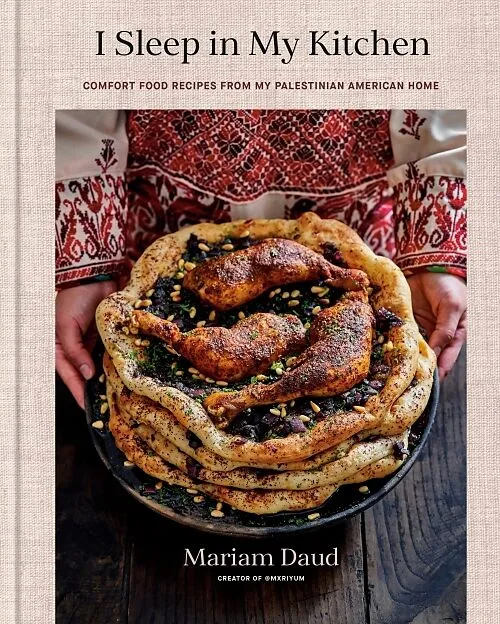
I Sleep in My Kitchen
Beschreibung
100 approachable and flavorful dishes, including signature bakes, from the Palestinian American creator of the beloved social media account mxriyum Mariam Daud is a home cook who posts mouthwatering meals with distinctly elegant presentations on social media. ...Format auswählen
- Fester EinbandCHF 46.80

Wird oft zusammen gekauft
Andere Kunden kauften auch
Beschreibung
100 approachable and flavorful dishes, including signature bakes, from the Palestinian American creator of the beloved social media account mxriyum Mariam Daud is a home cook who posts mouthwatering meals with distinctly elegant presentations on social media. In Mariam offers a taste of traditional Palestinian cuisine with cherished family recipes for the dishes she grew up eating. You’ll find a celebratory Msakhan , the national dish of Palestine, made with freshly baked flatbread topped with heaps of caramelized onions, succulent stewed chicken, fresh parsley, and toasted pine nuts. Mariam also includes personal favorites from her childhood, like her mother’s irresistible Cheese Fatayer , a savory cheese-stuffed pastry that was a household staple on weekend mornings. Along with these classic dishes, Mariam presents playful recipes infused with Middle Eastern flavors, like a Mediterranean Pasta Salad with Sumac-Vinaigrette and a Tahini and Browned Butter Banana Bread . Cinnamon Rolls and her Triple Stack Smash Burgers , alongside a wide range of brand-new creations, from Bang Bang Shrimp Tacos with Cabbage Slaw and Fluffy Browned Butter Rolls with Flaky Sea Salt to a Loaded Chickpea Salad with Bulgur . With Mariam’s simple and satisfying recipes, <I Sleep in My Kitchen< is a celebration of food, family, and the joy of cooking.
Autorentext
Mariam Daud, better known as mxriyum, is a Palestinian American home cook based in California. She grew up watching her mother create beautiful dishes for her and her nine siblings, which sparked a deep passion for bringing people together with food. Since then, Mariam has enjoyed global success online by sharing her relaxing, inspiring recipe videos that offer everything from baked goods to comfort food to traditional Palestinian cuisine.
Klappentext
NEW YORK TIMES BESTSELLER • 100 flavor-forward recipes—including signature bakes—from the Palestinian American creator of the beloved social media account mxriyum
Mariam Daud has built a devoted following by sharing beautifully prepared, comforting meals that feel both timeless and entirely her own. In I Sleep in My Kitchen, she offers a collection of the recipes that have shaped her life—dishes that carry the flavors of her heritage and the ease and creativity of a home cook who simply loves to feed others, from cherished classics like her mother’s irresistible Cheese Fatayer, a savory cheese-stuffed pastry, to her takes on everyday favorites like Triple Stack Smash Burgers or tender, pull-apart Cinnamon Rolls.
At the heart of I Sleep in My Kitchen are the flavors Mariam Daud grew up with in her Palestinian American home, including celebratory dishes like Msakhan, the national dish of Palestine, of soft flatbread, caramelized onions, tender stewed chicken, and toasted pine nuts, alongside playful recipes infused with Middle Eastern flavor, like her Mediterranean Pasta Salad with Sumac-Vinaigrette, and Tahini Browned Butter Banana Bread.
Spanning breakfasts, small plates, salads, soups, mains, and her signature sweet and savory baked goods, this collection includes many of her most-loved recipes as well as brand-new creations, including Bang Bang Shrimp Tacos with Cabbage Slaw, Fluffy Browned Butter Rolls, and a Loaded Chickpea Salad with Bulgur.
I Sleep in My Kitchen is an invitation to cook with generosity and curiosity, to explore the food that connects us to memory, place, and one another.
Leseprobe
Introduction
If you lived in the Cleveland area in the early 2000s and happened to visit a restaurant called the Pyramid, then there’s a very good chance you’ve been in a room with me and my family. My parents owned and operated the restaurant from 1996 to 2004, but that’s really underselling their roles . . . they were the restaurant. They had a small handful of employees—a dishwasher, an occasional prep cook, and a couple of servers—but apart from that, they did all the cooking and hosting themselves.
While you were there, did you notice several babies napping in their car seats in the corner of the back room? Or teens and preteens folding napkins and drying silverware? Was there a handful of rambunctious five- to sevenyear-olds running around your table or a toddler on the hip of the woman bringing you delicious Middle Eastern food? That woman was my mother, and the kids were me and my nine (yes, you read that right—nine!) siblings. In case you were wondering, I was the five-year-old scampering about, pretending to be helpful.
I’m the third-youngest in my family, so my memory of the Pyramid is quite faded compared to that of my older siblings. But I can still say that I’m proud to have grown up in a restaurant family, and I know that the experience shaped who I am today. My earliest memories are of my parents working so hard to feed my family and our community. When they had to sell the restaurant, there was even a time when my dad had to move away, to Pittsburgh, to earn a living. While he saved up enough money to move us all to join him, my mom was essentially a single mom, raising and feeding us all while my dad supported us from afar.
You may have heard that professional chefs do not like to cook at home, preferring instead to eat frozen dinners or delivery pizza. Well, that never applied to my mama. At home, she made everything from scratch. I don’t think she touched a canned chickpea during my entire childhood. She always boiled big pots of dried chickpeas that she had soaked overnight, then stored leftovers in the freezer.
To this day, Mama is an incredible cook; she set the bar very high for me. But when I think about the most important lessons she taught me, I don’t necessarily think about recipes. Instead, I think about her entire approach to cooking and hospitality—for her, the spirit in which food is shared is as important as the food itself. For example, if you walked up to my mom and asked her for the recipe for one of the dishes you’d enjoyed, she’d burst into a big smile and immediately write it down for you. I cannot imagine her not giving away a recipe to someone who asked. She loves teaching people about her food and her culture; that is why there are no “secret recipes” in our family.
At home, Mom was always the head chef, but from the time we were very young, we were her enthusiastic (but also not-so-enthusiastic) souschefs. It took a lot of work to feed a family of twelve, so we all pitched in where we could. Many of my favorite childhood memories involve me and my sisters standing around our kitchen island, arranged like a factory assembly line. Mom would prepare a big bowl of kibbeh filling (see page 57), and it was our job to press out and stuff the shells, then arrange them neatly on a tray for her to finish frying. I’d be lying if I said I was an expert from the very start—my mom definitely circled back to the kibbeh I shaped and filled on the sheet and “adjusted” them a bit to meet her standards. (Let’s be real, they most definitely needed the help.) Other days, Mom would set out a bowl of sweet walnut- and coconut-studded katayef filling (see page 237), then she’d cook pancakes on a griddle and toss them onto a big tablecloth. From there, we’d spoon the filling into the pancakes, press them closed, and arrange them on a sheet pan so she could fry or bake them later.
I am the proud daughter of Palestinian immigrants, and sharing recipes that were passed down to me by my Palestinian mother is my life’s greatest honor. This work feels especially important now, as my people have been the victims of horrific, genocidal violence. As you are reading this, there are men, women, and children in Gaza wh…